

|
 あきのうなぎつかみ (秋の鰻掴み) |
|
|
                   |
|

|
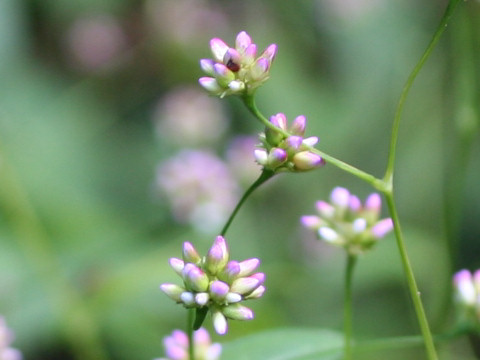
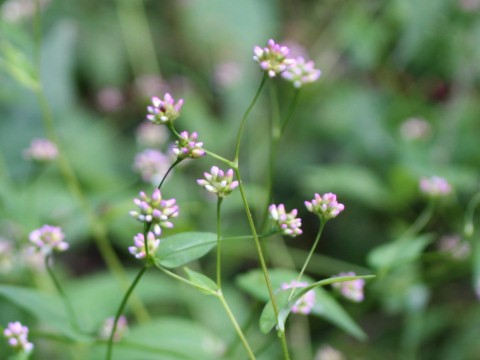
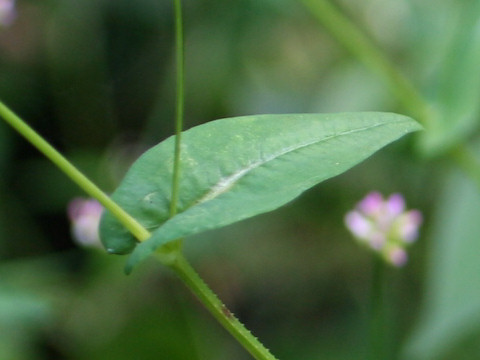
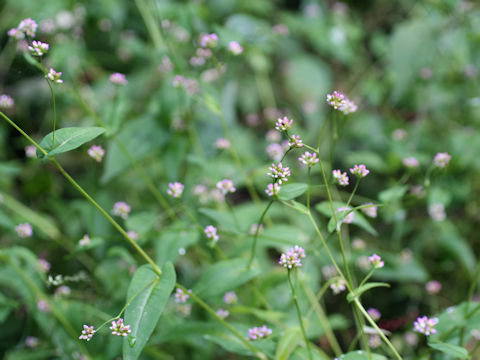
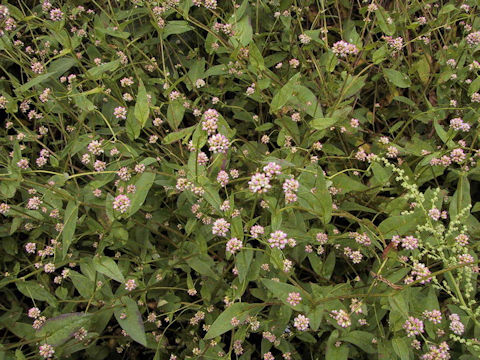
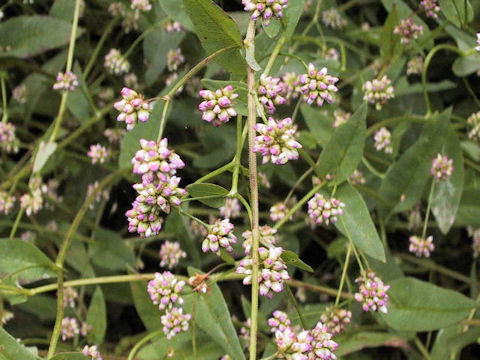
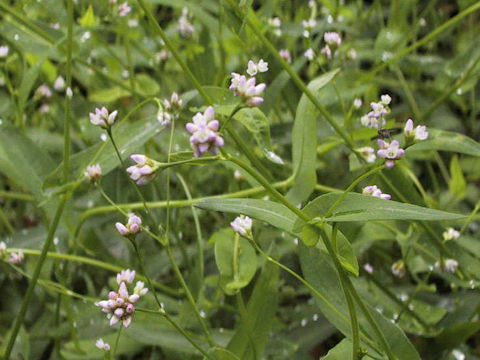
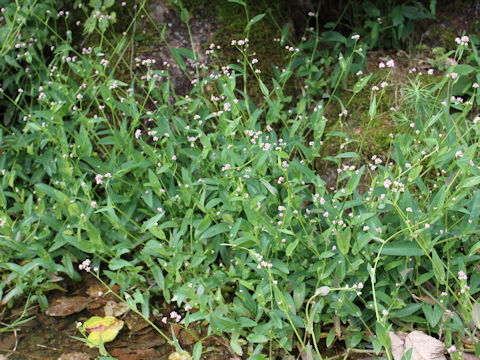
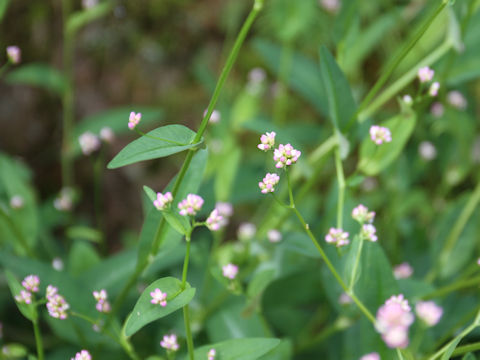
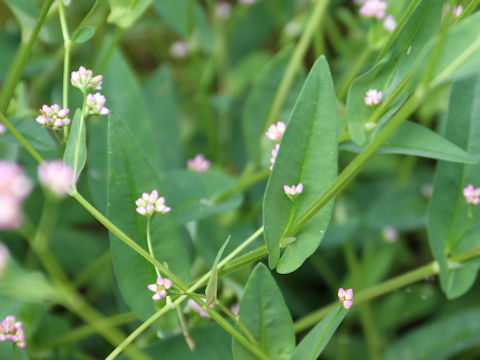
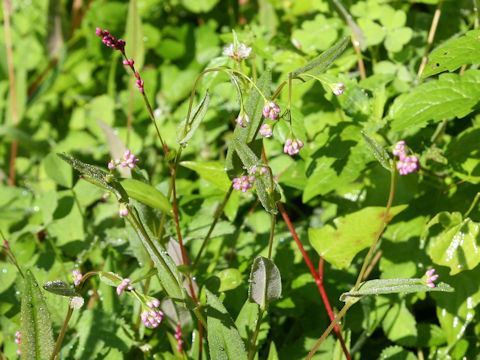
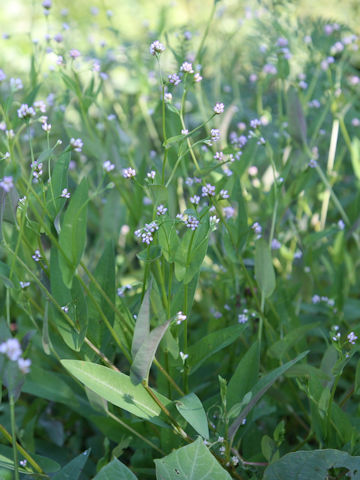
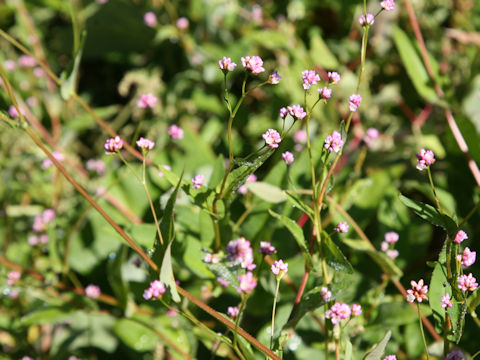
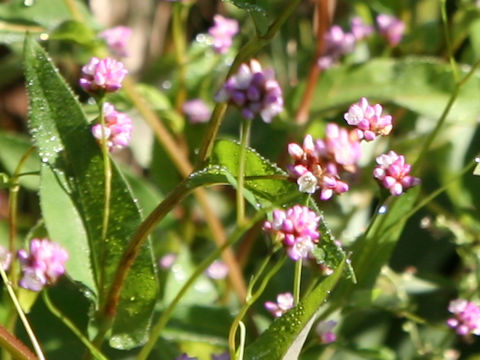
わが国の各地をはじめ、東アジアに広く分布しています。水辺や湿地に群生して生え、高さは60~100センチになります。葉は卵状披針形から長披針形で互生し、基部は鏃形で茎を抱くようにはりだします。8月から10月ごろ、枝先に下の方が白色で上の方が紅色の小さな花を球状につけます。和名は、茎に下向きのたくさんの棘があって、これを使うとウナギでもつかめるということから。 従来は早生の畑地型が狭義のウナギツカミ(Persicaria sagittata var. aestiva)、晩生の湿地型がアキノウナギツカミ(Persicaria sagittata var. sibirica)と呼ばれてきましたが、最近では種内変異とされ、広義にアキノウナギツカミを含めてウナギツカミ(Persicaria sagittata)とされています。 台湾華語では「箭葉蓼」、中国語では「箭頭蓼(jian tou liao)」と呼ばれます。 韓国語では「ミックリナッシ(미꾸리낚시)」です。これは和名と同じ発想で、「ドジョウ(ミックリ: 미꾸리)」+「釣る(ナッシ: 낚시)」という意味から来ています。 |
|
|
タデ科イヌタデ属の一年草で、学名は Persicaria sagittata var. sibirica (syn. Persicaria sieboldii、Polygonum sagittatum var. sieboldii)。英名はありません。 |
|
|
The "Akino-unagi-tsukami" (Persicaria sagittata var. sibirica) belongs to Polygonaceae (the Knotweed family). It is an annual herb that is widely distributed in various parts of Japan and East Asia. This herb grows in watersides and wetlands, and the height is 60-100 cm. The leaves are ovate-lanceolate to long-lanceolate, alternate, and the bases are sagittate and hold the stems. The small flowers bloom in the spherical clusters from August to October. The corolla is white at the lower part and red at the upper part. The Japanese name comes from the fact that there are many downward spines on the stem, which can be used to catch eels. Traditionally, the early-maturing field-grown variety was referred to as "Unagi-tsukami" (Persicaria sagittata var. aestiva) in the narrow sense, while the late-maturing wetland variety was called "Akino-unagi-tsukami" (Persicaria sagittata var. sibirica); however, these are now considered intraspecific variations, and in the broad sense, the term "Unagi-tsukami" (Persicaria sagittata) encompasses "Akino-unagi-tsukami" as well. In Taiwanese Chinese, it is called "箭葉蓼", and "箭頭蓼" (jian tou liao) in Chinese. In Korean, it's called "mik-kuri-nak-si" (미꾸리낚시). This is based on the same concept as the Japanese name, deriving from the combination of "loach" (mik-kuri: 미꾸리) and "to fish" (na-ssi: 낚시). |
|
|
[上・中1~3] 大阪府千早赤阪村水分「金剛山」にて、2005年10月13日撮影。 [中4・中5] 長野県茅野市「霧ヶ峰高原」にて、2001年09月16日撮影。 [中6~中8] 兵庫県神戸市「六甲高山植物園」にて、2002年09月08日撮影。 [中9~中13] 山形県小国町小玉川にて、2019年09月21日撮影。 [中14~中16] 同上にて、2021年09月19日撮影。 [中17・下] 同上にて、2021年09月20日撮影。 |
|
|

|
Shu Suehiro shu@botanic.jp |