

|
 アリウム・カラタウィエンセ (眉刷毛韮) |
|
|
  |
|

|
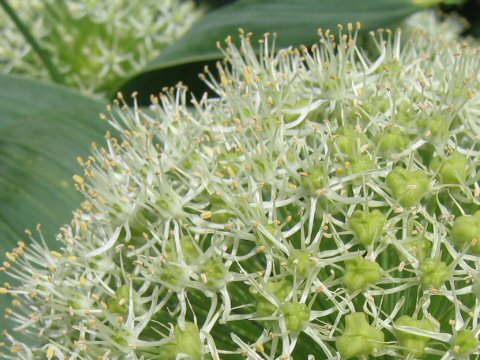
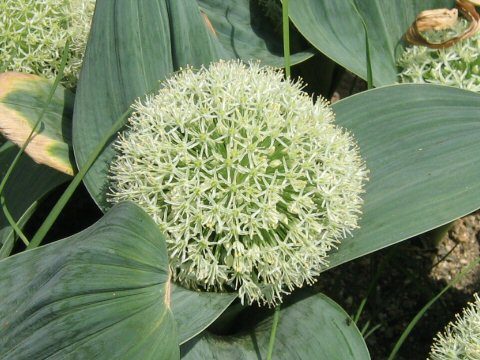
中央アジア、カザフスタン共和国のトルケスタン地方が原産です。高さは25センチほどになり、葉は大きな楕円形で灰緑色をしていて、根生します。3月から5月ごろ、花茎を伸ばして散形花序をつけ、ピンク色から白色の星形の花を咲かせます。種小名は、産地のカラタウ山脈(Kara Tau)に因みます。和名では「まゆはけにら(眉刷毛韮)」と呼ばれます。 |
|
|
ユリ科ネギ属の多年草で、学名は Allium karataviense。英名は Ornamental onion。 |
|
|
The Ornamental onion (Allium karataviense) belongs to Liliaceae (the Lily family). It is a perennial herb that is native to Central Asia, the Turkestan region of the Republic of Kazakhstan. It grows to about 25 cm tall and has large, elliptic, gray-green, basal leaves. from March to May, it produces pink to white, star-shaped flowers in umbels on extended flower stalks. The specific epithet is derived from the Karatau Mountains where it is found. It is also called "Mayuhake-nira" (eyebrow-brush chive) in Japanese. |
|
|
京都市左京区「京都府立植物園」にて、2005年05月16日撮影。 |
|
|

|
Shu Suehiro shu@botanic.jp |