

|
 あずまいちげ (東一華)
|
|
|
|
-- もっと見る(Show more)--
-- 閉じる(Close) --
|
|
|
|

|
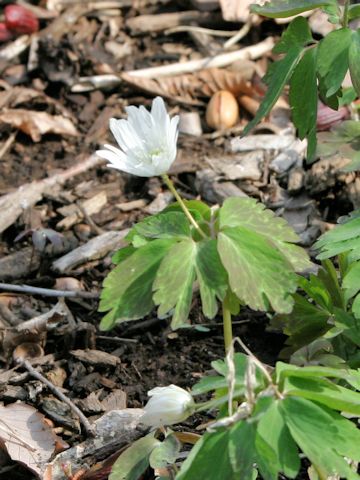
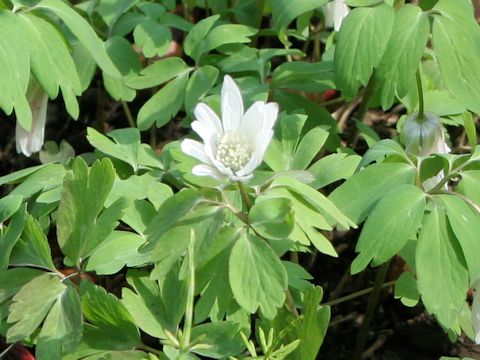
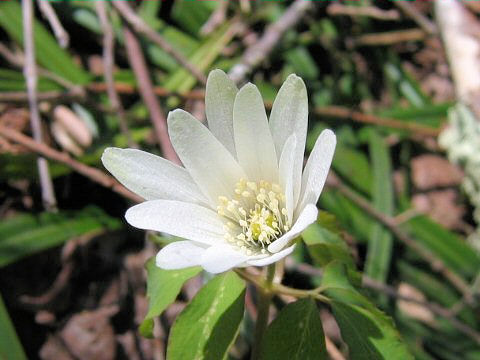
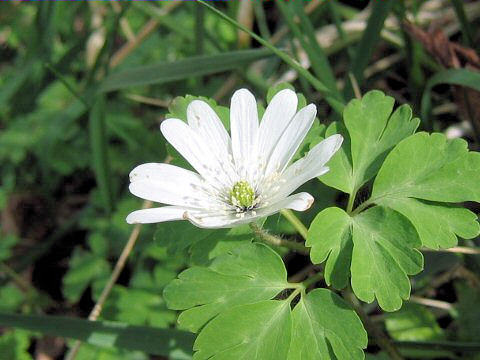
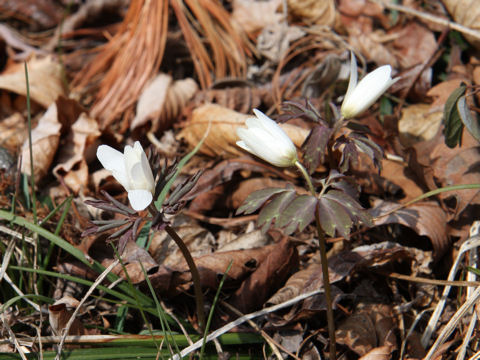
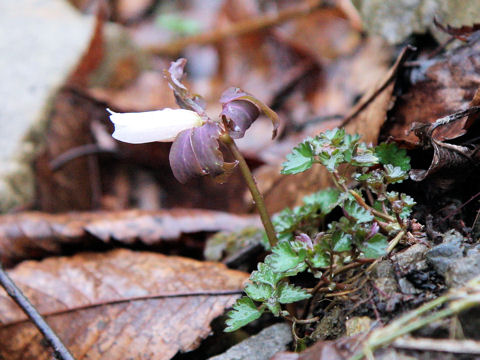
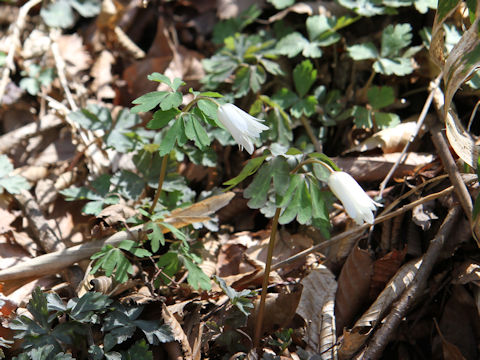
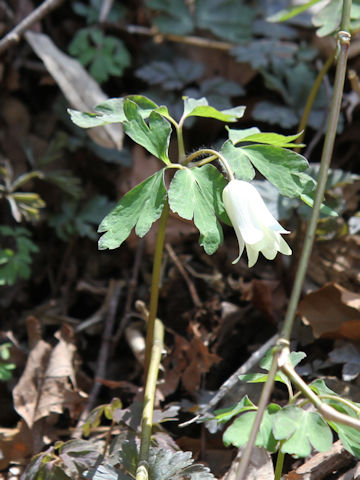
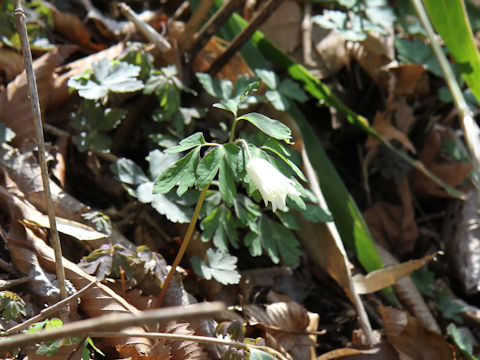
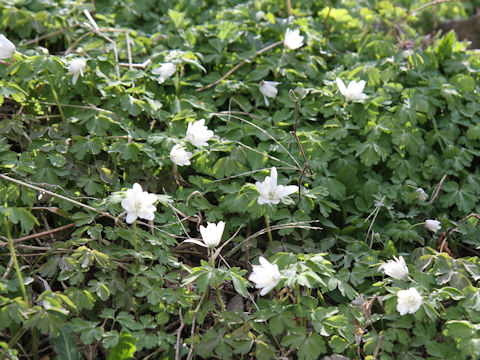
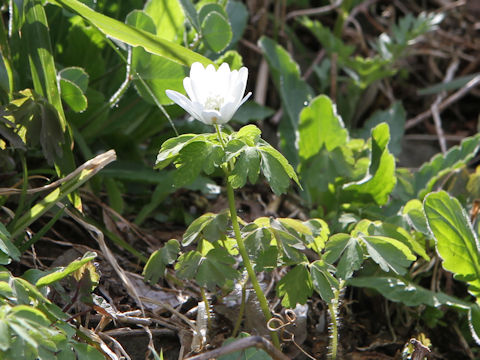
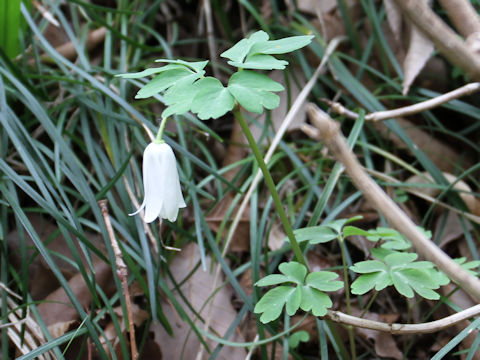
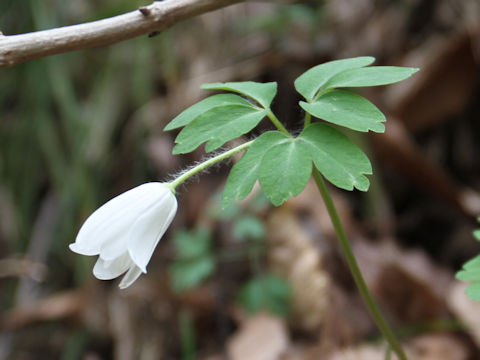
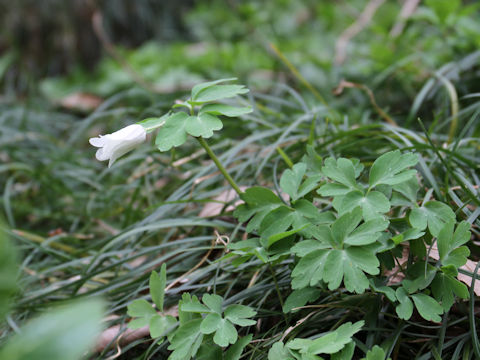
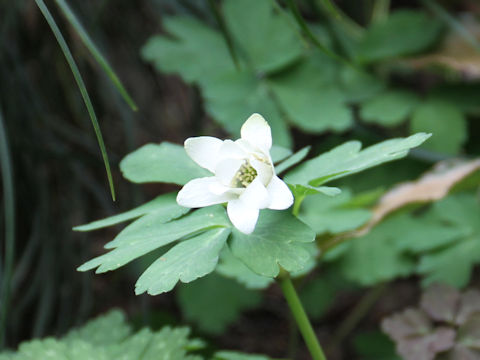
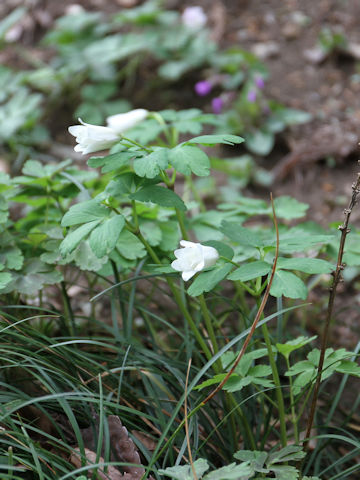
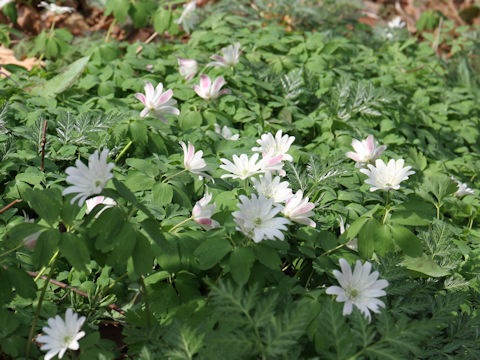
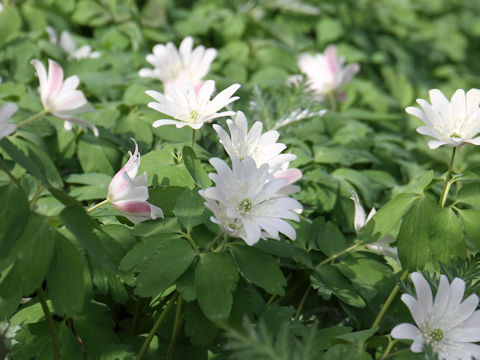
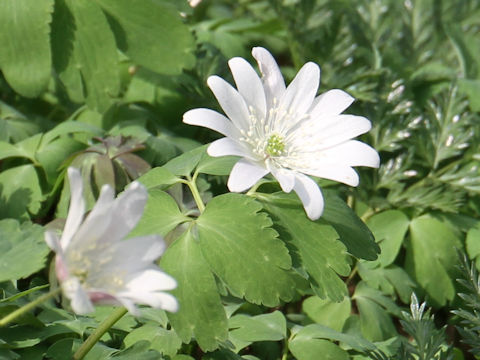
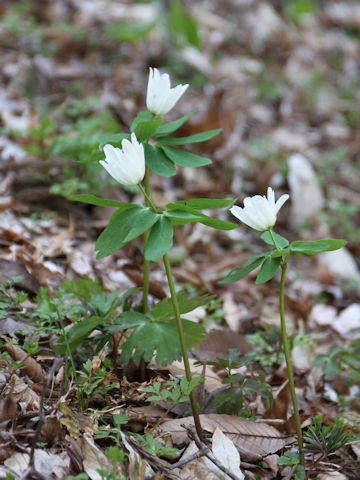
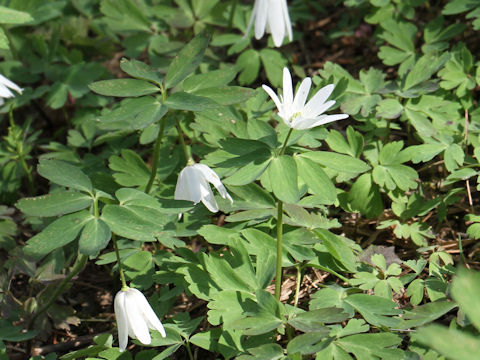
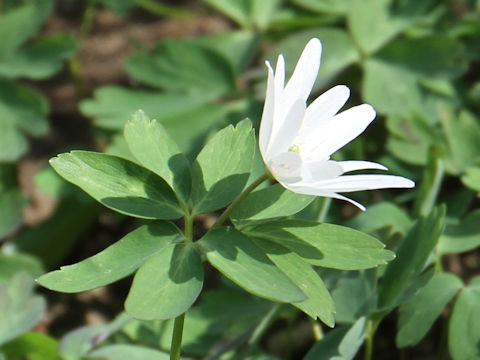
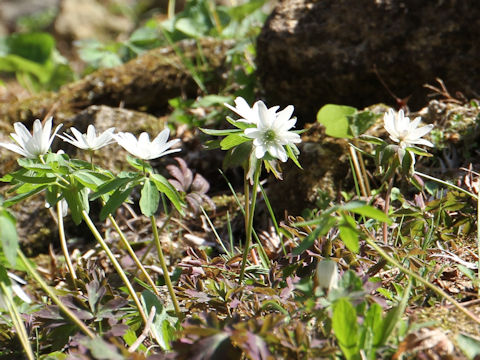
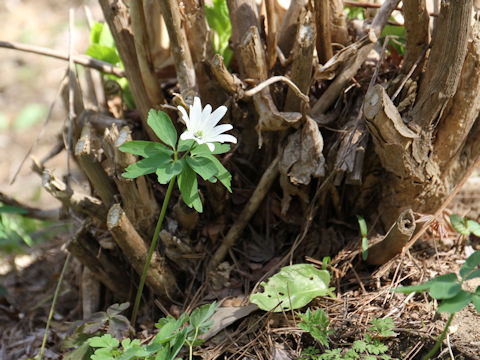
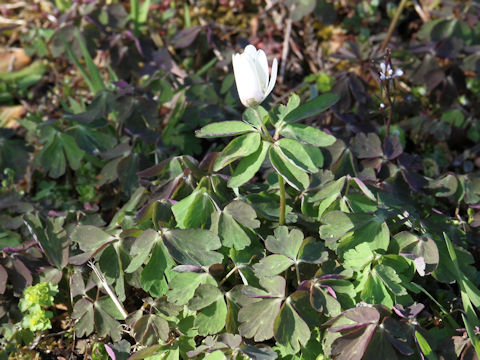
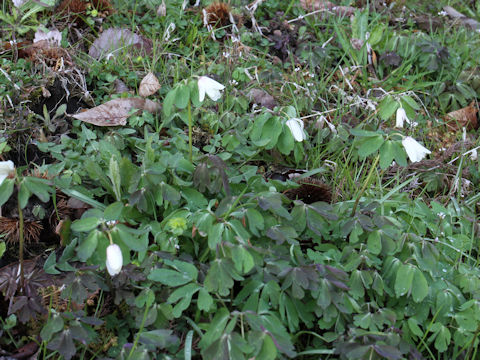
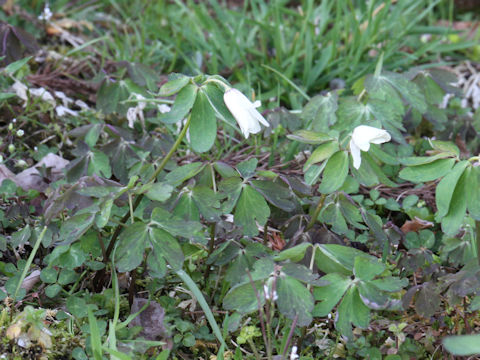
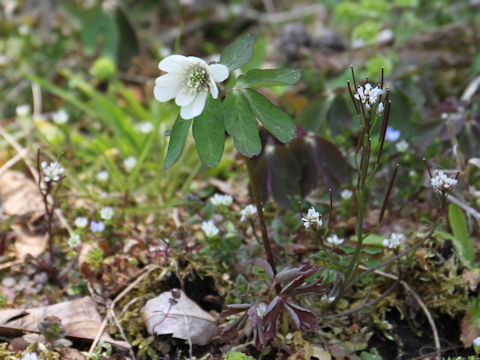
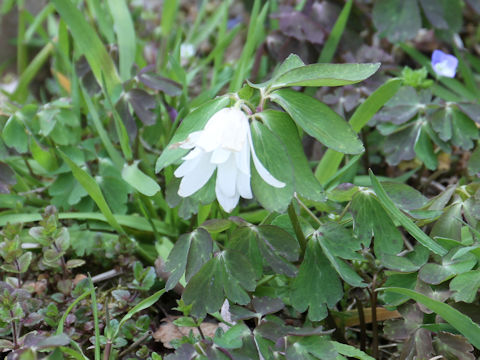
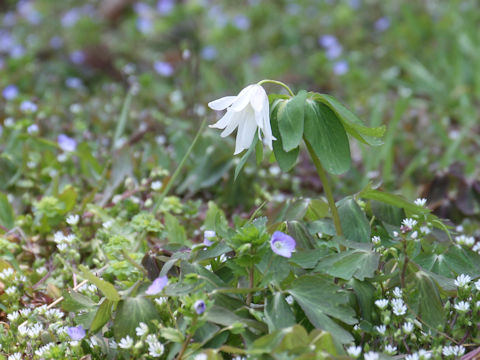
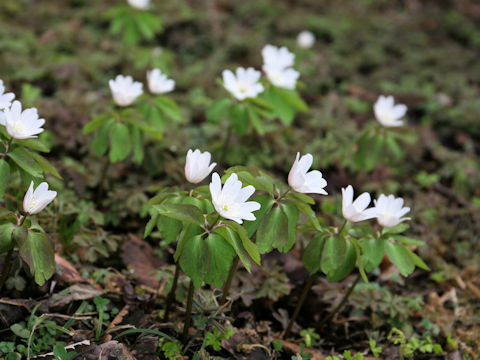
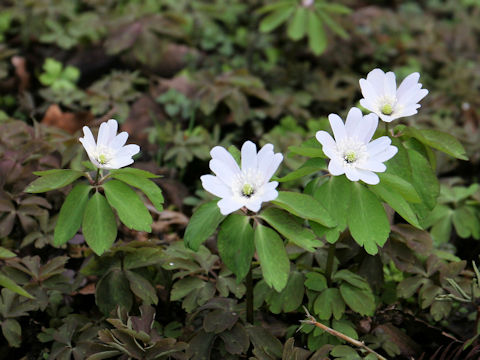
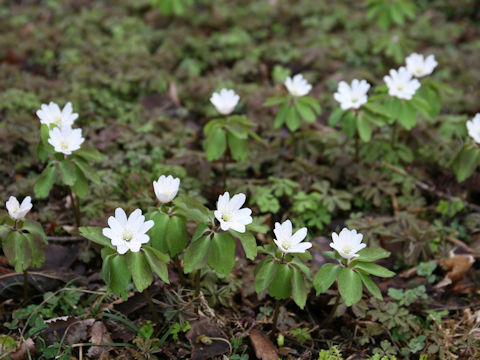
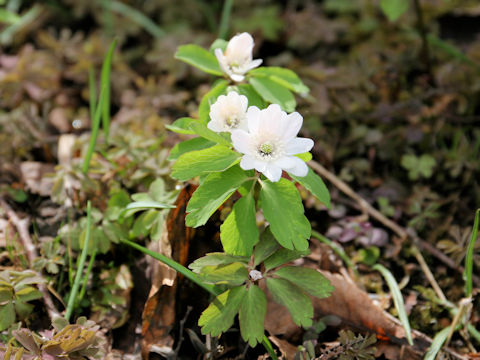
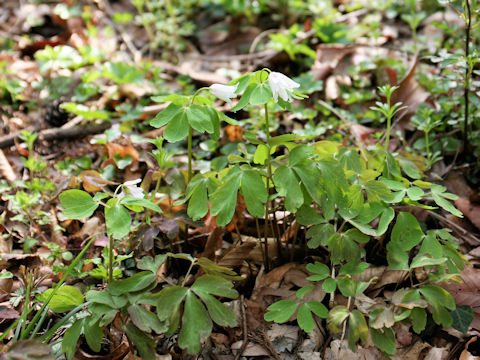
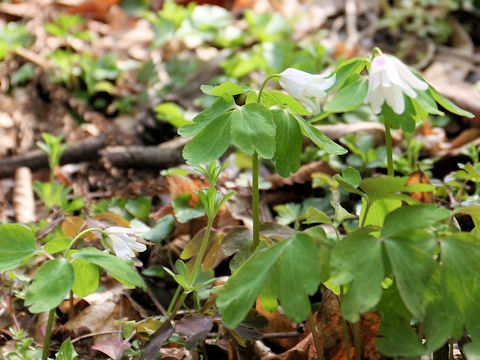
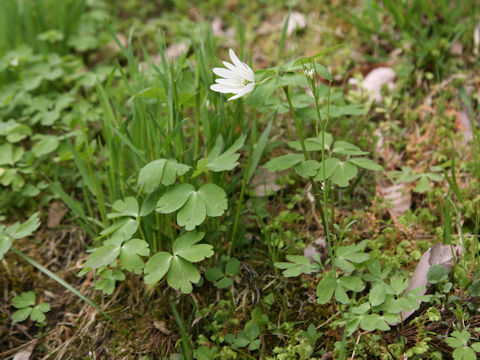
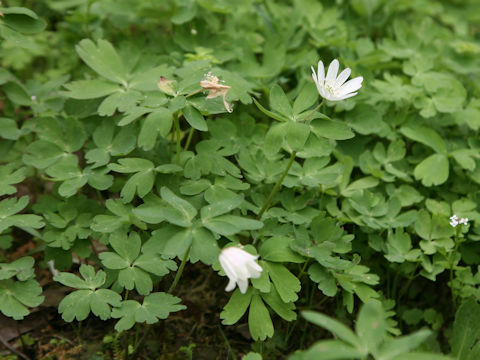
わが国の北海道から九州の太平洋側をはじめ、サハリンや朝鮮半島、中国北東部、アムール地方に分布しています。山地の落葉樹林の林床や林縁に生え、高さは15~20センチになります。葉は3出複葉で3個輪生し、垂れ下がります。3月から5月ごろ、茎の先に白い花を咲かせます。花弁のように見えるのは萼片で8~12個あり、裏面は淡い紅紫色を帯びます。6月には、地上部が枯死して休眠します。別名で「うらべにいちげ(裏紅一華)」とも呼ばれます。中国語では「多被銀蓮花(duo bei yin lian hua)」と呼ばれます。 韓国語では「クォンエバラムコッ(꿩의바람꽃)」です。これは「雉(クォン: 꿩)」+「~の(エ: 의)」+「イチリンソウ属の植物(バラムコッ: 바람꽃)」の合成語です。春の初めのキジが鳴くころに咲くことや、花の形がコウライキジの首周りの羽模様を連想させることなどからこの名がついたと言われています。 ※特徴(「きくざきいちげ」との比較で) (1) 葉の先が丸くて深く切れ込まない。やや垂れ気味。 (2) 萼片の幅が狭く、中心部が紫色を帯びる。 (3) 花柄に毛がないことが多い。(有毛のこともある) |
|
|
キンポウゲ科イチリンソウ属の多年草で、学名は Anemone raddeana。英名はありません。 |
|
|
The "Azuma-ichige" (Anemone raddeana) belongs to Ranunculaceae (the Buttercup family). It is a perennial herb that is distributed to the Pacific Ocean Side of Japan, from Hokkaido to Kyushu, as well as Sakhalin, the Korean Peninsula, northeast China and Amur. This herb grows in outskirts or floors of deciduous forests and can reach 15-20 cm in height. The leaves are 3-lobed compounds, 3 whorled and drooping. The white flowers come on the shoot apexes in March to May. The sepals are petal-like and have 8-12 lobes that are tinged pale peach bloom on the reversesides. The terrestrial is blighted and diapause in June. It is called "多被銀蓮花" (duo bei yin lian hua) in Chinese. In Korean, it's called "kkwong-e-ba-ram-kkot" (꿩의바람꽃). This is a compound word consisting of "pheasant" (kkwong: 꿩) + "'s" (e: 의) + "plants of the genus Anemone" (ba-ram-kkot: 바람꽃). It is said that the flower got its name because it blooms in early spring, around the time pheasants begin to call, and because the shape of its flowers resembles the feather pattern around a common pheasant’s neck. § Features (compared to "Kikuzaki-ichige") (1) The tip of the leaf is round and does not cut deeply. Slightly dripping. (2) The calyx is narrow and the center is purple. (3) The peduncle often has no hair. (Sometimes hairy) |
|
|
[上・中1] 栃木県藤岡市「三毳山公園」にて、2008年03月29日撮影。 [中2] 長野県戸隠村戸隠「戸隠高原」にて、2004年05月02日撮影。 [中3] 長野県茅野市宮川にて、2005年04月30日撮影。 [中4] 群馬県東吾妻町原田にて、2008年03月30日撮影。 [中5] 埼玉県小鹿野町「節分草園」にて、2010年03月06日撮影。 [中6~中8] 茨城県桜川市「筑波山」にて、 2014年04月12日撮影。 [中9・中10] 福島県古殿町「鎌倉岳」にて、2014年04月19日撮影。 [中11~中15] 栃木県宇都宮市古賀志町にて、 2016年04月02日撮影。 [中16~中18] 宮城県仙台市太白区「仙台市野草園」にて、2018年04月04日撮影。 [中19~中23] 宮城県仙台市太白区「天守閣自然公園」にて、2018年04月12日撮影。 [中24~中26] 宮城県川崎町前川にて、2020年04月14日撮影。 [中27~中29] 同上にて、2020年04月15日撮影。 [中30~中33] 同上にて、2021年03月29日撮影。 [中36・下] 同上にて、2022年04月26日撮影。 [中34・中35] 宮城県村田町足立にて、2021年04月03日撮影。 |
|
|

|
Shu Suehiro shu@botanic.jp
|