

|
 オクラ
オクラ
|
|
|
|
-- もっと見る(Show more)--
-- 閉じる(Close) --
|
|
|
|

|
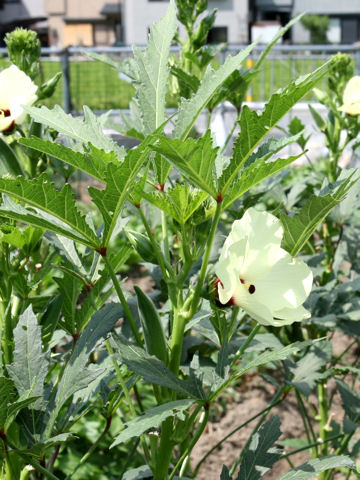
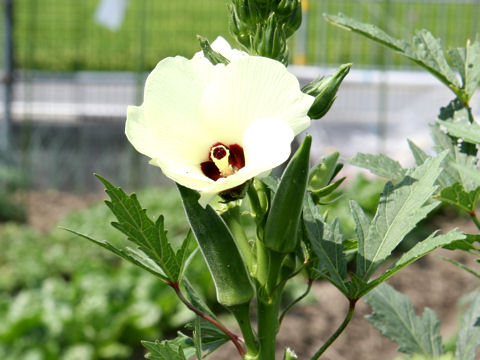
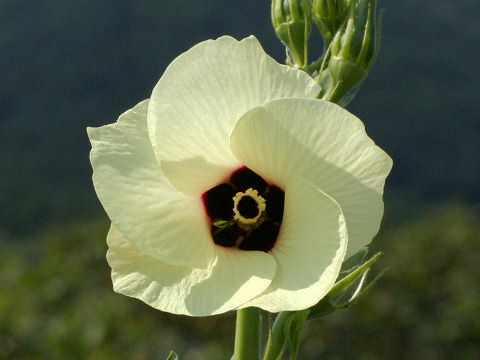
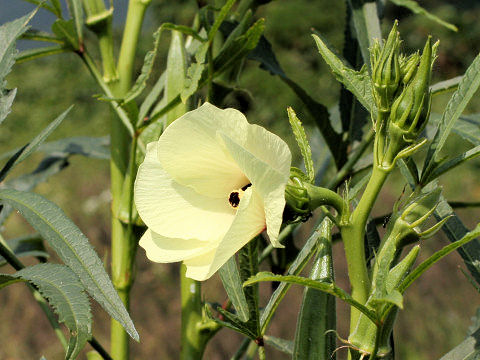
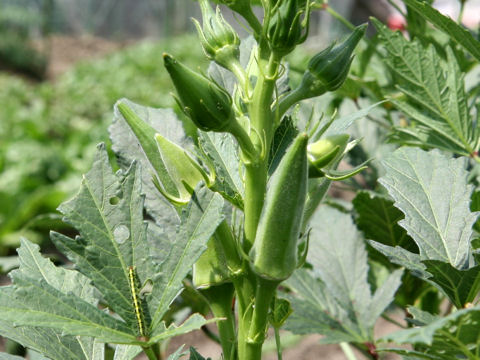
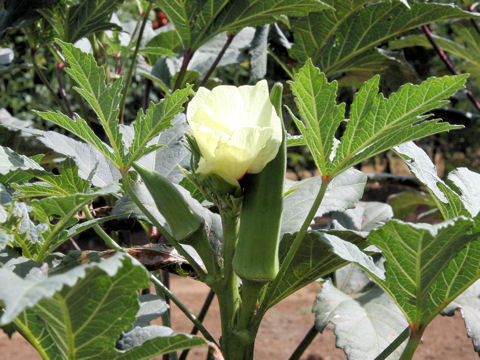
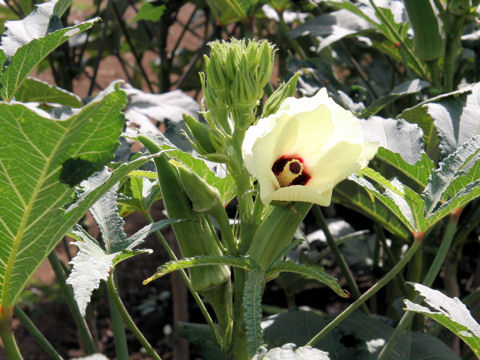
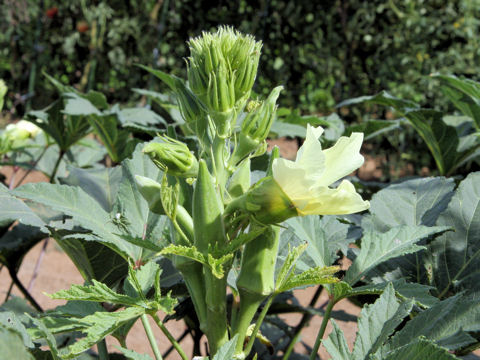
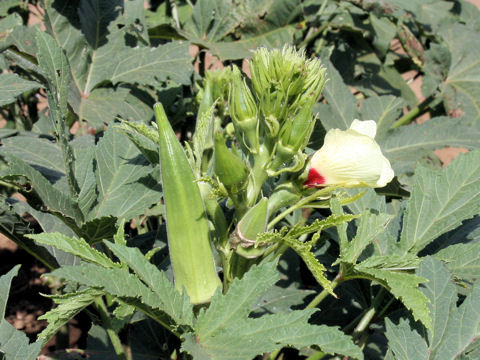
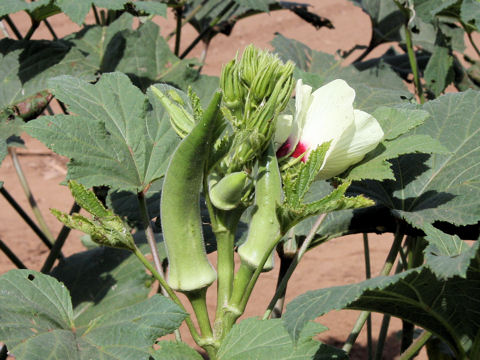
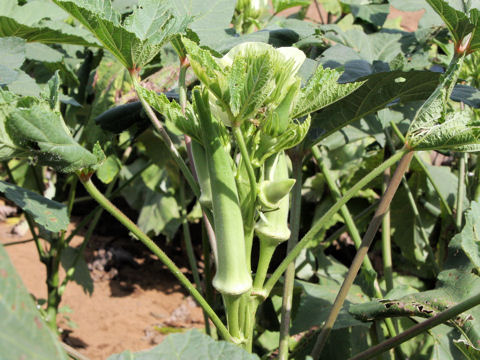
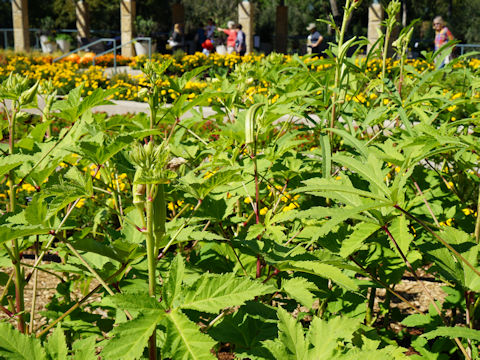
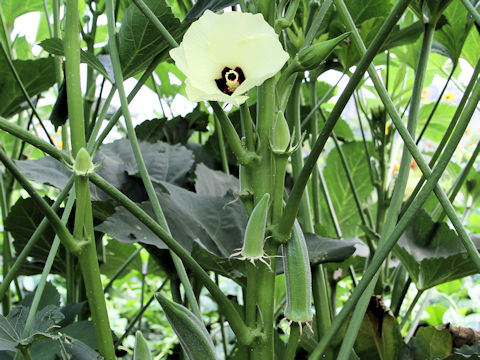
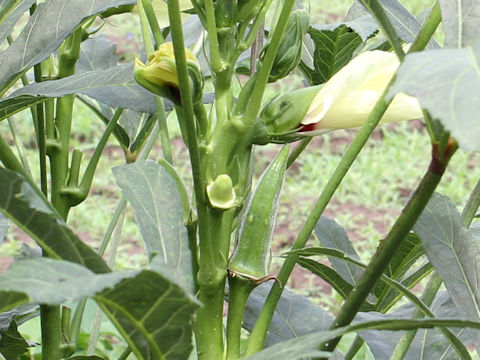
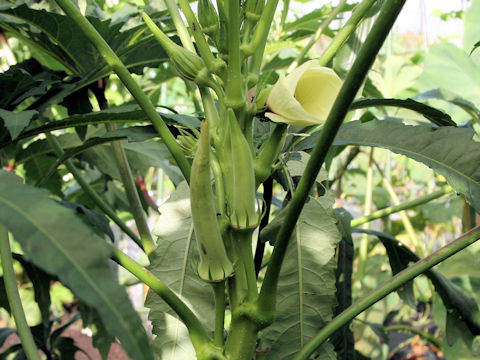
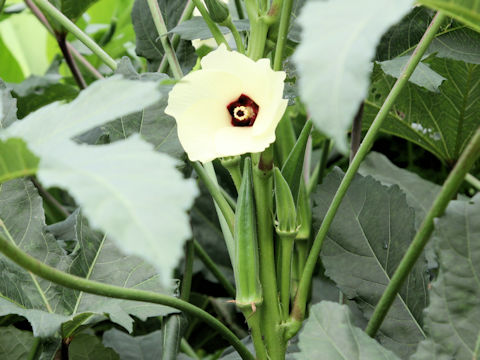
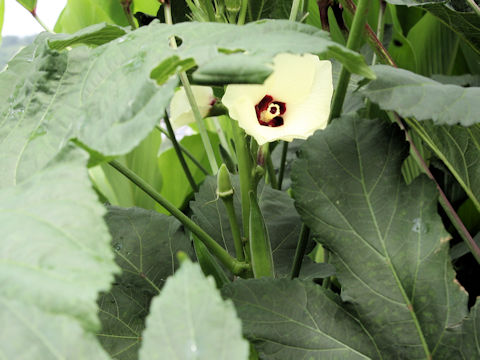
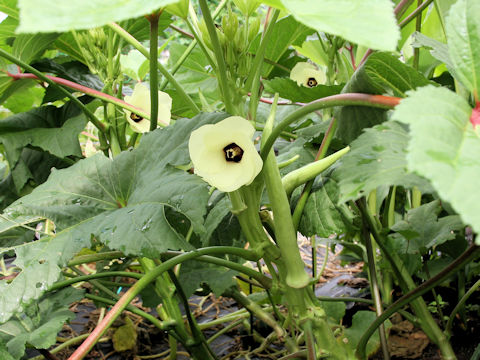
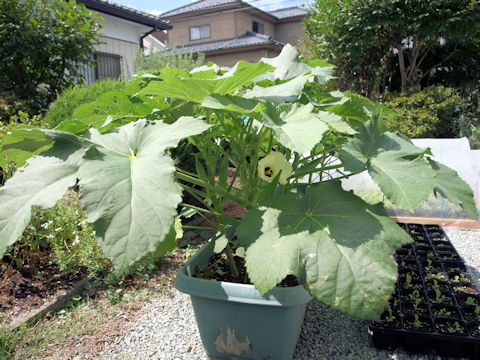
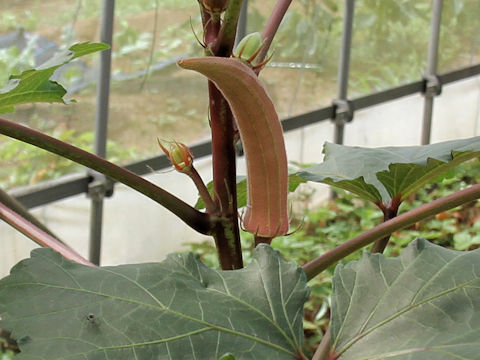
アフリカの東北部が原産です。エジプトでは、紀元前200年ごろにはすでに栽培が始まっていたといいます。わが国へは江戸時代の終わりに渡来しました。本格的に普及したのは、昭和40年ごろです。7月から9月ごろ、黄色い花を咲かせます。花の基部はワインレッド。開花後、5~6日の若い莢果を食用にします。サラダや和え物、天ぷら、煮物、スープなどに利用されます。 品種としては、果実の断面が五角や多角、丸形のものがあり、莢の色も濃緑色から淡緑色、ほぼ白色、紫紅色などがあります。近年、深型プランターで栽培できる矮性品種も登場しています。 写真中5の品種は、「ガリバー(五角莢)」(カネコ種苗)、 中6は、「グリーンスター(五角莢)」(サカタのタネ)、 中7は、「ピークファイブ(五角莢)」(サカタのタネ)、 中8は、「みやこ五角(五角莢)」(丸種)、 中9は、「スムースグリーン(丸莢)」、 中10は、「島オクラ(丸莢)」、 中12は、「ジョニー(五角莢)」(カネコ種苗)、 中13は、「平城グリーン(五角莢)」(ナント種苗)、 中14は、「クレムソンスピンレス(多角莢)」、 中15は、「白ひすい(丸莢系)」(フタバ種苗)、 中16は、「大奥(五角莢)」(ナント種苗)、 中17は、「スーパー翠星(五角莢)」(中原採種)、 中18は、「グリーンライト(丸莢)」、 中19が、「SID-POH-02(矮性・五角莢)」(JAVA Seed)、 中20は、「べにいろ(多角莢)」(中原採種)、 そして下は、「ダビデの星(多角莢)」。 (注1.わが国では動物性、植物性に関わらず「ネバネバ=ムチン」という認識が広まっていましたが、近年になって研究が進み、間違いであることがわかりました。このことは日本生物工学会からも報告されています。ムチンは粘性物質ですが、動物の胃液等で生成されるもので、植物からは生成されません。) |
|
|
アオイ科トロロアオイ属の多年草で、学名は Abelmoschus esculentus。英名は Okra。 |
|
|
The okra (Abelmoschus esculentus) belongs to Malvaceae (the Mallow family). It is a perennial herb that is native to northeastern Africa. Cultivation of this herb began in ancient Egypt before 200 BC. It was introduced into Japan in the late Edo Era (1603-1868), though it only became common in the Showa Era (1926-1989). The yellow flowers, each with a wine-red throat, bloom in July to September. Five or six days after flowering, the immature fruits are used in salads, marinated foods, deep-fried foods, boiled foods, or soup. (edit by Greg Brockelbank) (Note 1: In Japan, there was a widespread belief that "sticky substances" were synonymous with "mucin", regardless of whether they were of animal or plant origin; however, recent research has shown this to be incorrect. This has also been reported by the Society for Biotechnology, Japan. While mucin is a viscous substance, it is produced in animal gastric juices and similar secretions, and is not produced by plants.) |
|
|
[上・中1・中4] 大阪府枚方市招提元町にて、2007年09月05日撮影。 [中2・中3] 長野県辰野町上島にて、2005年09月21日撮影。 [中5~中10] 千葉県香取市大角にて、2011年09月07日撮影。 [中12] 同上にて、2013年08月12日撮影。 [中20] 同上にて、2014年08月01日撮影。 [中11] アメリカ・テキサス州「ダラス植物園」にて、2017年10月17日撮影。(photo by Jon Suehiro) [中13] 宮城県川崎町支倉にて、2020年08月24日撮影。 [中14] 同上にて、2021年08月05日撮影。 [中15] 同上にて、2023年08月10日撮影。 [中16~中18] 同上にて、2024年08月21日撮影。 [下] 同上にて、2021年08月12日撮影。 [中19] 宮城県大河原町大谷にて、2024年08月26日撮影。 |


|
|

|
Shu Suehiro shu@botanic.jp
|