 |
|

|
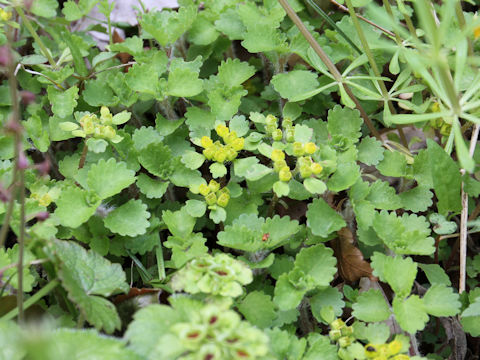
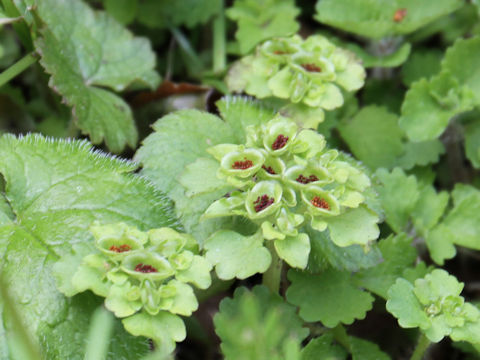
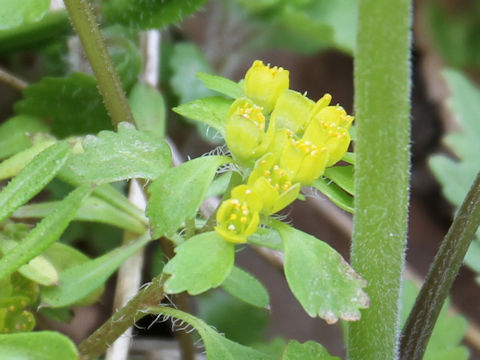
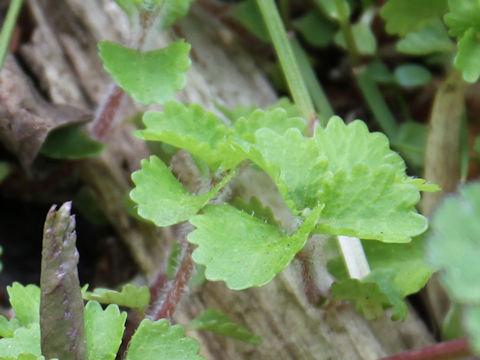
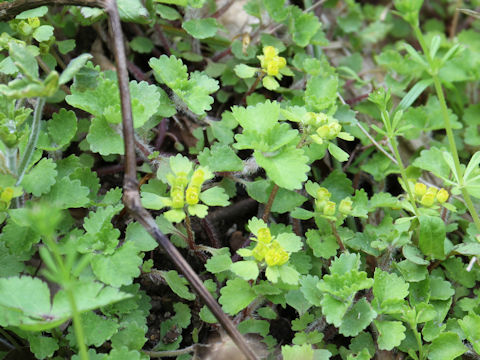
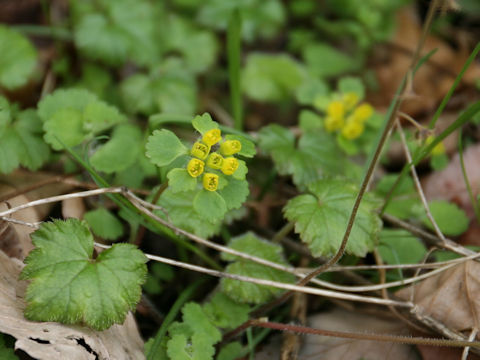
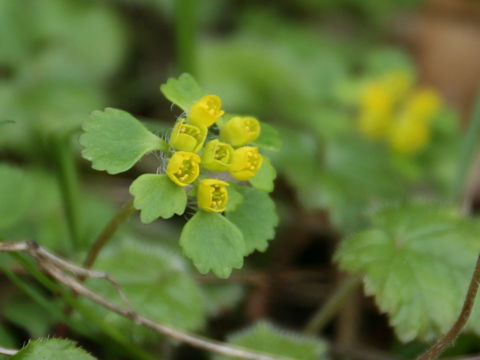
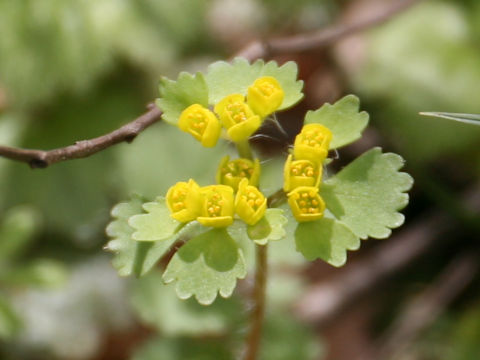
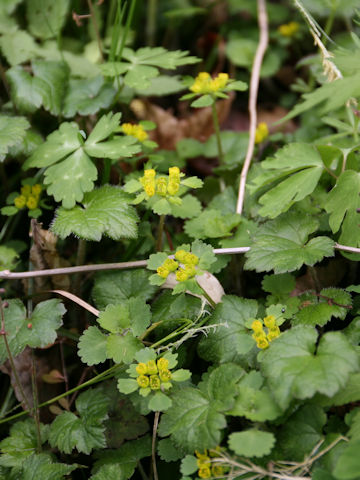
わが国の本州、東北地方南部から四国・九州に分布しています。山地の谷沿いの湿地に生え、高さは5~10センチになります。走出枝は長く伸び、白色の軟毛に被われます。葉は扇円形で、9~17個の丸い鋸歯があります。3月から5月ごろ、花茎を伸ばして黄色い花を咲かせます。葯は鮮やかな黄色をしていて、萼裂片は直立します。
|
|
|
ユキノシタ科ネコノメソウ属の多年草で、学名は Chrysosplenium pilosum var. fulvum。英名はありません。
|
|
|
The "Oo-kogane-nekonome-so" (Chrysosplenium pilosum var. fulvum) belongs to Saxifragaceae (the Saxifrage family). It is a perennial herb that is distributed from southern Tohoku district of Honshu to Shikoku and Kyushu in Japan. This herb grows in montane streamside marshes and can reach 5-10 cm in height. The runners elongate long and covered with white soft hairs. The leaves are round fan-shaped with 9-17 round serrate margines. The yellow flowers come on the flowering stalks from March to May. The anthers are bright yellow and the calyx lobes are erect.
|
|
|
[上・中1~4] 宮城県仙台市太白区坪沼にて、2020年04月30日撮影。
[中5~7・下] 同上にて、2021年04月18日撮影。
|

 おおこがねねこのめそう (大黄金猫の目草)

 shu@botanic.jp