 |
|

|
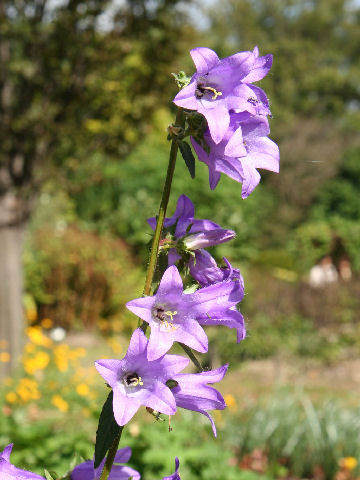
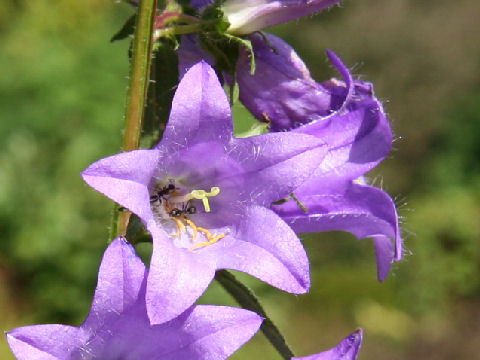
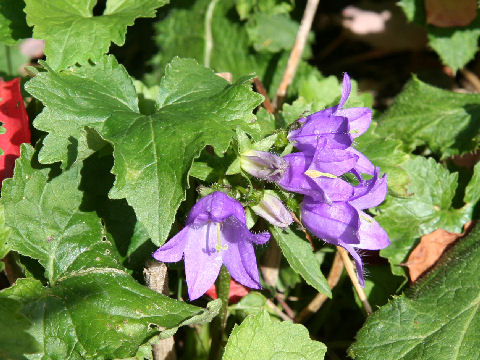
東ヨーロッパのルーマニアからブルガリアを中心に分布しています。高さは60~90センチになり、全体に細毛が疎らに生えます。葉は心形で、縁には粗い鋸歯があります。7月から9月ごろ、茎頂に総状花序をだし、ベル形の薄紫色から紫色の花を咲かせます。花冠や萼片にも細かい白毛が生えます。
|
|
|
キキョウ科ホタルブクロ属の多年草で、学名は Campanula grossekii。英名はありません。
|
|
|
The Campanula grossekii belongs to Campanulaceae (the Bellflower family). It is a perennial herb that is distributed in Eastern Europe, mainly from Romania to Bulgaria. It grows 60-90 cm tall and is sparsely covered with fine hairs. The leaves are heart-shaped with coarsely serrated edges. From July to September, bell-shaped, light purple to purple flowers appear in panicles at the top of the stem. The corolla and sepals also have fine white hairs.
|
|
|
京都市左京区「京都府立植物園」にて、2006年10月25日撮影。
|

 ハンガリーぎきょう (ハンガリー桔梗)

 shu@botanic.jp