 |
|

|
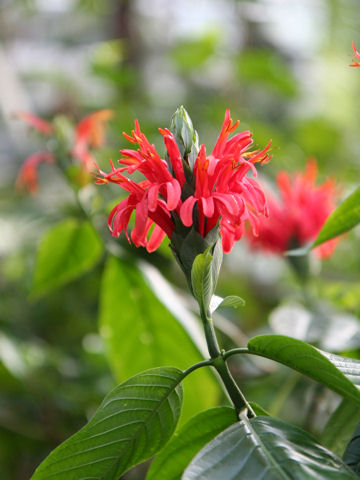
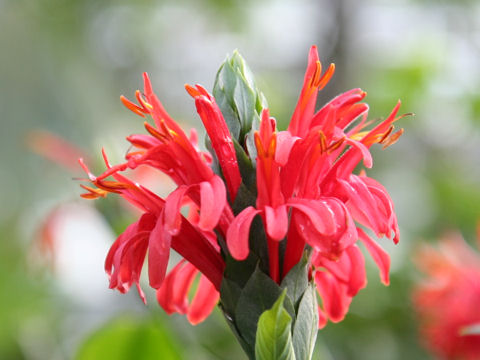
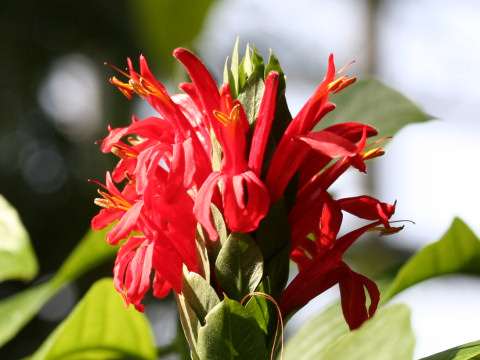
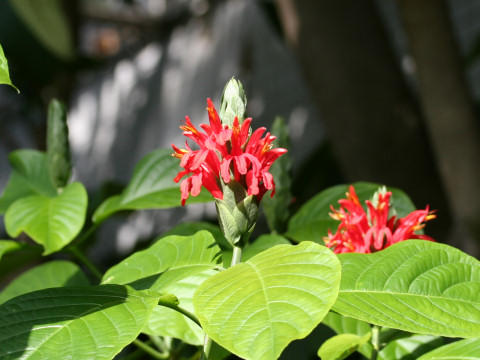
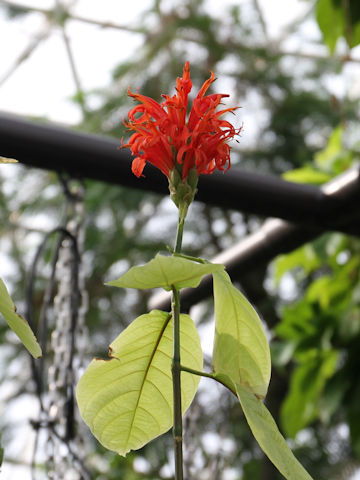
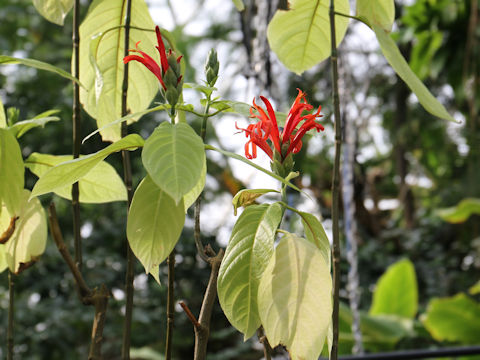
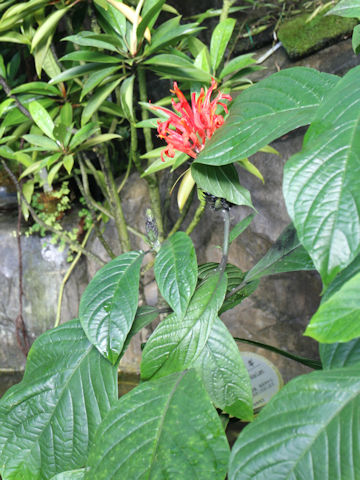
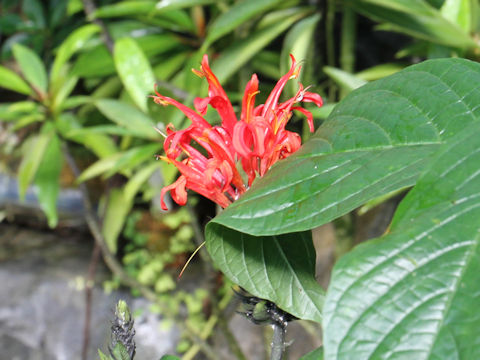
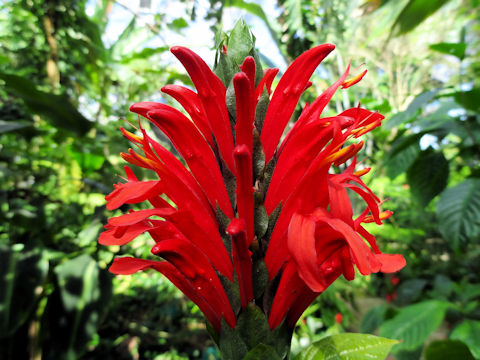
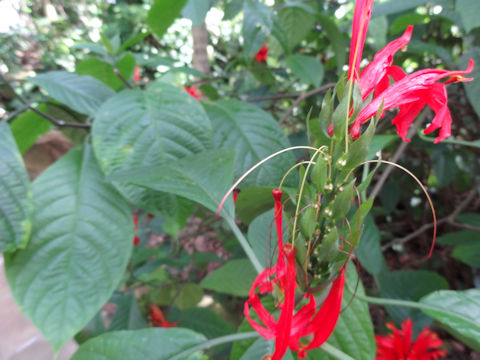
南アメリカ北部および西インド諸島に分布しています。高さは1.5~2メートルほどになり、葉は大きくて濃い緑色です。夏から秋にかけて、花茎を伸ばして、苞のあいだから真っ赤な花を咲かせます。和名では「べにさんごばな(紅珊瑚花)」と呼ばれます。
|
|
|
キツネノマゴ科パキスタキス属の常緑低木で、学名は Pachystachys coccinea。英名は Cardinal's guard。
|
|
|
The Cardinal's guard (Pachystachys coccinea) belongs to Acanthaceae (the Acanthus family). It is a small evergreen herb that is distributed to northern South America and the West Indies. This tree grows up to a height of 1.5-2 m. The leaves are large and dark green. The flower stalks are stretched and the bright red flowers bloom between the bracts. In Japanese name it is called "Beni-sangobana (red coral flower)".
|
|
|
[上・中1] 大阪府河内長野市「花の文化園」にて、2006年11月21日撮影。
[中2・中3] 大阪市鶴見区「咲くやこの花館」にて、2005年11月08日撮影。
[中4・中5] 新潟市東区秋葉「新潟県立植物園」にて、2018年01月21日撮影。
[中6・中7] 東京都新宿区「新宿御苑」にて、2019年12月24日撮影。
[中8・下] アメリカ・テキサス州「フォートワース植物園」にて、2013年03月06日撮影。(photo by Jon Suehiro)
|

 パキスタキス・コッキネア (紅珊瑚花)

 shu@botanic.jp