

|
 がまずみ (莢蒾)
|
|
|
|
-- もっと見る(Show more)--
-- 閉じる(Close) --
|
|
|
|

|
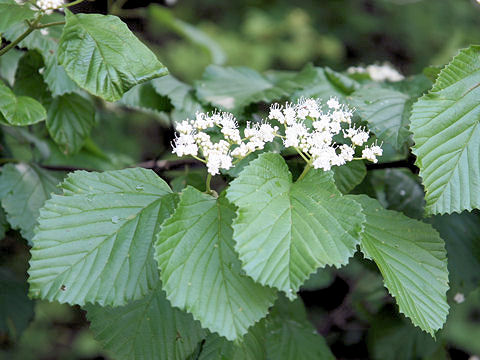
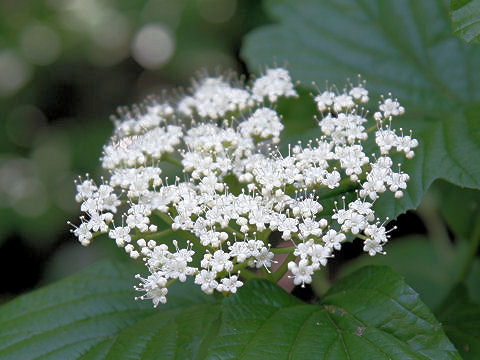
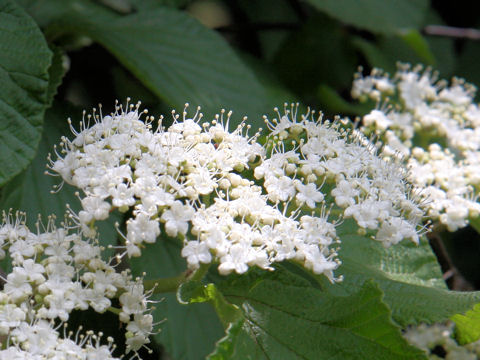
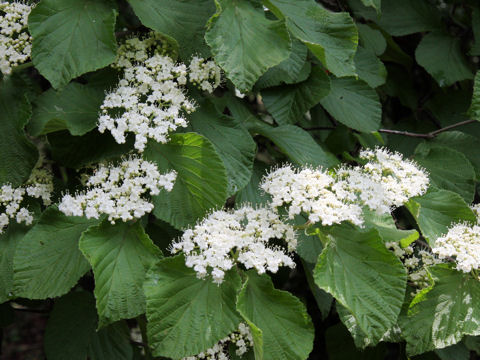
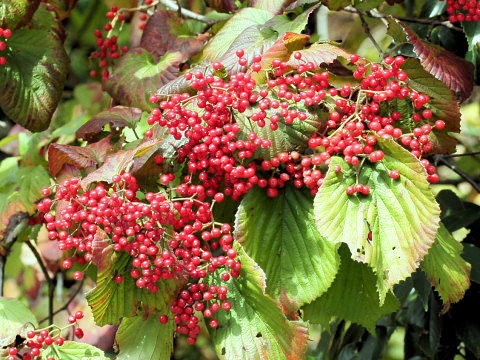
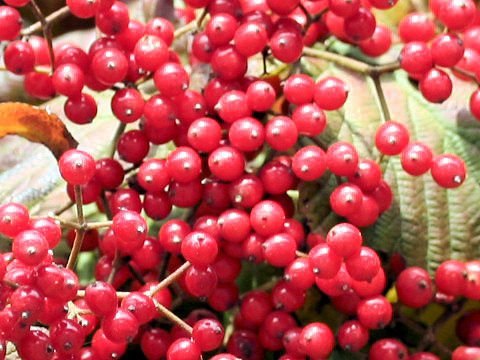
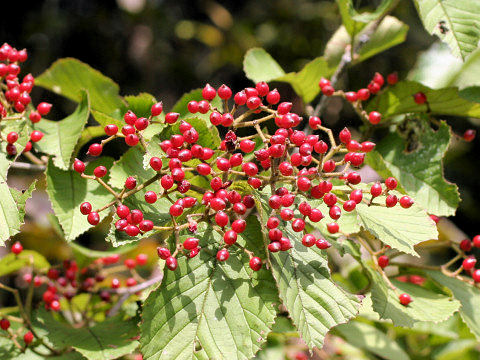
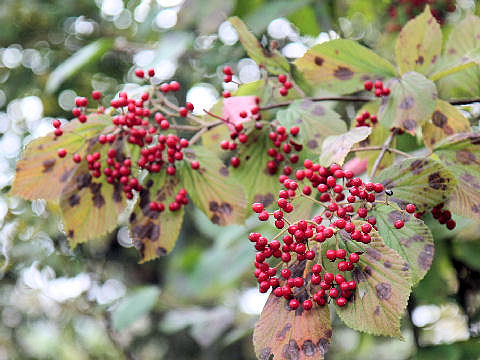
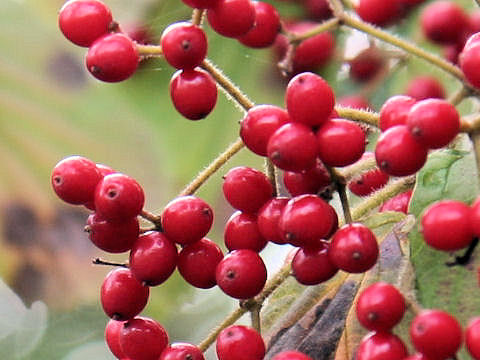
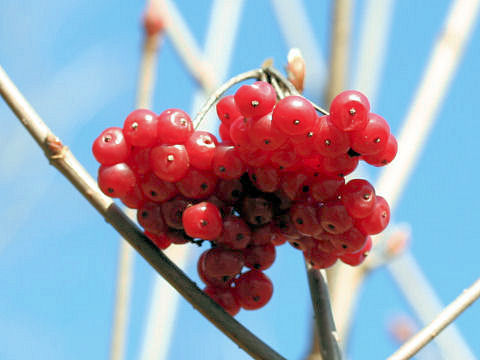
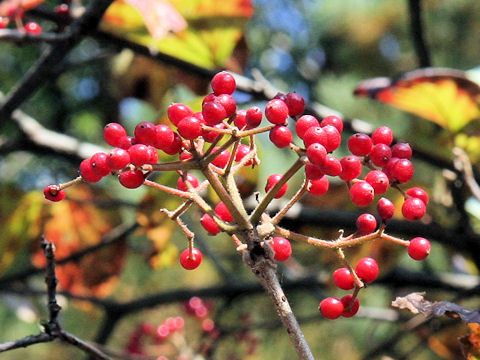
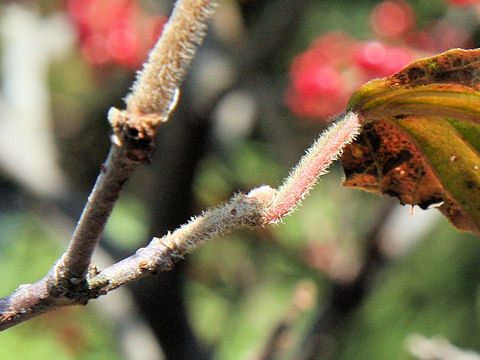
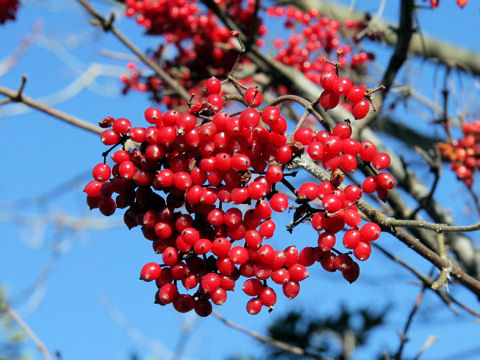
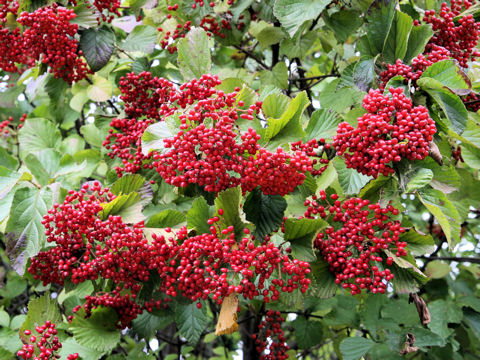
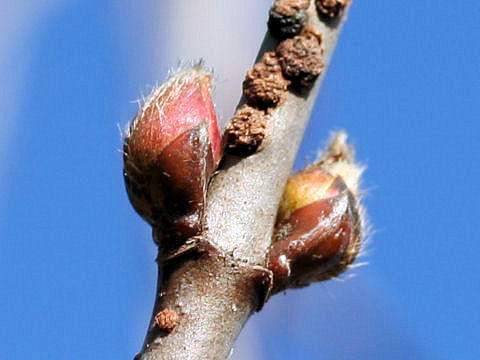
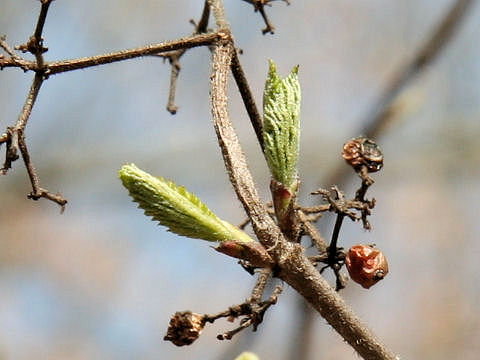
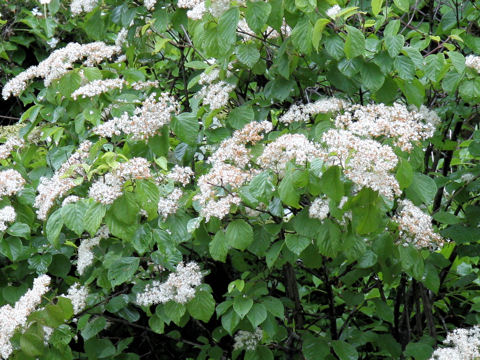
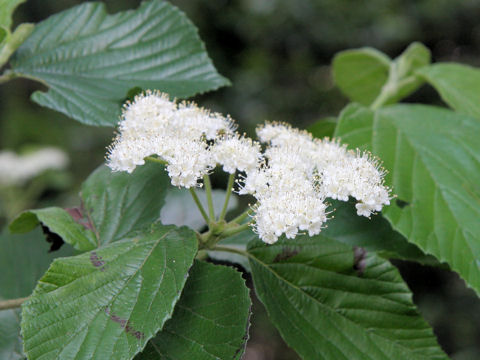
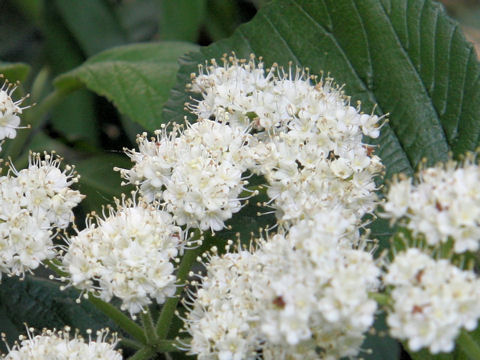
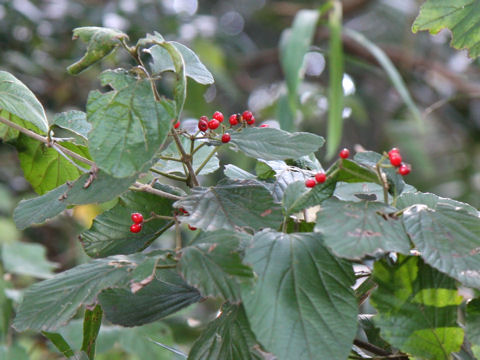
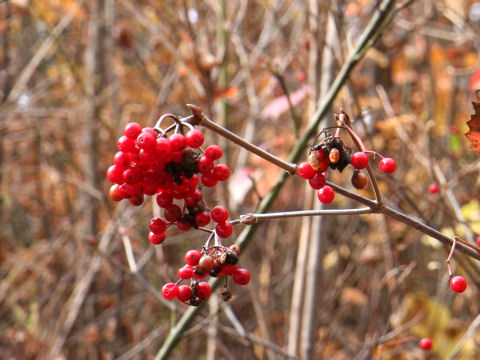
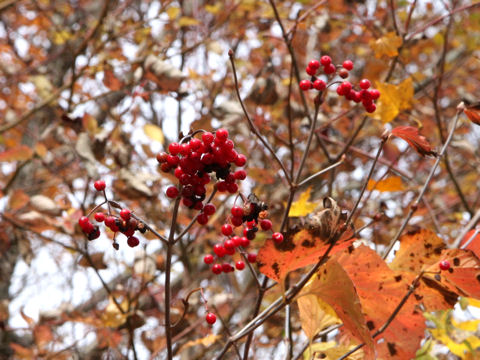
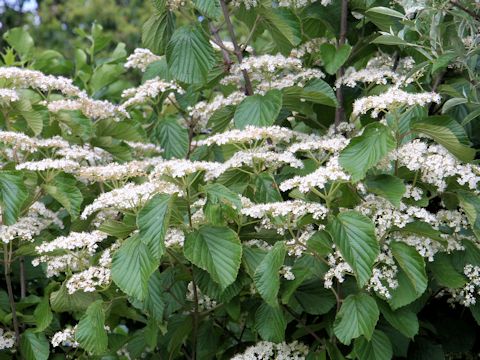
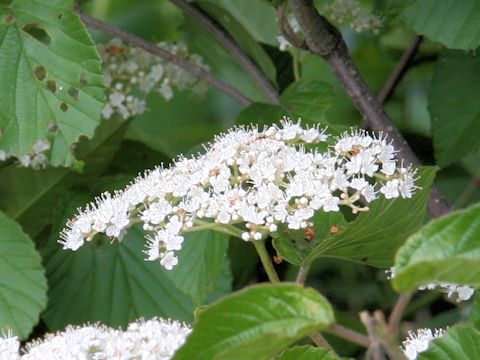
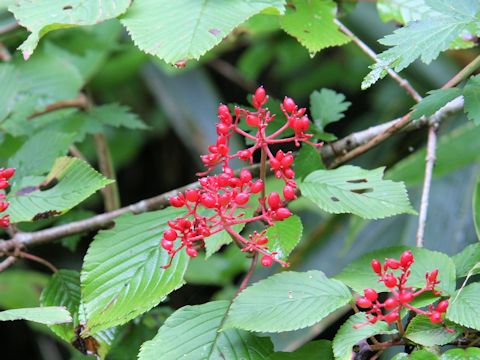
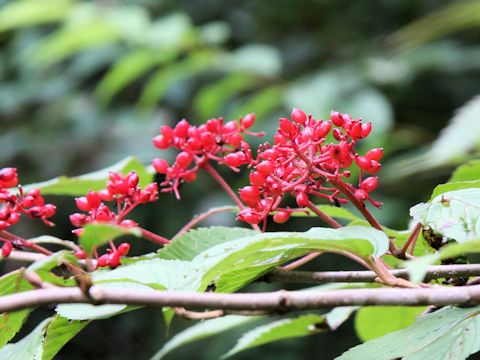
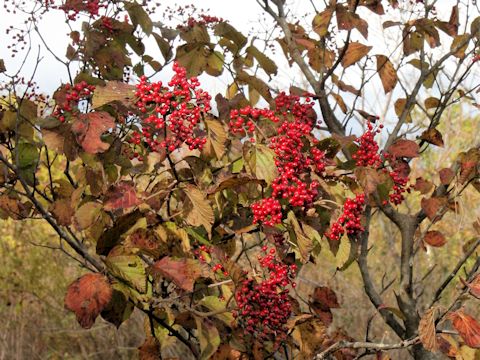
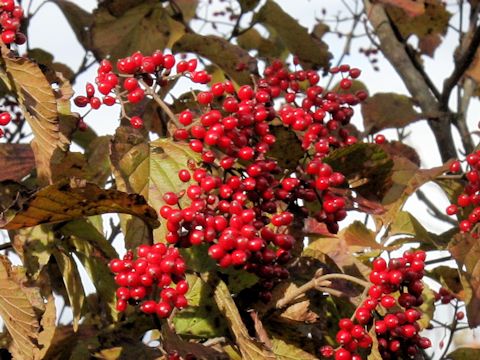
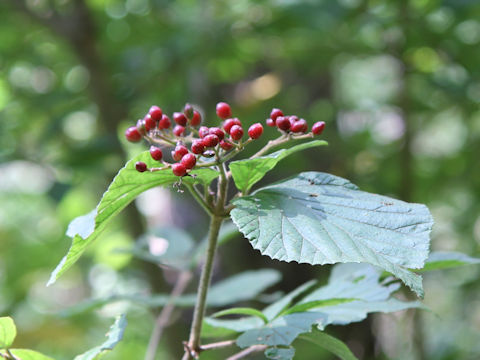
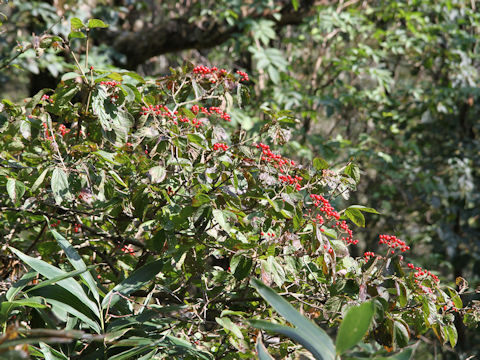
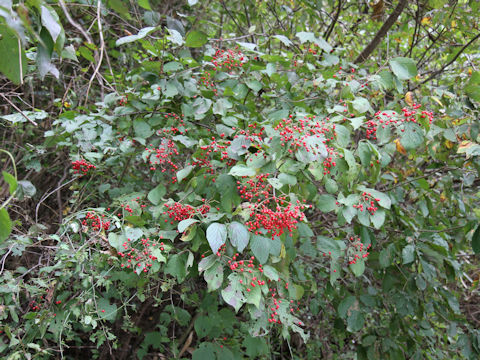
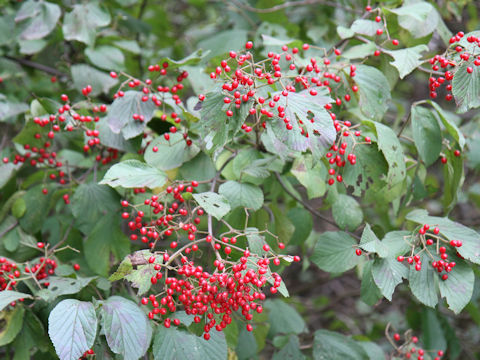
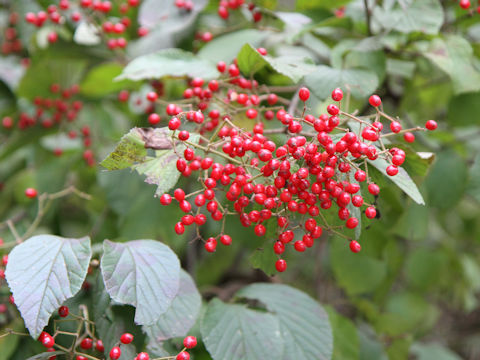
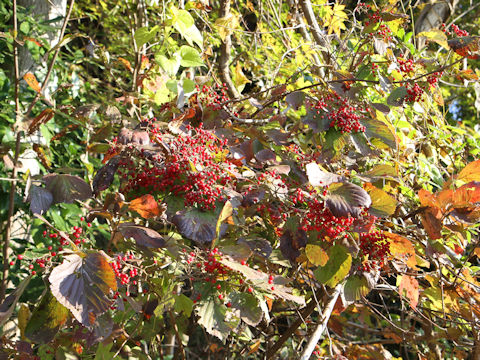
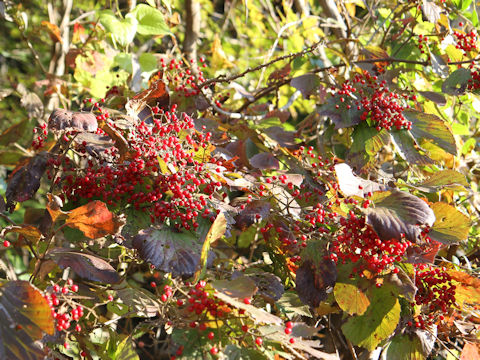
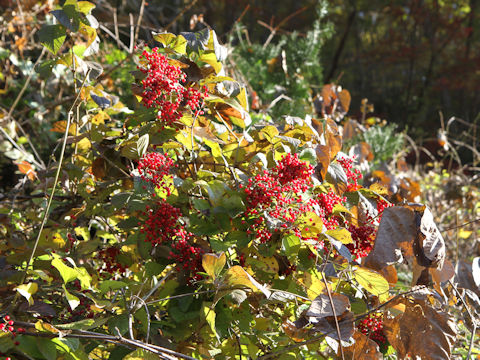
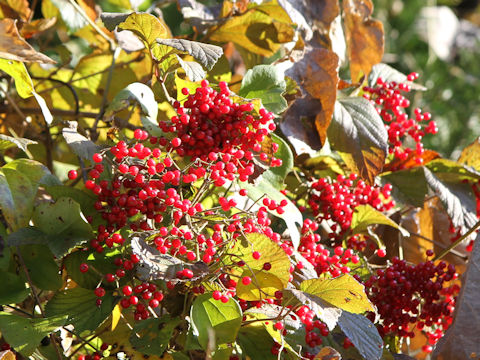
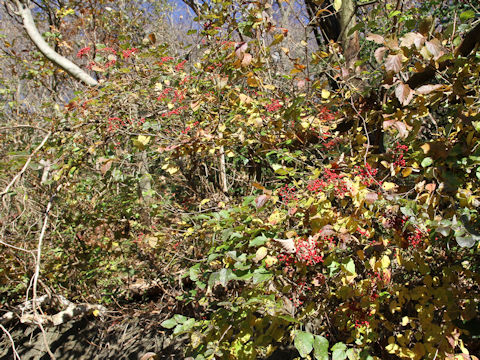
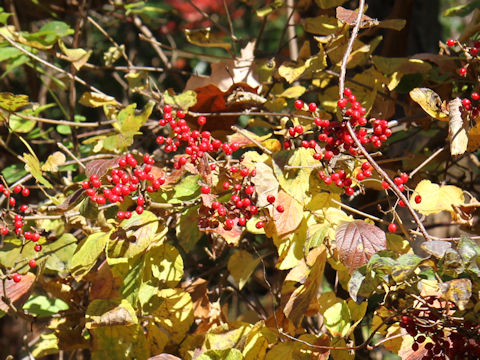
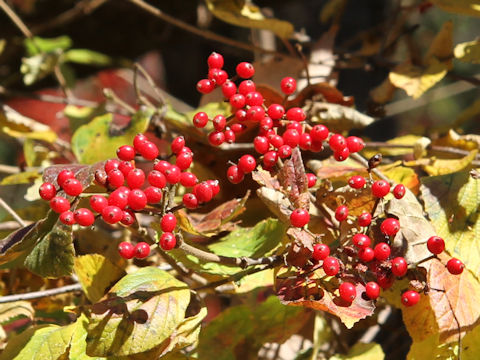
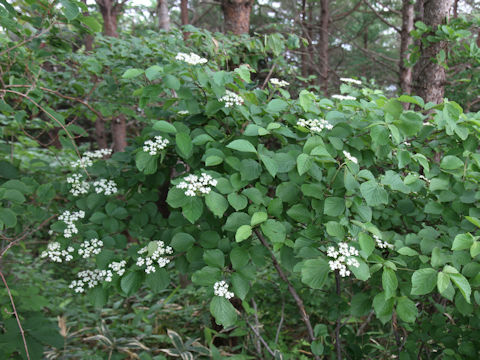
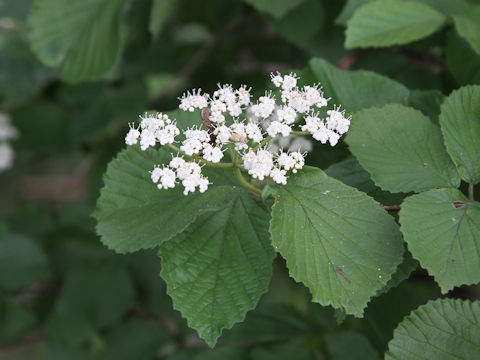
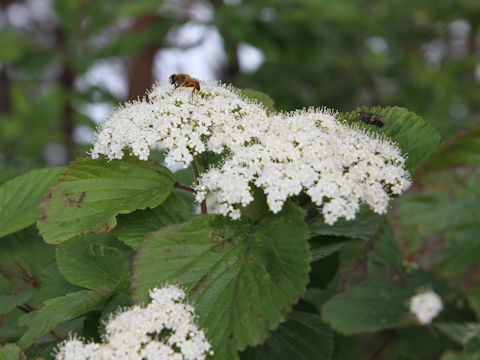
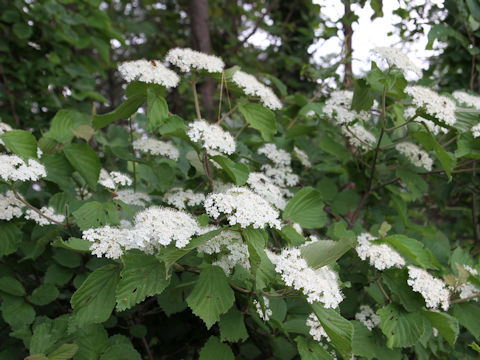
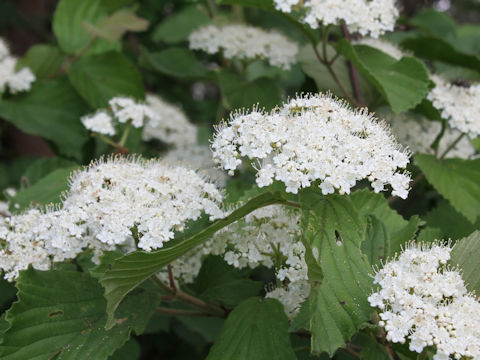
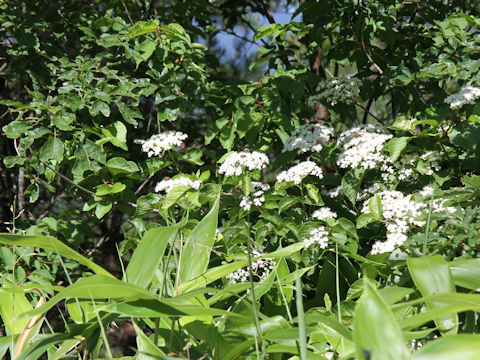
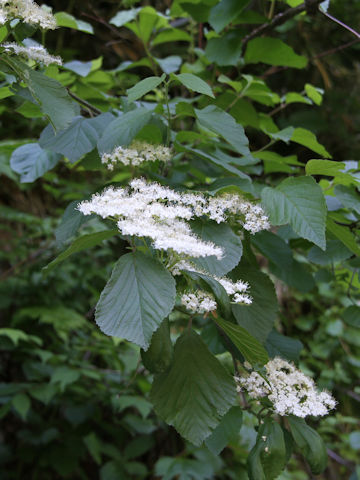
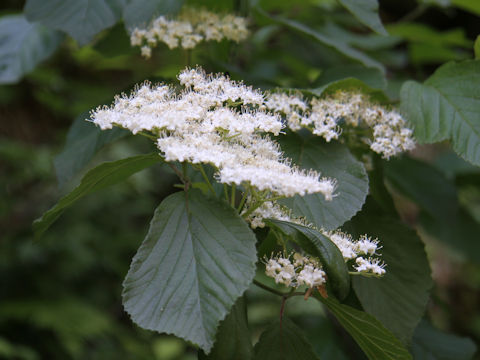
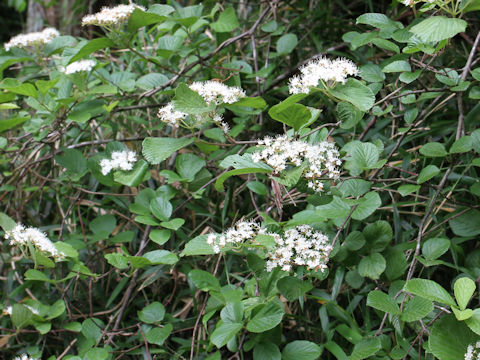
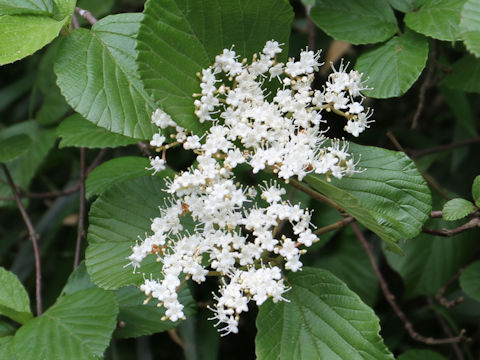
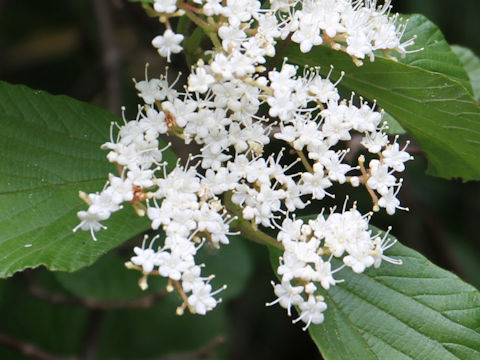
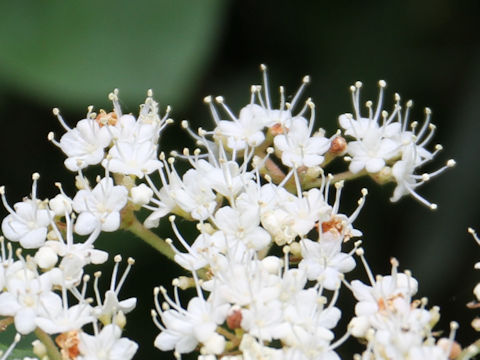
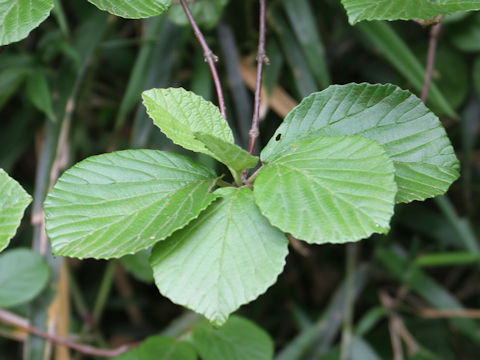
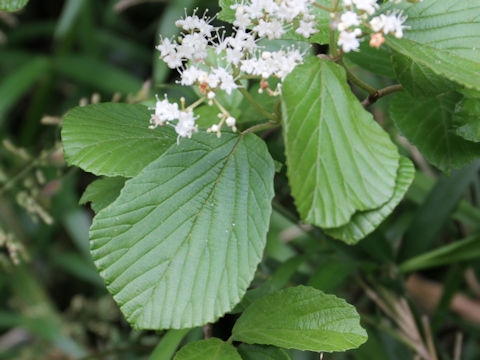
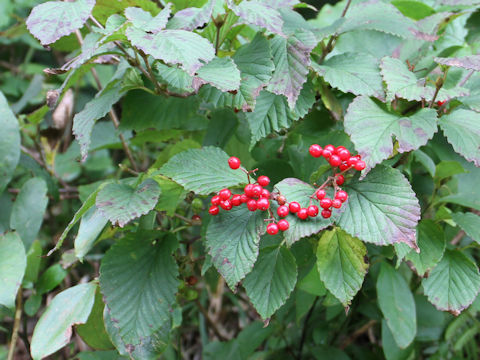
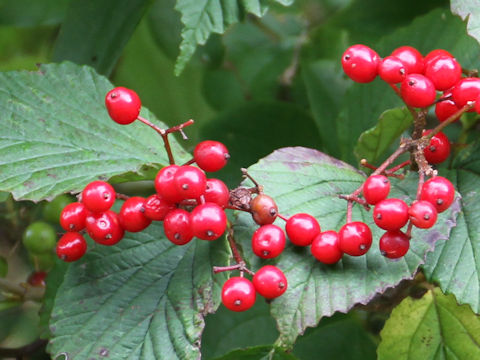
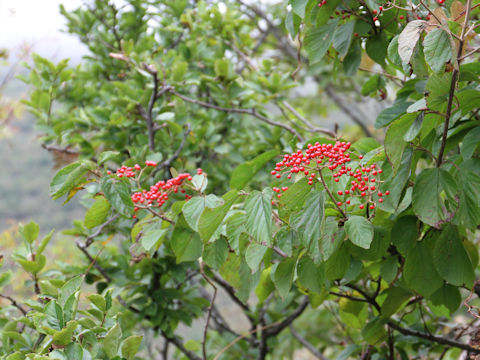
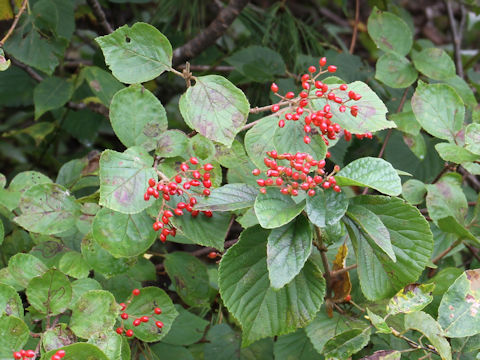
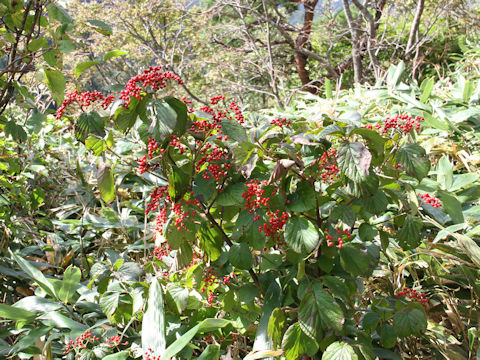
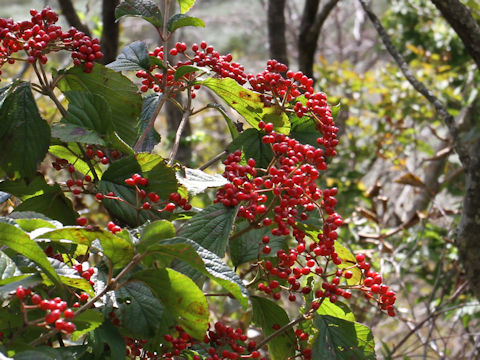
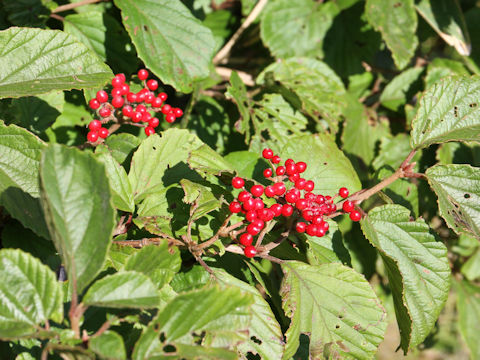
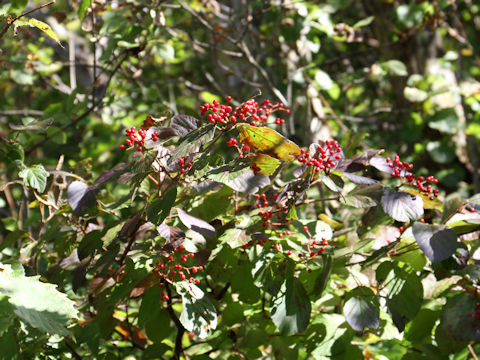
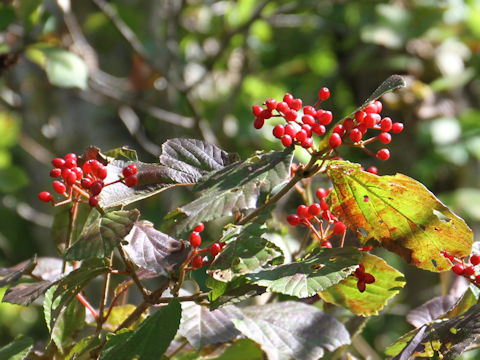
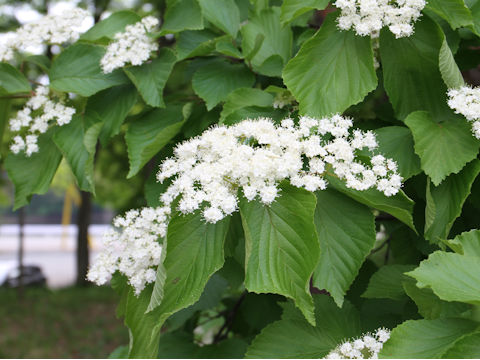
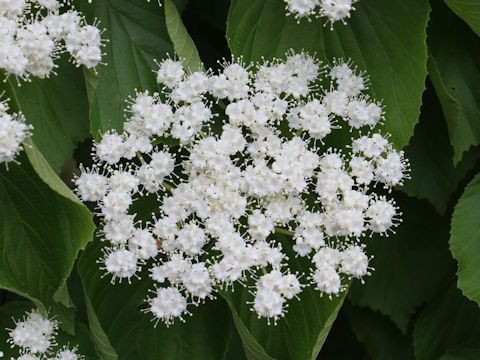
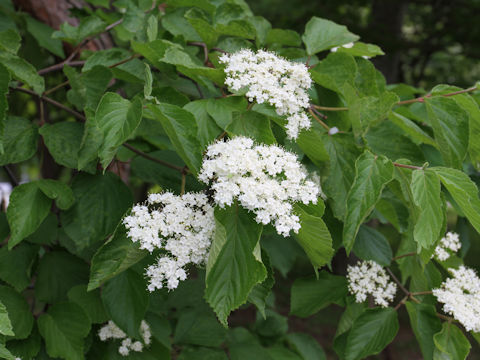
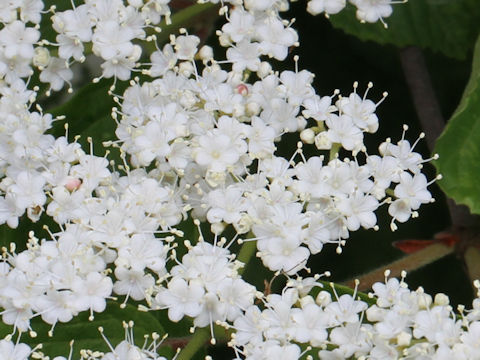
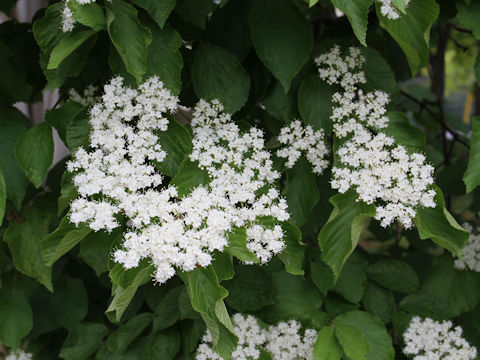
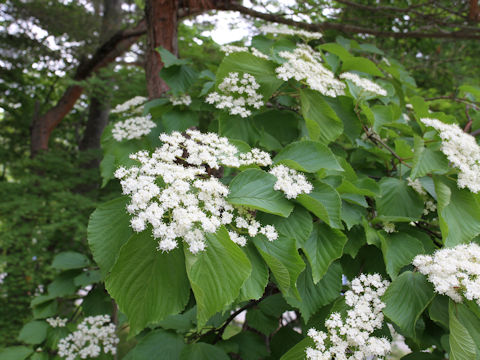
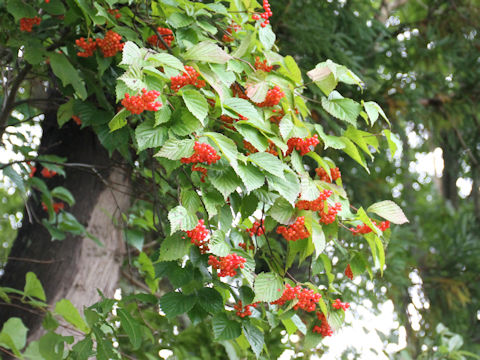
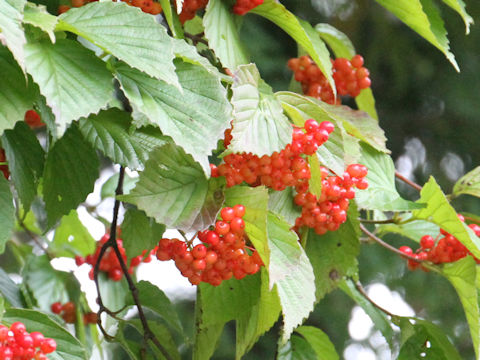
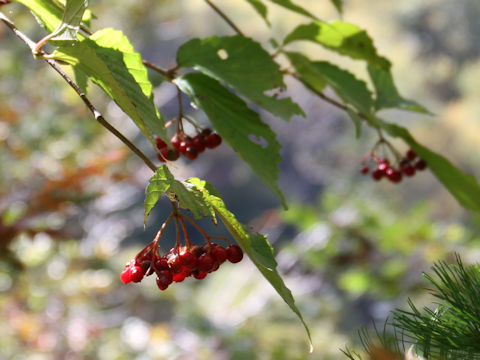
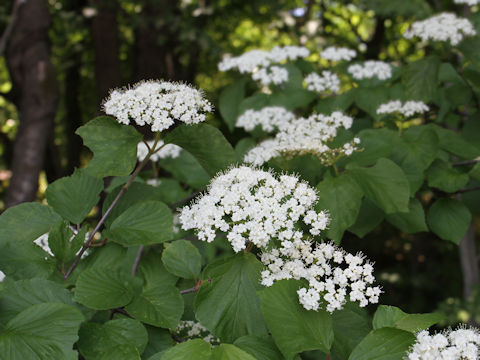
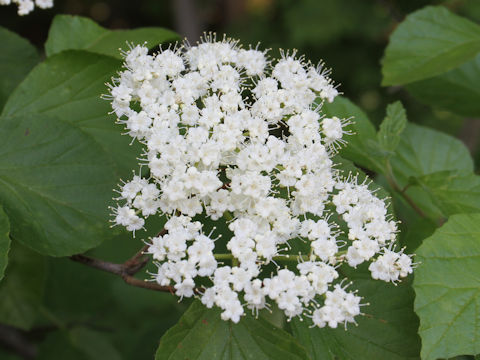
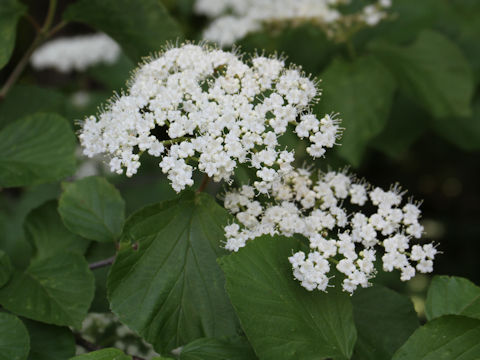
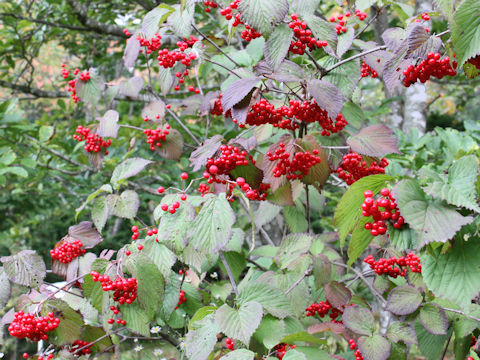
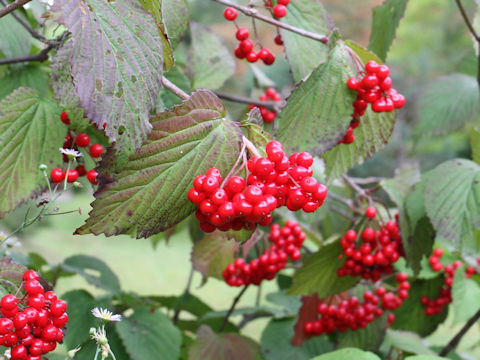
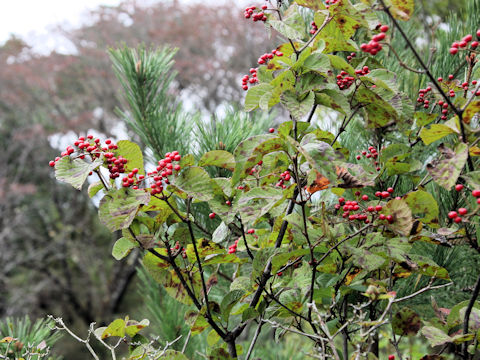
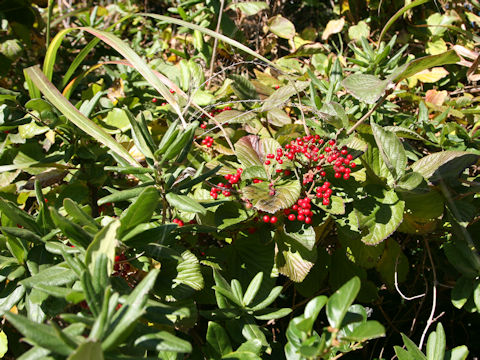
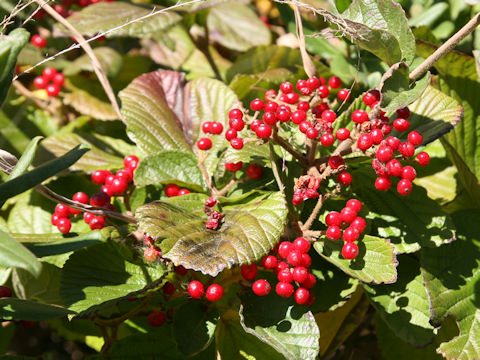
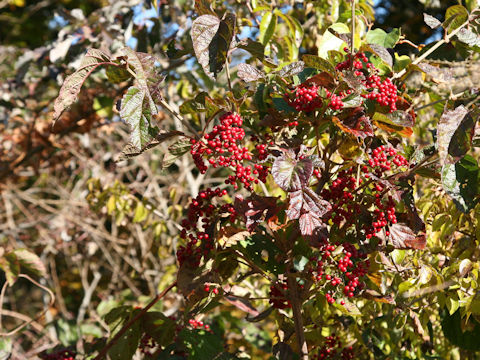
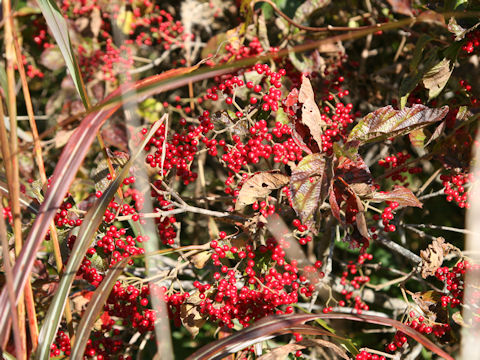
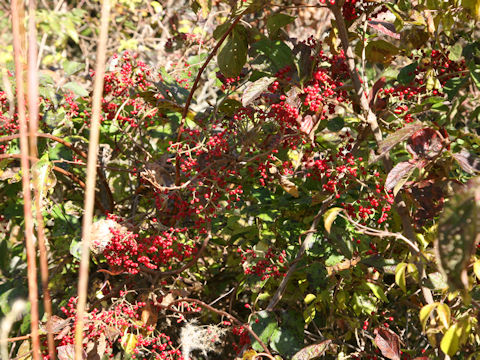
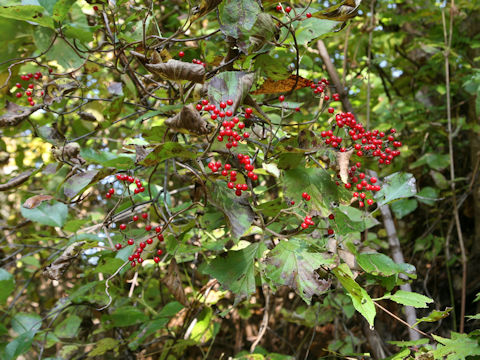
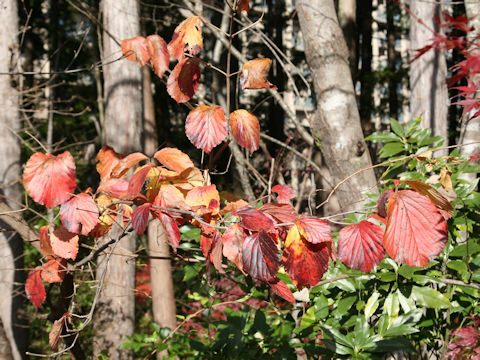
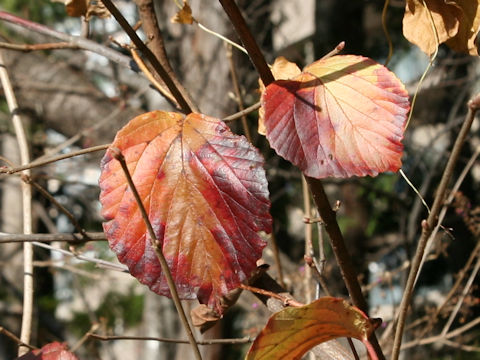
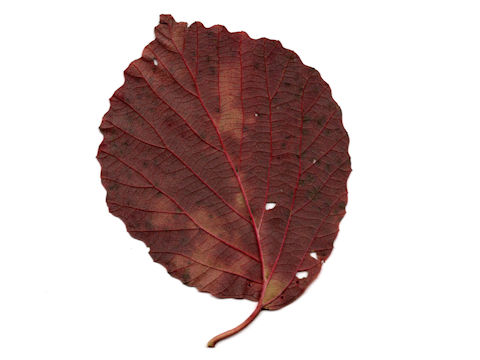
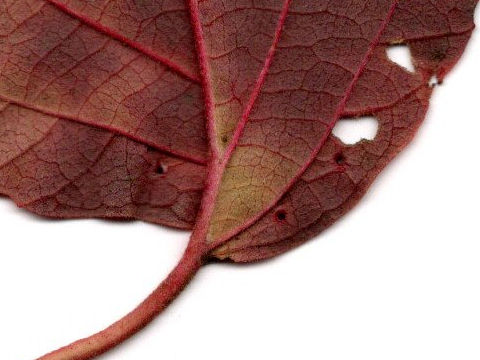
わが国の北海道西南部から本州、四国・九州それに朝鮮半島や中国に分布しています。丘陵から山地に生え、高さは5メートルほどになります。葉は倒卵形や卵形から円形で対生し、縁には浅い鋸歯があります。葉柄が10~25ミリと長いのが特徴です。裏面の基部付近には大きい腺点が2~3個あります。5月から6月ごろ、短い枝先の10センチほどの平らな散房花序に、小さな白色の花をいっぱい咲かせます。果実は9月から10月に赤く熟し、11月には白い粉がふいて甘くなり、食べることができます。別名で「あらげがまずみ(粗毛莢蒾)」。中国語では「莢蒾(jia mi)」と呼ばれます。 韓国語では「カマクサルナム(가막살나무)」です。これは「カマクサル(가막살)」+「木(ナム: 나무)」の合成語です。「カマクサル(가막살)」には、幹が黒ずんだ色をしていることから、「黒い身(茎)を持つ(가막 살 (줄기) 을 가진)」という意味に由来するという説と、赤く熟す果実を「カラスが食べるお米」と見なし、「カラス米(가마귀쌀)」と呼ばれていたものが変化したという説があります。 |
|
|
スイカズラ科ガマズミ属の落葉低木で、学名は Viburnum dilatatum。英名は Linden viburnum、Linden arrow-wood。 |
|
|
The Linden viburnum (Viburnum dilatatum) belongs to Caprifoliaceae (the Honeysuckle family). It is a small deciduous tree that is distributed from southwest Hokkaido to Honshu, Shikoku and Kyushu of Japan, as well as the Korean Peninsula and China. This tree grows in hills and mountains and can reach about 5 m in height. The leaves are obovate to ovate, round and opposite with slightly toothed edges. They are defined by the long leaf-stalks 10-25 mm long. There are two or three large glandular dots near the base of the reverse side. The many small white flowers come in the terminal flat corymbs from May to June. The fruits ripen red in September to October. They have a white bloom in November, and can be edible. In Chinese, it is called "莢蒾" (jia mi). In Korean, it is "ga-mak-sal-na-mu" (가막살나무). This is a compound word formed from "ga-mak-sal" (가막살) and "tree" (na-mu: 나무). "ga-mak-sal" (가막살) gets its name from the fact that its stem is dark in color, meaning "it has a black stem" (가막 살 (줄기) 을 가진), and another theory suggests that the name evolved from "crow rice" (가마귀쌀), a term used to describe the fruit's red, ripe form, which was likened to "rice eaten by crows". |
|
|
[上・中1] 岐阜県恵那市大井町にて、2007年06月07日撮影。 [中2・中3] 茨城県つくば市「つくば実験植物園」にて、2009年05月23日撮影。 [中14] 同上にて、2009年09月19日撮影。 [中4・中5] 静岡県浜松市引佐町川名にて、2005年11月19日撮影。 [中6] 大阪府東大阪市上石切町「くさか園地」にて、2005年10月03日撮影。 [中7・中8] 長野県塩尻市片丘にて、2006年10月19日撮影。 [中9・中12] 岐阜県恵那市長島町にて、2005年12月26日撮影。 [中10・中11] 長野県軽井沢町「軽井沢町植物園」にて、2008年10月18日撮影。 [中13] 群馬県高崎市「高崎市染料植物園」にて、2008年12月07日撮影。 [中15] 大阪府交野市「大阪市大付属植物園」にて、2007年03月10日撮影。 [中16] 群馬県片品村東小川にて、2010年06月27日撮影。 [中17・中18] 千葉県香取市大角にて、2011年06月05日撮影。 [中19] 同上にて、2011年10月17日撮影。 [中48~中53] 同上にて、2016年05月25日撮影。 [中20・中21] 福島県磐梯町更科にて、2011年11月05日撮影。 [中22・中23] 福島県磐梯町更科にて、2012年06月22日。 [中24・中25] 茨城県北茨城市関本町にて、2012年09月22日撮影。 [中33・中34] 同上にて、2013年11月17日撮影。 [中26・中27] 茨城県高萩市「土岳」にて、2012年11月10日撮影。 [中28] 山梨県上野原町「扇山」にて、2013年09月22日撮影。 [中29] 福島県矢祭町茗荷「八溝山」にて、2013年10月12日撮影。 [中30~中32] 茨城県高萩市下君田にて、2013年10月19日撮影。 [中35・中36] 同上にて、2013年11月17日撮影。 [中37~中39] 茨城県日立市「神峰山」にて、2013年11月30日撮影。 [中40~中44] 福島県二本松市「日山」にて、2014年06月21日撮影。 [中45] 宮城県大崎市「胡桃ヶ岳」にて、2015年06月07日撮影。 [中46・中47] 宮城県大崎市「地獄谷遊歩道」にて、2015年06月07日撮影。 [中54・中55] 宮城県川崎町「笹谷峠」にて、2016年09月24日撮影。 [中56・中57] 山形市関沢「笹谷峠」にて、2016年09月24日撮影。 [中61・中62] 同上にて、2017年09月25日撮影。 [中58~中60] 宮城県川崎町「ハマグリ山」にて、2016年10月01日撮影。 [中63~中68] 山形県山辺町「山形県県民の森」にて、2018年06月08日撮影。 [中69・中70] 山形県小国町小玉川にて、2018年09月09日撮影。 [中71] 宮城県気仙沼市「唐桑半島」にて、2018年10月13日撮影。 [中72~中74] 宮城県川崎町青根温泉にて、2020年06月10日撮影。 [中75・中76] 北海道旭川市「旭山三浦庭園」にて、2020年09月20日撮影。 [中77] 岩手県平泉町「経塚山」にて、2021年10月17日撮影。 [中78・中79] 宮城県南三陸町「泊崎半島」にて、2022年10月30日撮影。 [中80~中82] 宮城県南三陸町「満海山」にて、2022年10月31日撮影。 [中83] 宮城県七ヶ宿町「七ヶ宿ダム」にて、2023年10月28日撮影。 [中84~86・下] 宮城県仙台市青葉区「台原森林公園」にて、2023年12月05日撮影。 |
|
|

|
Shu Suehiro shu@botanic.jp
|