
|

|
 ごよういちご (五葉苺)
|
[Index]
[Back]
|
|
|
                |
|

|
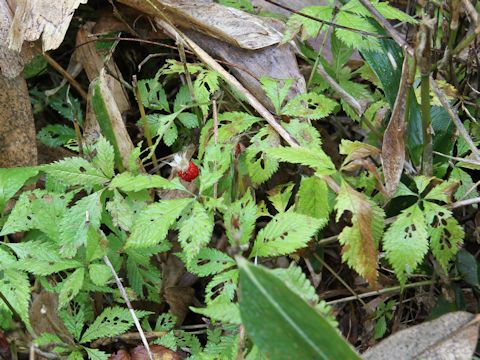
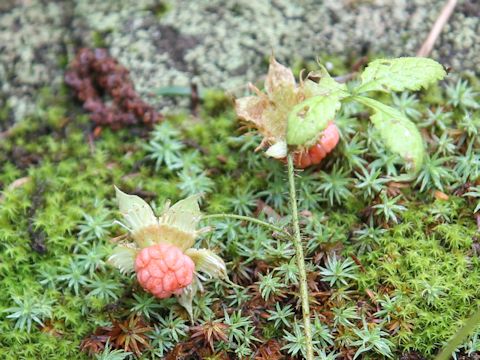
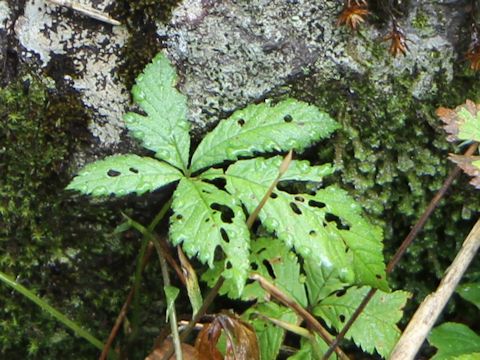
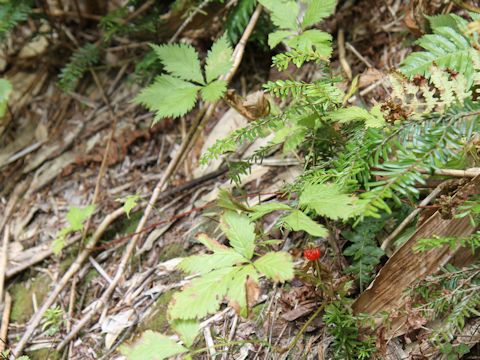
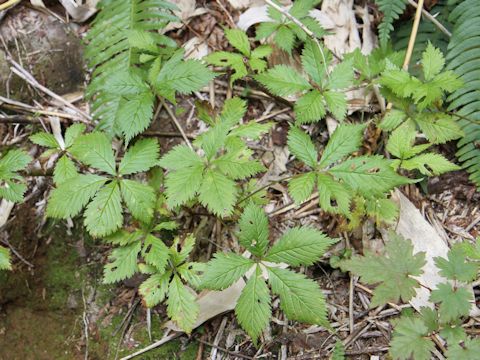
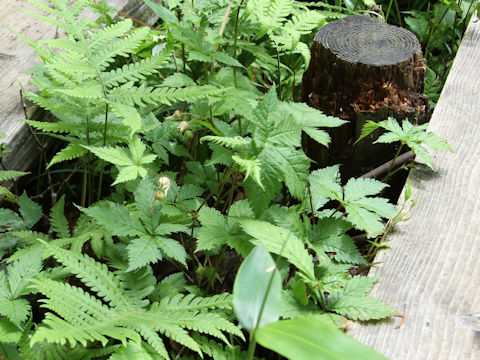
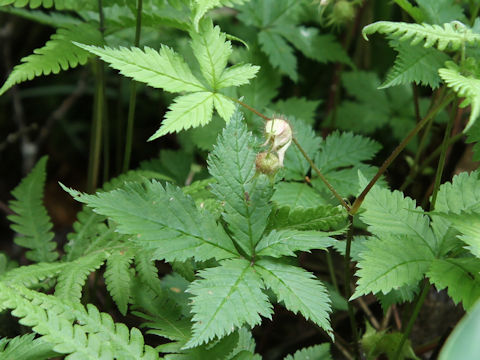
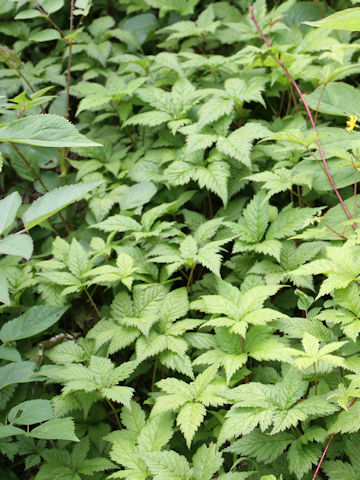
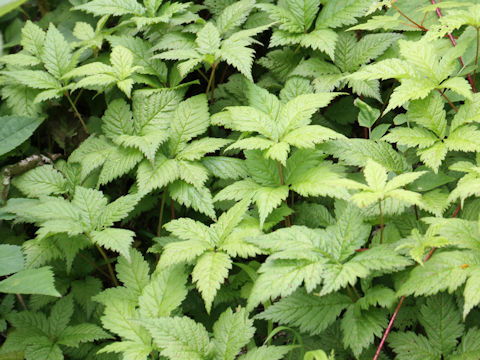
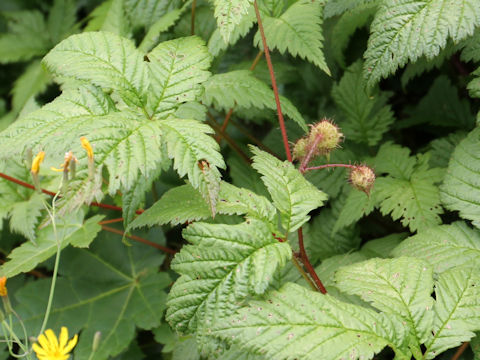
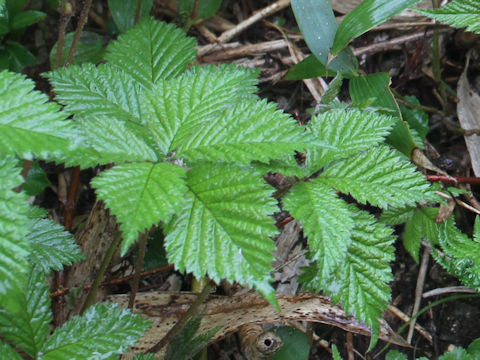
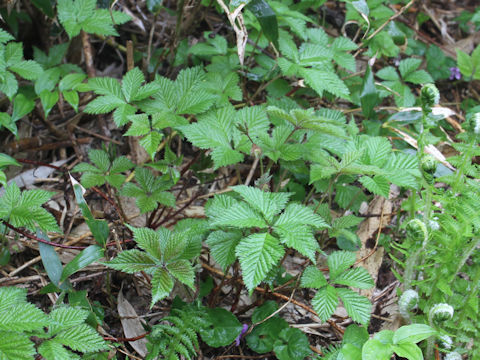
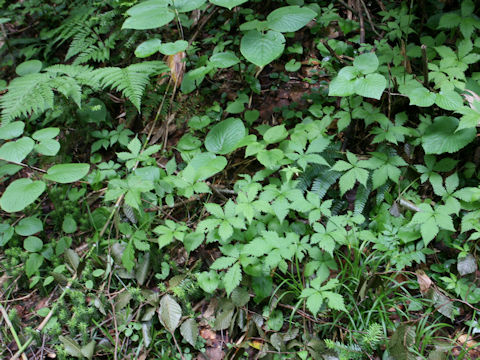
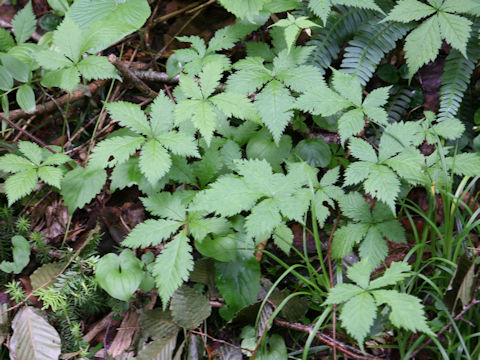
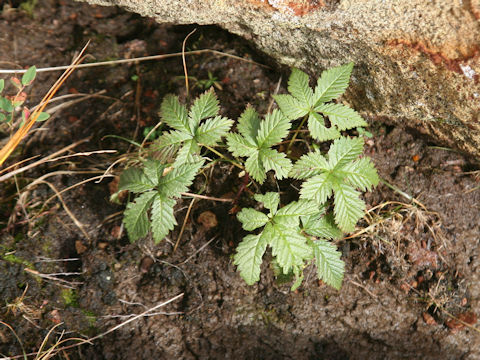
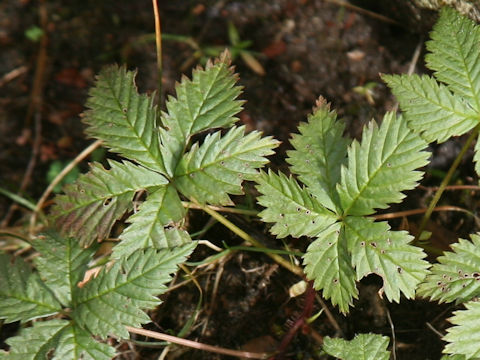
わが国の本州、中部地方以北から東北地方に分布しています。亜高山帯の林縁などに生え、高さは10~20センチになります。ややつる状に地面を這い、全体に針状の細い棘があります。葉は5出複葉で、小葉の縁は重鋸歯になっています。5月から7月ごろ、花柄の先に白色の花を咲かせます。花弁はまったくないか、ごく小さいものです。果実は赤い集合果です。 |
|
|
バラ科キイチゴ属落葉小低木で、学名は Rubus ikenoensis。英名はありません。 |
|
|
The "Goyo-ichigo" (Rubus ikenoensis) belongs to Rosaceae (the Rose family). It is a deciduous shrub that is native northward from Chubu district to Tohoku district of Honshu in Japan. This shrub grows in sub-alpine forest edges and it can reach 10-20 cm in height. The viny stems are creeping on the ground and the plant is covered with needle-like fine spines. The leaves are pentafoliolate with doubly serrate margins. The white flowers bloom on peduncles from May to July. The petals are very little or tiny. The fruits are red aggregates. |
|
|
[上・中1~2] 福島県檜枝岐村「尾瀬沼」にて、2013年08月25日撮影。 [中3・中4] 福島県檜枝岐村「燧ヶ岳」にて、2014年09月20日撮影。 [中5・中6] 群馬県片品村戸倉「川上川」にて、2015年07月05日撮影。 [中7~中9] 岩手県雫石町「犬倉山」にて、2019年07月11日撮影。 [中10・中11] 宮城県蔵王町「南蔵王」にて、2020年06月20日撮影。 [中12・中13] 岩手県八幡平市「源太ヶ岳」にて、2021年07月24日撮影。 [中14・下] 山形県米沢市「西吾妻山」にて、2025年10月02日撮影。 |
|
|

|
Shu Suehiro shu@botanic.jp
|
|