 |
|

|
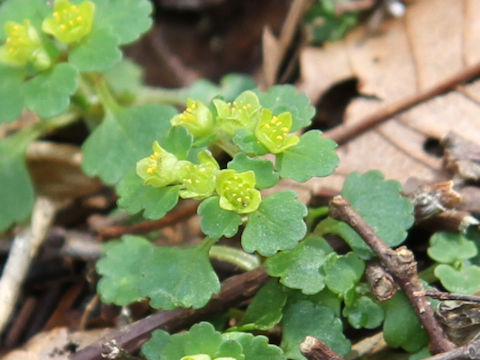
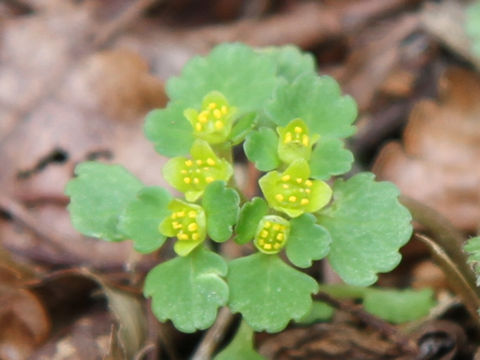
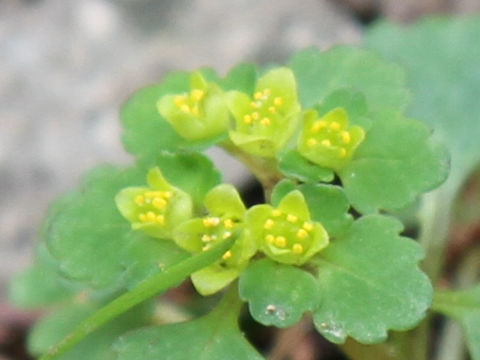
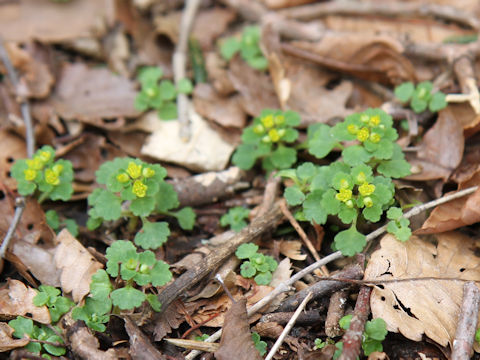
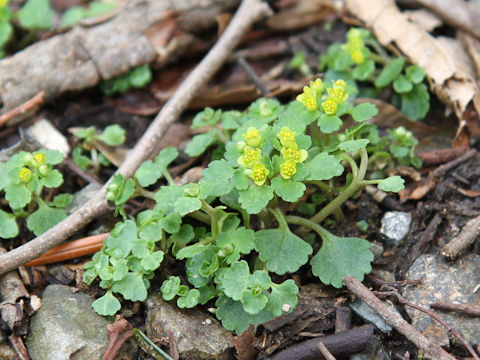
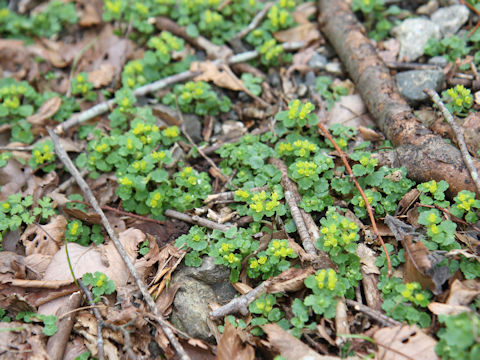
わが国の本州、東北地方南部から東海地方に分布しています。沢沿いの林内に生え、高さは3~15センチになります。地面の中に走出枝をだし、先端に珠芽をつけて広がります。茎葉は2~3対あり、卵円形で丸い鋸歯があります。3月から4月ごろ、茎頂に淡黄緑色の花を数個咲かせます。花には花弁がなく、4個の直立した萼片があります。雄しべは8個、葯は緑白色または黄白色です。果実は蒴果で、緑白色または黄白色、2裂します。
|
|
|
ユキノシタ科ネコノメソウ属の多年草で、学名は Chrysosplenium maximowiczii。英名はありません。
|
|
|
The "Mukago-nekonome-so" (Chrysosplenium maximowiczii) belongs to Saxifragaceae (the Saxifrage family). It is a perennial herb that is native form southern Tohoku district to Tokai district of Honshu in Japan. This herb grows in forests along mountain streams, and it can reach 3-15 cm in height. It bears basal stolons under grounds and spreads by terminal propagules. The cauline leaves are 2-3 pairs and ovate-round with round toothed edges. The several, pale yellowish-green flowers bloom atop of stems from March to April. The corolla is non-petaled and has erect four-lobate sepal. It has eight stamens with greenish-white or yellow-white anthers. The capsules are greenish-white or yellow-white, and bilobate.
|
|
|
福島県いわき市「湯ノ岳」にて、2014年03月29日撮影。
|

 むかごねこのめそう (珠芽猫の目草)

 shu@botanic.jp