

|
 じしばり (地縛り) |
|
|
                  |
|

|
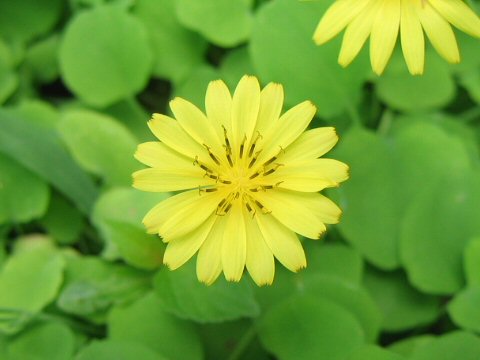
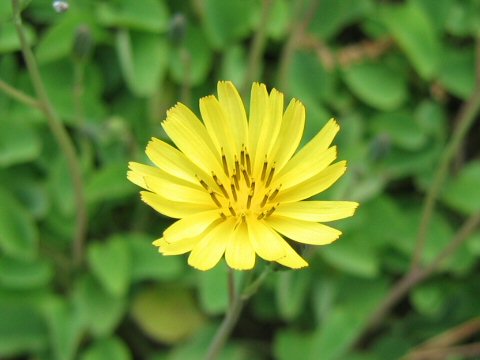
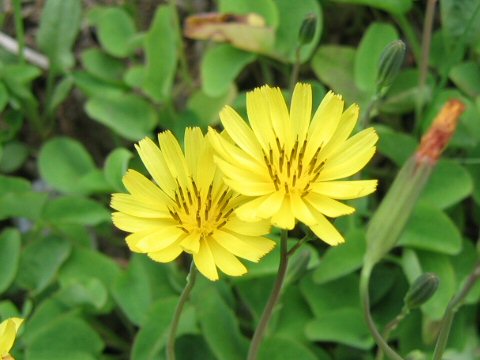
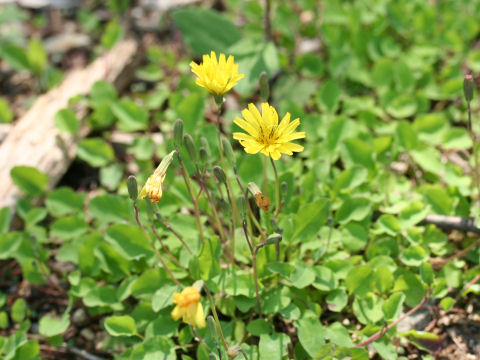
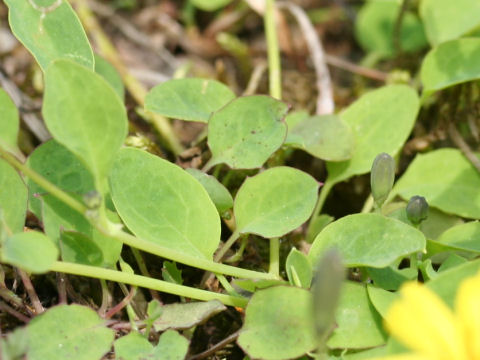
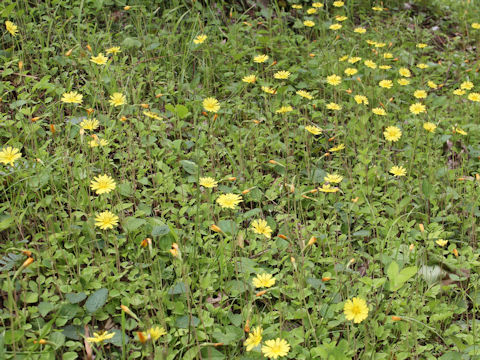
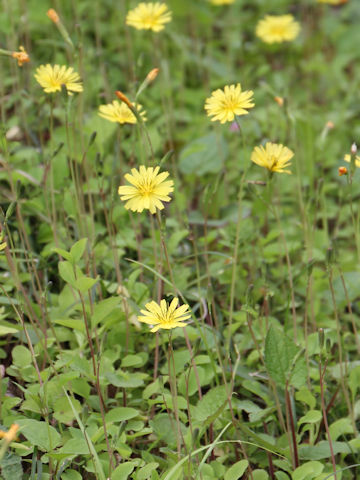
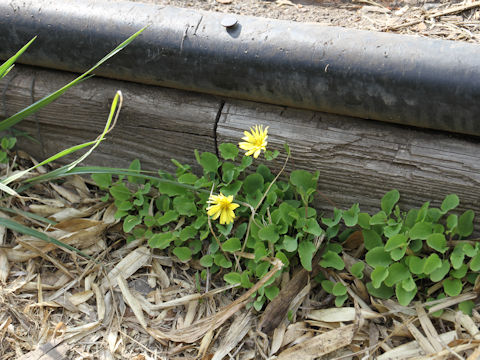
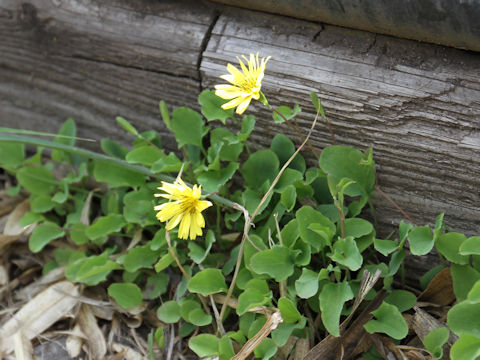
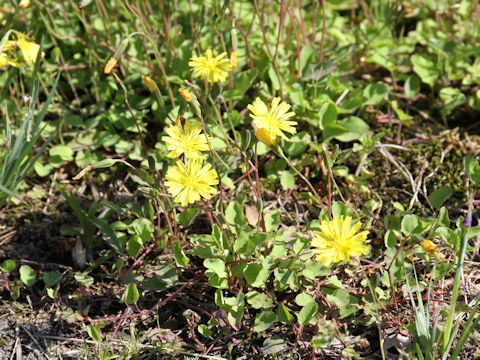
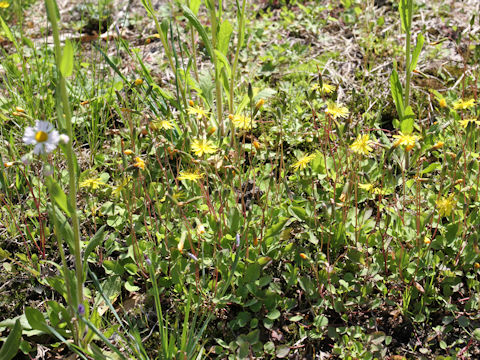
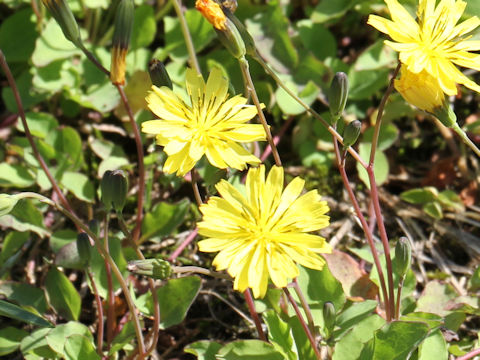
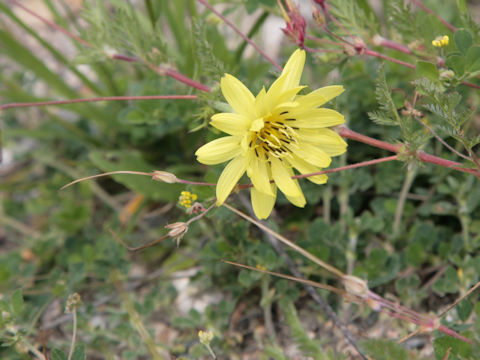
わが国の各地をはじめ、台湾や朝鮮半島、中国の東部に分布しています。別名で「いわにがな(岩苦菜)」とも呼ばれ、畑や道端にふつうに生えています。長い匍匐枝を伸ばし、節から根を出して広がります。葉は卵形で柔らかく、長い葉柄があります。4月から6月ごろ、葉のあいだから花茎を伸ばし、黄色い頭花を咲かせます。台湾華語では「蔓苦蕒(man ku mai)」、中国語では「圓葉苦蕒菜(yuan ye ku mai cai)」と呼ばれます。 韓国語では「チョムッスムバグィ(좀씀바귀)」です。これは「小さい(チョム: 좀)」+「ニガナ(ッスムバグィ: 씀바귀)」の合成語です。春先の若芽はナムルとして食べられ、全草は解熱や解毒などの薬草としても利用されます。 |
|
|
キク科ニガナ属の多年草で、学名は Ixeris stolonifera。英名は Creeping lettuce。 |
|
|
The Creeping lettuce (Ixeris stolonifera) belongs to Asteraceae (the Aster family). It is a perennial herb that is native throughout Japan, as well as Taiwan, the Korean Peninsula and eastern China. This herb grows commonly in fields and roadsides. It spreads long stolons and takes roots at the nodes. The leaves are ovate and soft with long petioles. The flowering stalk bears along the leaves and the yellow flower-heads bloom from April to June. In Taiwanese Chinese, it is called "蔓苦蕒" (man ku mai), and "圓葉苦蕒菜" (yuan ye ku mai cai) in Chinese. In Korean, it's called "chom-sseum-ba-gwi" (좀씀바귀). This is a compound word consisting of "little" (chom: 좀) + "Korean lettuce" (sseum-ba-gwi: 씀바귀). The young shoots in early spring are eaten as namul, and the entire plant is used as a medicinal herb for reducing fever and detoxifying the body. |
|
|
[上] 京都府宇治市「宇治市植物公園」にて、2004年05月29日撮影。 [中1・中2] 長野県松本市内田「県林業総合センター」にて、2005年05月22日撮影。 [中3] 長野県安曇野市穂高牧「烏川渓谷緑地」にて、2006年06月01日撮影。 [中4] 長野県安曇野市穂高有明「中房渓谷」にて、2006年06月02日撮影。 [中5・中6] 宮城県仙台市「東北大学植物園」にて、2016年05月14日撮影。 [中7・中8] 大分県別府市東山にて、2018年04月27日撮影。 [中9~中11] 山形県小国町玉川にて、2018年05月22日撮影。 [中12] アメリカ・テキサス州マッキニー市「ハードミュージアム」にて、2007年04月06日撮影。(photo by Jon Suehiro) [中13~16・下] 長崎県雲仙市小浜町「仁田峠園地」にて、2026年05月12日撮影。 |
|
|

|
Shu Suehiro shu@botanic.jp |