 |
|

|
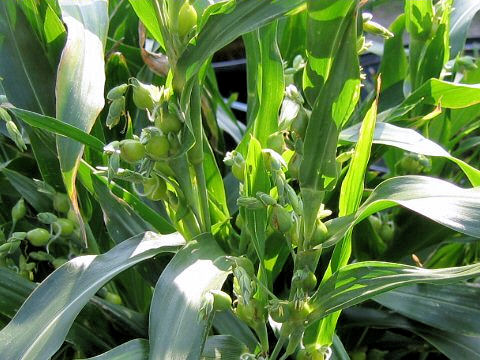
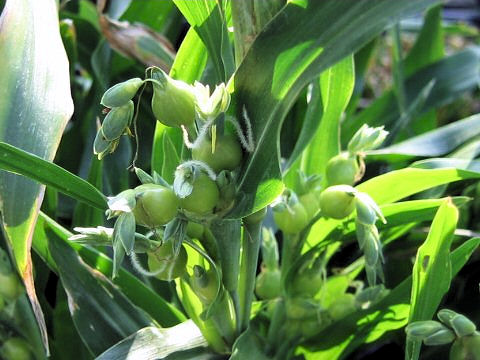
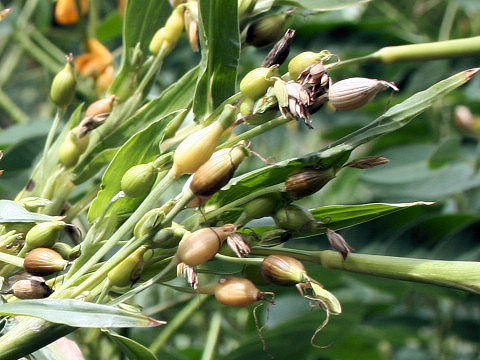
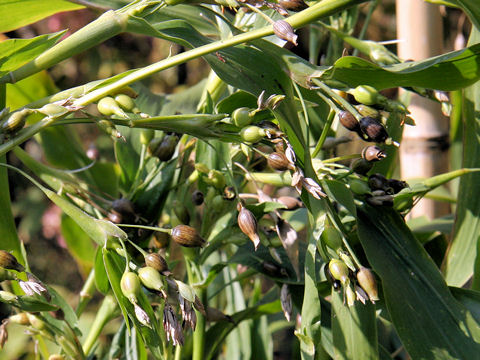
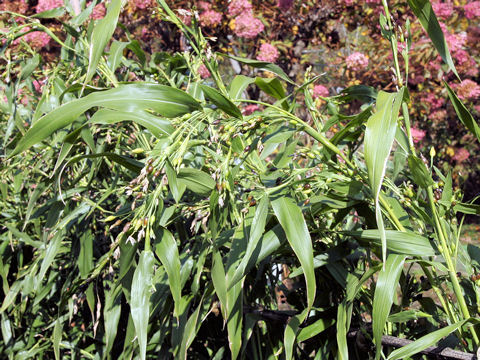
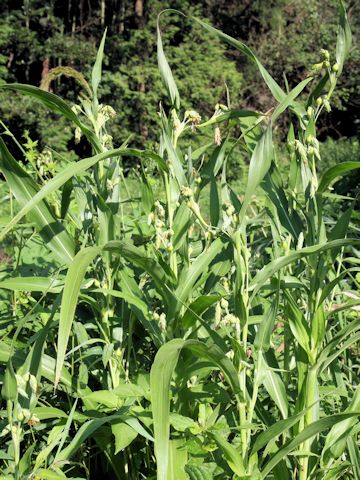
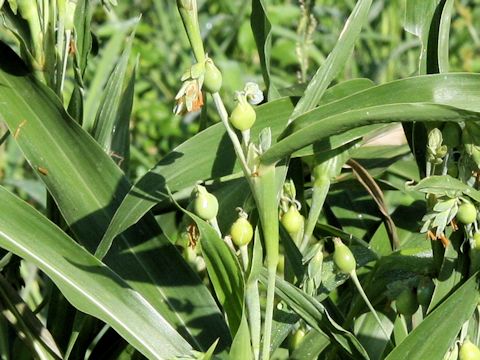
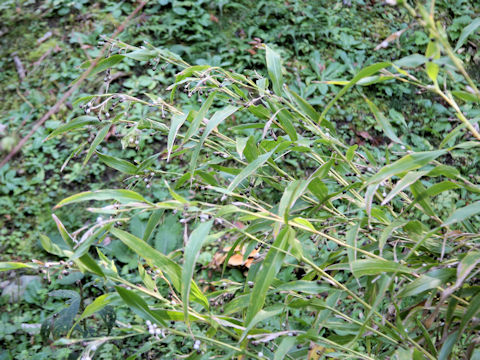
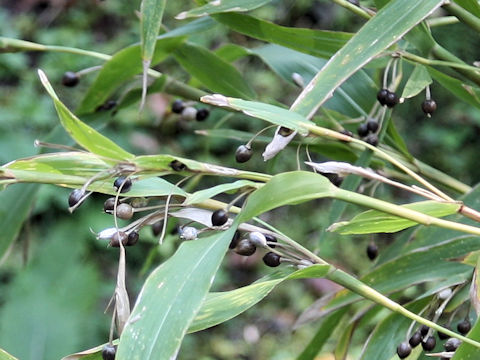
インドの東部からインドシナ半島、インドネシアの熱帯地域が原産です。わが国へは古い時代に渡来し、本州以南の川沿いなどに帰化しています。高さは1~2メートルほどになります。花期は7月から9月ごろで、その後にさまざまな色の苞鞘に包まれた種子をつけます。これに糸を通すと数珠になります。「はとむぎ」茶の代用にもされます。C4植物(C4型光合成を行う植物)です。
|
|
|
イネ科ジュズダマ属の多年草で、学名は Coix lacryma-jobi。英名は Job's tears。
|
|
|
The Job's tears (Coix lacryma-jobi) belongs to Poaceae (the Grass family). It is a perennial herb that is native to the tropical areas of eastern India to the Indo-China Peninsula and Indonesia. It was introduced into Japan in ancient days and now naturalized along riversides on Honshu to southward. This herb can reach 1-2 m in height. The flowers come in June to September and produce seeds covered with various colored bract sheaths after flowering. The beads are made of these seeds. The seeds are used as a substitute for Job's tears (Coix lacryma-jobi var. ma-yuen) tea. It is a C4 plant (Plants with C4-type photosynthesis).
|
|
|
[上・中1] 京都府宇治市「宇治市植物公園」にて、2004年11月05日撮影。
[中2] 京都市左京区「京都府立植物園」にて、2005年08月16日撮影。
[中3・中4] 長野県軽井沢町「軽井沢町植物園」にて、2008年10月18日撮影。
[中5・中6] 千葉県香取市大角にて、2011年09月08日撮影。
[中7・下] 宮城県仙台市太白区「仙台市野草園」にて、2024年11月10日撮影。
|

 じゅずだま (数珠玉)

 shu@botanic.jp