 |
|

|
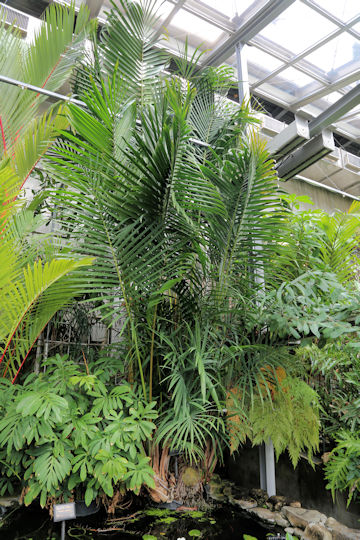
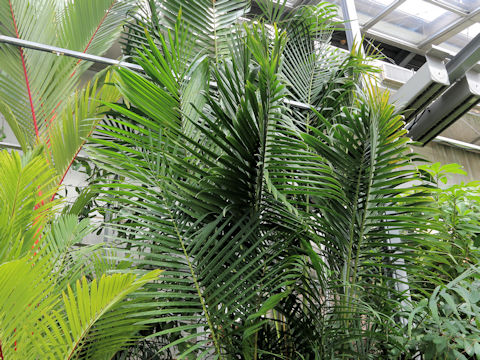
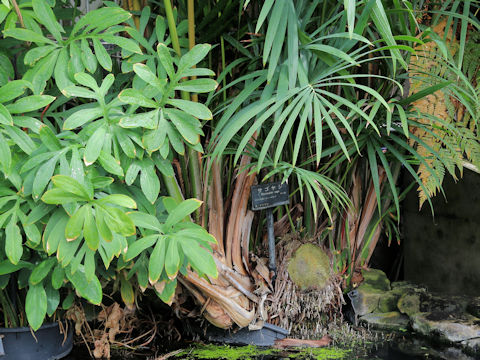
インドネシアのマルク諸島からニューギニア島が原産だと考えられています。熱帯雨林の湿地に生え、高さは7~15メートルになります。生育はきわめて速く、1年間に幹が1.5メートルも伸長すると言われます。葉は大きな羽状複葉で、多数の小葉が葉軸につきます。その最大の特徴は、幹にでん粉を大量に蓄積することで、古くから地域住民の重要な食料となっています。抽出されたデンプン(サゴ)はタピオカのような粒状に加工されてデザートやお菓子に使われます。
|
|
|
ヤシ科サゴヤシ属の常緑小高木で、学名は Metroxylon sagu (syn. Metroxylon rumpfii)。英名は Sago palm、Pearl sago。
|
|
|
The Sago palm (Metroxylon sagu) belongs to Arecaceae (the Palm family). It is a semi-tall evergreen tree that is believed to be native to the Maluku Islands in Indonesia and the island of New Guinea. It grows in the wetlands of tropical rainforests and reaches a height of 7 to 15 m. It grows extremely quickly; it is said that the trunk can grow as much as 1.5 m in a single year. The leaves are large, pinnate compound leaves, with numerous leaflets attached to the leaf stalk. Its most distinctive feature is the large amount of starch it accumulates in its trunk, and it has long been an important food source for local residents. The extracted starch (sago) is processed into tapioca-like granules and used in desserts and sweets.
|
|
|
茨城県つくば市「つくば実験植物園」にて、2026年03月28日撮影。
|

 サゴやし (サゴ椰子)

 shu@botanic.jp