

|
 せんじゅらん (千寿蘭)
|
|
|
             |
|

|
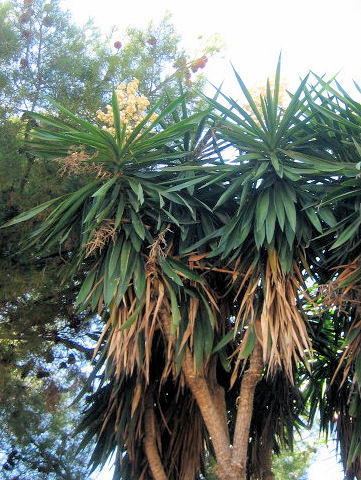
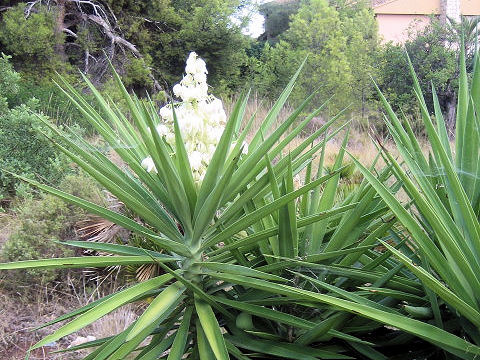
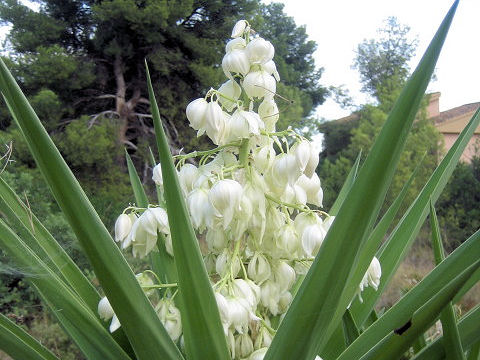
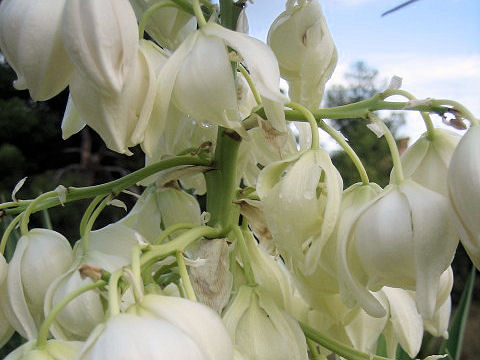
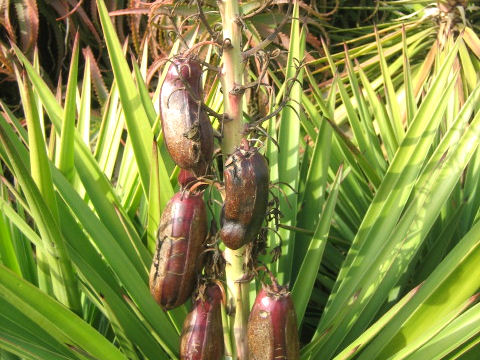
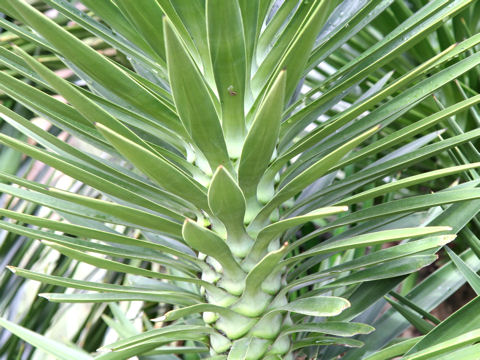
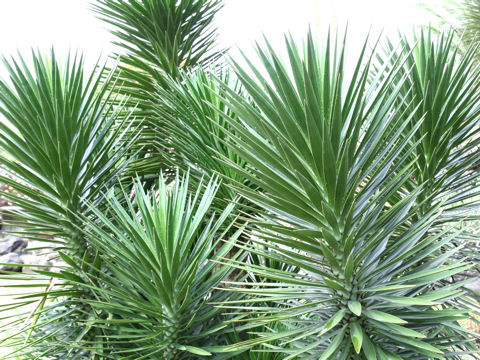
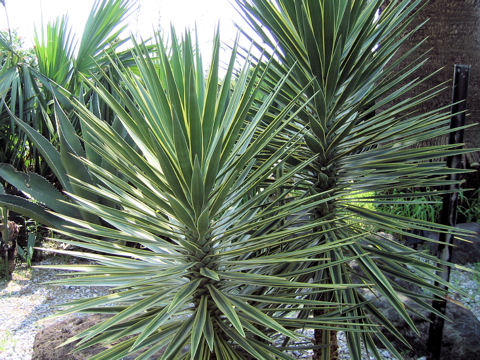
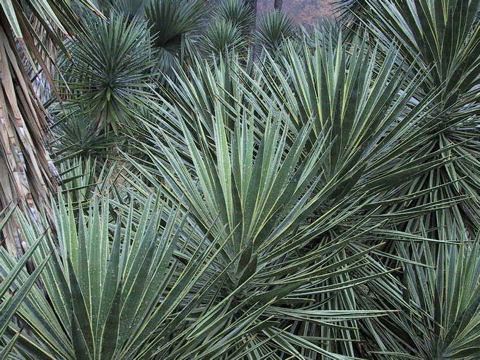
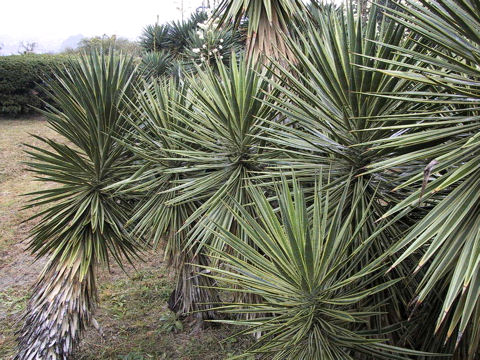
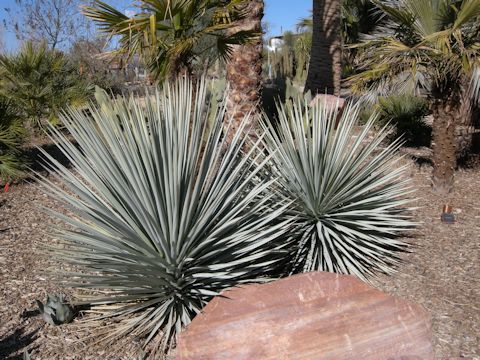
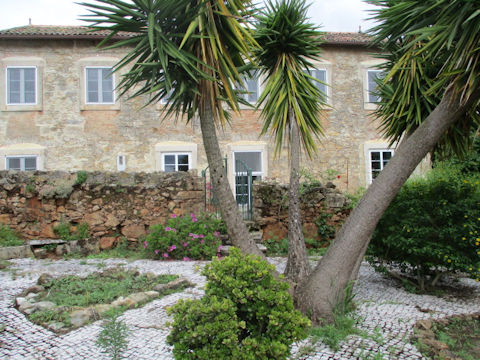
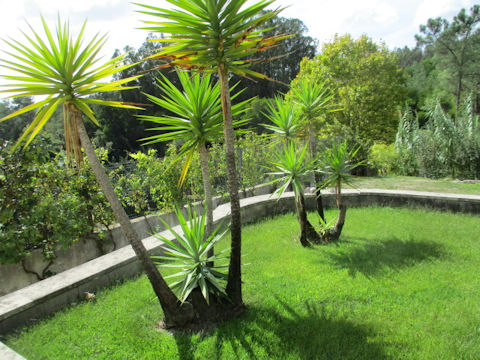
北アメリカが原産です。わが国へは明治時代の中頃に渡来しました。暖地では庭木として植えられています。高さは4~6メートルになり、葉は先端が針のように尖って、縁に細かい鋸歯があります。茎頂から花茎をのばし、円錐花序に白い花をいっぱい咲かせます。 写真中7~中9は、葉に黄色い斑が入る「ふいりせんじゅらん(Yucca aloifolia f. marginata)」。 |
|
|
リュウゼツラン科イトラン属の常緑低木で、学名は Yucca aloifolia。英名は Spanish bayonet。 |
|
|
The Spanish bayonet (Yucca aloifolia) belongs to Agavaceae (the Agave family). It is a small evergreen tree that is native to North America. It was introduced into Japan in the middle of Meiji Era (1868-1912). It is cultivated as a garden tree in the warm places. This tree can reach 4-6 m in height, and the leaves have needle-like tips and fine toothed edges. The flowering stalks are borne on the stem apices, and the many white flowers bloom in the panicles. The 8th to 10th photos are a yellow-variegated form (Yucca aloifolia f. marginata). |
|
|
[上] スペイン・バレンシア県プソルにて、2011年09月19日撮影。(photo by Yumi Gunji) [中1~中3] 同上にて、2011年09月24日撮影。(photo by Yumi Gunji) [中4] 同上にて、2011年01月15日撮影。(photo by Yumi Gunji) [中5・中6] 大阪市鶴見区「咲くやこの花館」にて、2006年10月06日撮影。 [中7] 同上にて、2005年08月03日撮影。 [中8・中9] 大阪府交野市「大阪市大付属植物園」にて、2001年11月03日撮影。 [中10] アメリカ・ネバダ州ラスベガス市にて、2009年01月10日撮影。(photo by Jon Suehiro) [中11] ポルトガル・レイリア県アウヴェヤズルにて、2018年07月02日撮影。(photo by Yumi Gunji) [下] ポルトガル・セントロ地方・レイリア市にて、2023年09月22日撮影。(photo by Yumi Gunji) |
|
|

|
Shu Suehiro shu@botanic.jp
|