 |

|

|
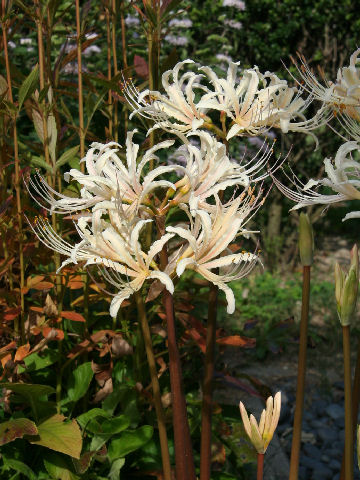
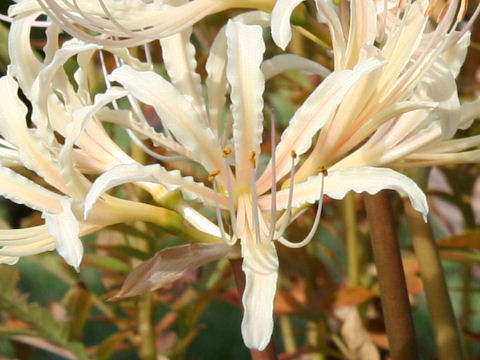
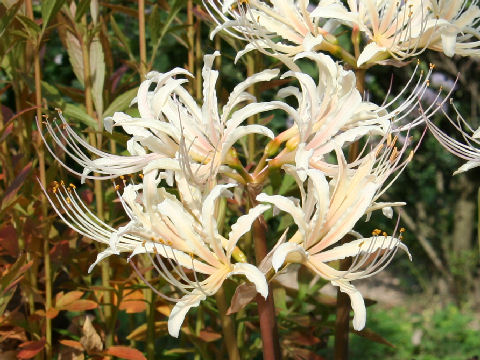
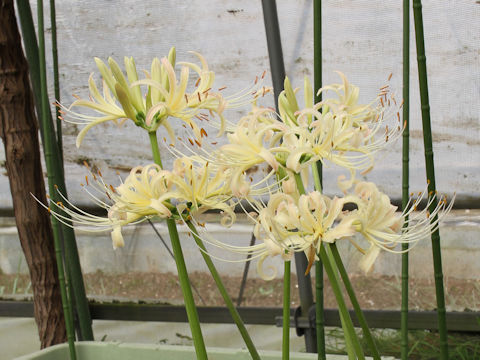
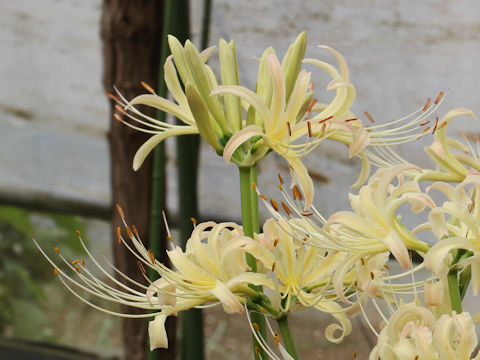
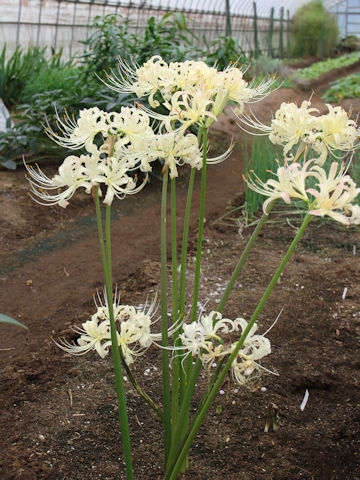
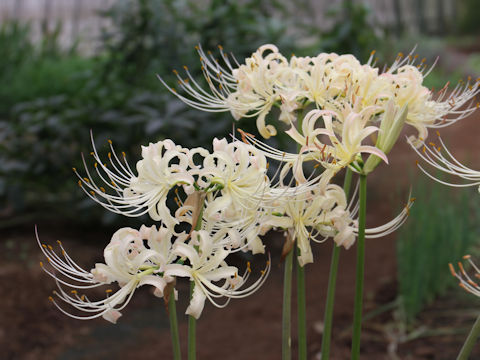
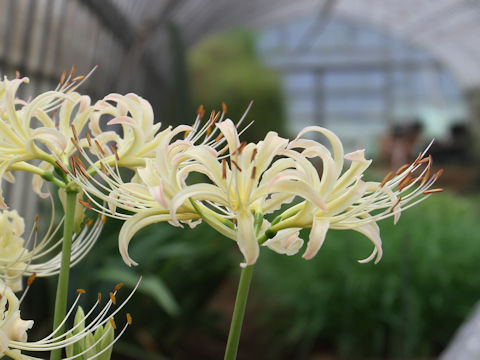
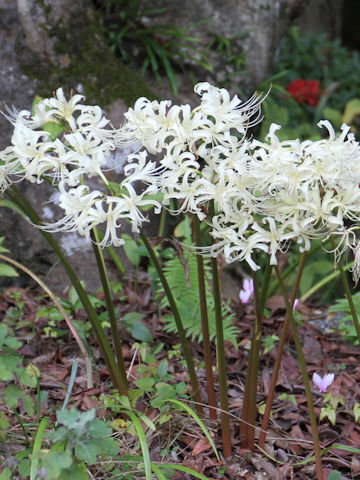
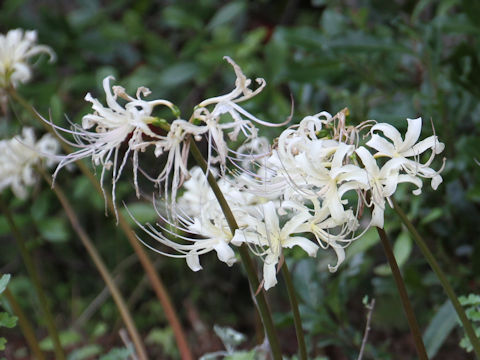
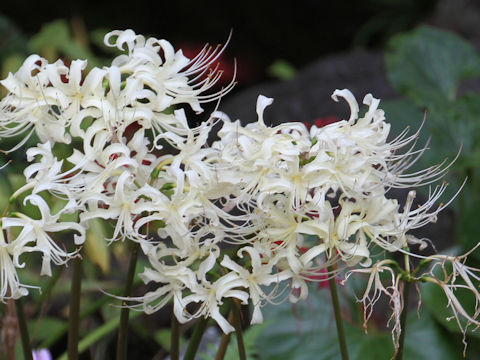
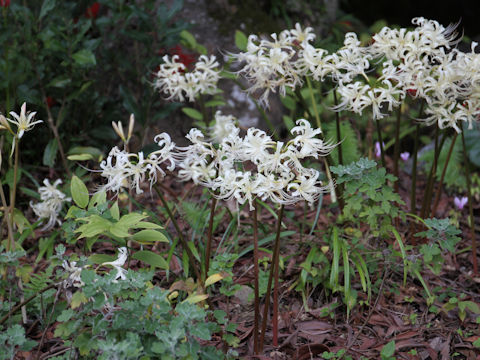
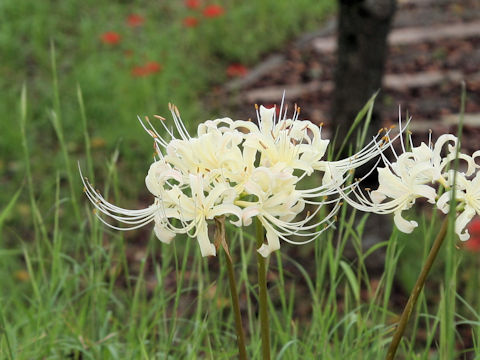
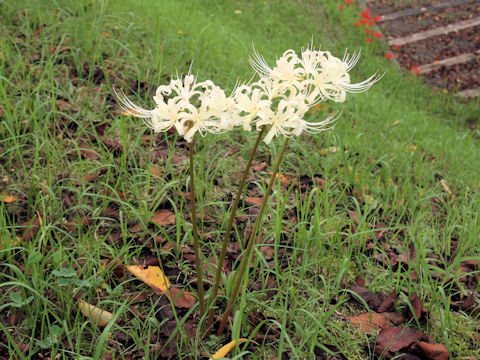
「ひがんばな(Lycoris radiata)」の二倍体と「しょうきずいせん(Lycoris aurea)」との種間交雑種だと考えられています。わが国の九州や朝鮮半島の済州島、中国で自生しているようですが、今では各地で観賞用に栽培されています。9月ごろ、花茎を伸ばして淡黄色や淡いピンク色を帯びた白色の花を咲かせます。別名で「しろばなひがんばな(白花彼岸花)」とも呼ばれます。中国語では「乳白石蒜(ru bai shi suan)」と呼ばれます。
|
|
|
ユリ科ヒガンバナ属の多年草で、学名は Lycoris x albiflora。英名は White spider lily。
|
|
|
The White spider lily (Lycoris x albiflora) belongs to Liliaceae (the Lily family). It is thought to be an interspecific hybrid between the diploidy of Red spider lily (Lycoris radiata) and the Golden spider lily (Lycoris aurea). It is a perennial herb that is native to Kyushu of Japan, as well as the Jeju-do (southern Korea) and China. Now, this herb is planted as an ornamental plant elsewhere across Japan. The pale yellow or pale pink flowers bloom atop of flowering stalk in September. In Chinese, it is called "乳白石蒜" (ru bai shi suan).
|
|
|
[上・中1~2] 大阪府交野市「大阪市大付属植物園」にて、2006年09月29日撮影。
[中3・中4] 千葉県香取市大角にて、2016年09月21日撮影。
[中5~中7] 同上にて、2016年09月23日撮影。
[中8~中11] 高知市五台山「牧野植物園」にて、2017年09月29日撮影。
[中12~13・下] 宮城県大河原町「大河原公園」にて、2024年09月28日撮影。
|

 しろばなまんじゅしゃげ (白花曼珠沙華)

 shu@botanic.jp