 |
|

|
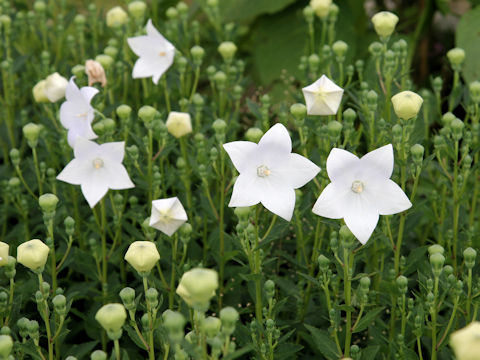
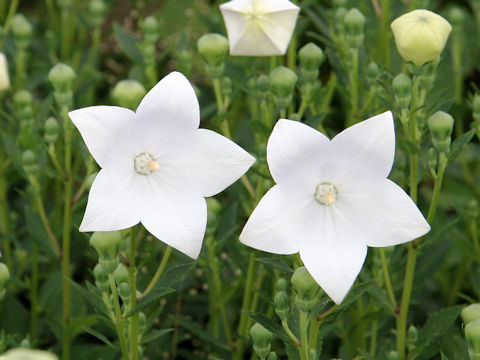
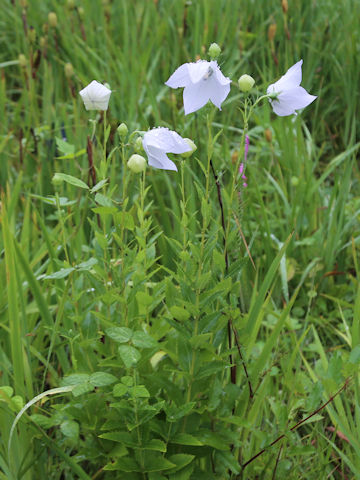
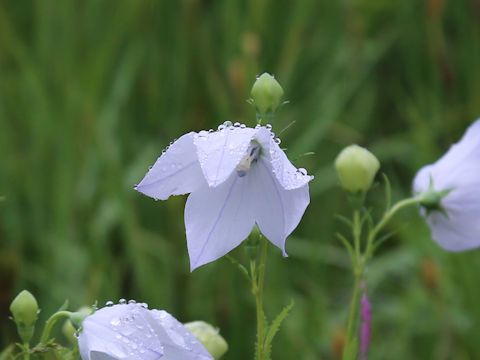
わが国の各地をはじめ、朝鮮半島や中国北部に分布しています。日当たりのよい草地に生え、高さは50~100センチになります。葉は狭卵形で鋭い鋸歯があり、互生します。7月から9月ごろ、茎頂に白色の鐘形の花を咲かせます。果実は長卵形の蒴果です。
|
|
|
キキョウ科キキョウ属の多年草で、学名は Platycodon grandiflorus f. albiflorus。英名は White baloon flower。
|
|
|
The White baloon flower (Platycodon grandiflorus f. albiflorus) belongs to Campanulaceae (the Bellflower family). It is a perennial herb that is found throughout Japan, as well as on the Korean Peninsula and in northern China. It grows in sunny grasslands and reaches a height of 50 to 100 cm. The leaves are narrowly ovate with sharp serrations and are arranged alternately. From around July to September, it produces white, bell-shaped flowers at the tips of its stems. The fruit is a long-ovate capsule.
|
|
|
[上・中1] 大阪府河内長野市「花の文化園」にて、2007年06月29日撮影。
[中2・下] 宮城県仙台市太白区秋保町馬場「秋保大滝植物園」にて、2026年07月28日撮影。
|

 しろぎきょう (白桔梗)

 shu@botanic.jp