 |
|

|
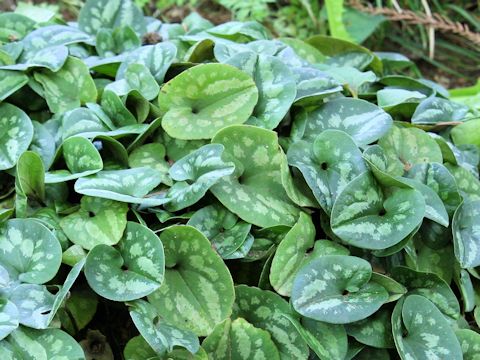
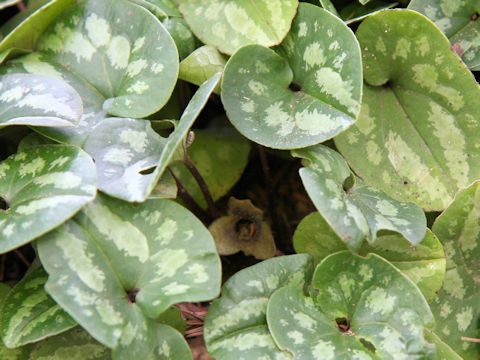
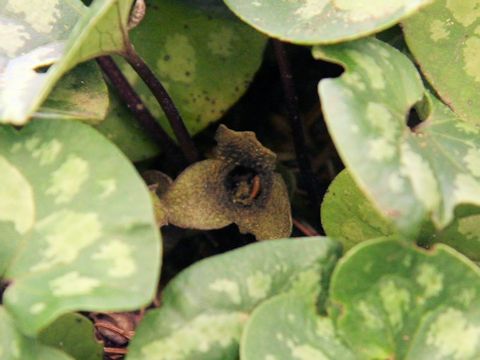
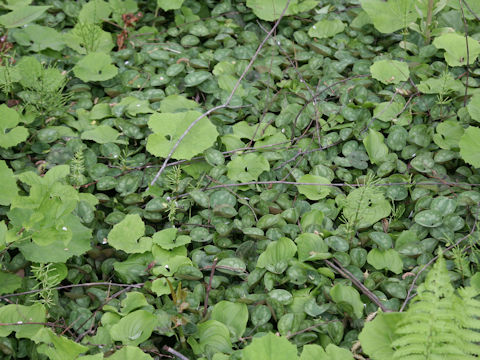
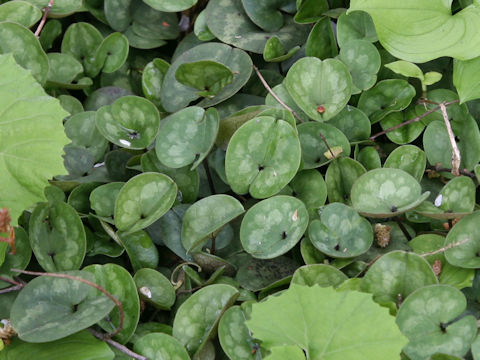
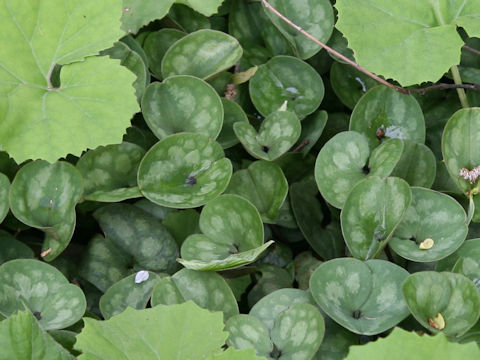
わが国の本州、関東地方北部から長野県に分布しています。「みちのくさいしん(陸奥細辛)」の変種です。山地の湿った林内に生え、高さは10センチほどになります。葉は広卵形から腎円形で、先端がややへこみ、薄い紋様があります。4月から5月ごろ、紫褐色の花を咲かせます。萼筒は短い鐘形で、花柱は6個、雄しべは12個あります。
現在では、標準和名が変更され、「つるだしあおい(蔓出し葵)」と呼ばれています。
|
|
|
ウマノスズクサ科カンアオイ属の常緑多年草で、学名は Asarum fauriei var. serpens (syn. Heterotropa fauriei var. serpens、Asarum fauriei var. stoloniferum)。英名はありません。
|
|
|
The "Sonou-saishin" (Asarum fauriei var. serpens) belongs to Aristolochiaceae (the Birthwort family). It is a variety of "Michinoku-saishin". It is an evergreen perennial herb that is native to northern Kanto district and Nagano prefecture, Honshu in Japan. This herb grows in wettish forests and can reach about 10 cm in height. The leaves are broad-ovate to reniform-round, emarginate at the tips and have pale patches. The purple-brown flowers bloom from April to May. The calyx tube is short bell-shaped, having six pistiles and 12 stamens.
Currently, the standard Japanese name has been changed to "Tsurudashi-aoi".
|
|
|
[上・中1~2] 茨城県つくば市「つくば実験植物園」にて、2011年05月04日撮影。
[中3~4・下] 山形市神尾「山形市野草園」にて、2025年05月11日撮影。
|

 そのうさいしん (園生細辛)

 shu@botanic.jp