 |
|

|
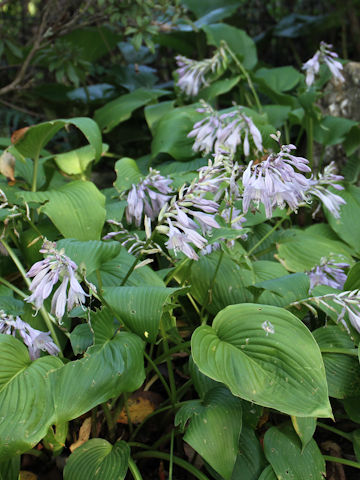
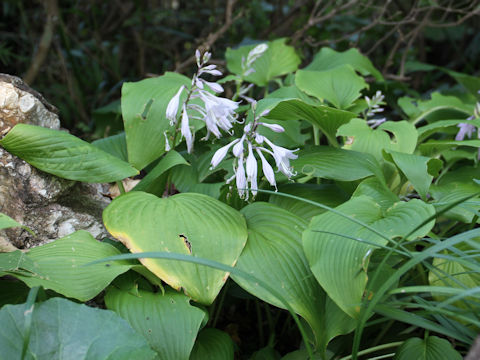
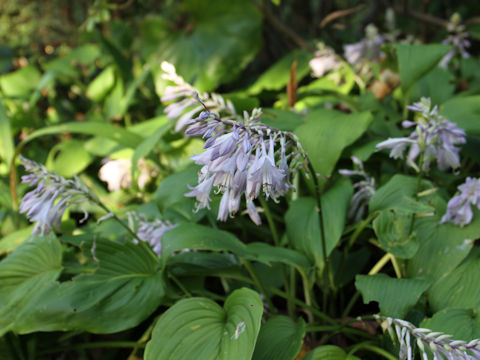
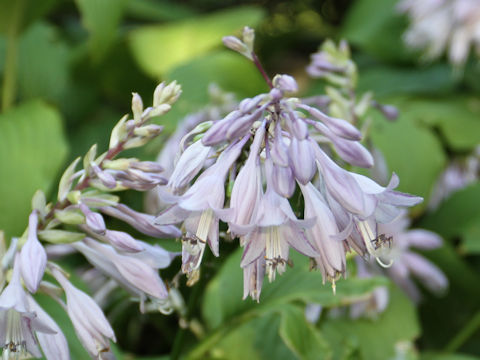
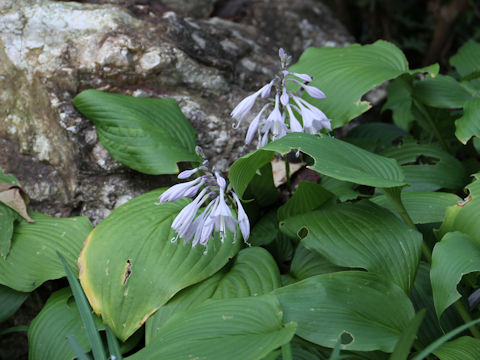
わが国の本州、近畿地方南部と四国に分布しています。「ひゅうがぎほうし(日向擬宝珠)」の変種です。山地の谷沿いの岩に上や湿った岩場に生え、高さは30~60センチになります。葉は狭い卵形で先端は尖り、長さは25~40センチです。葉脈の間隔が狭いのが特徴です。8月から9月ごろ、白色から淡紫色の花を花茎の先に咲かせます。
|
|
|
ユリ科ギボウシ属の多年草で、学名は Hosta kikuti var. polyneuron。英名はありません。
|
|
|
The "Sudare-giboushi" (Hosta kikuti var. polyneuron) belongs to Liliaceae (the Lily family). It is a perennial herb that is distributed to southern part of Kinki region of Honshu and Shikoku in Japan. It is a variant of "Hyuga-giboushi". This herb grows on rock along the valleys of the mountainous area and on wet rocky places and its height is 30-60 cm. The leaves are narrow ovate with acute tips, the length is 25-40 cm. It is characterized by narrow leaf veins. The white to pale purple flowers will bloom atop of the flower stalk from August to September.
|
|
|
高知市五台山「牧野植物園」にて、2017年09月29日撮影。
|

 すだれぎぼうし (簾擬宝珠)

 shu@botanic.jp