 |
|

|
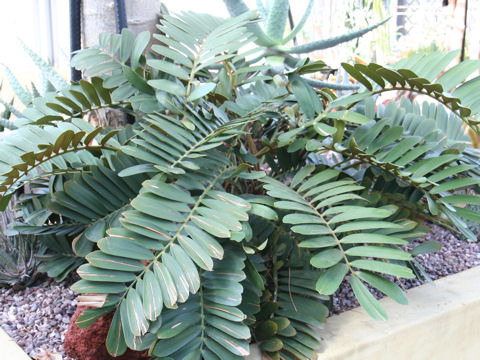
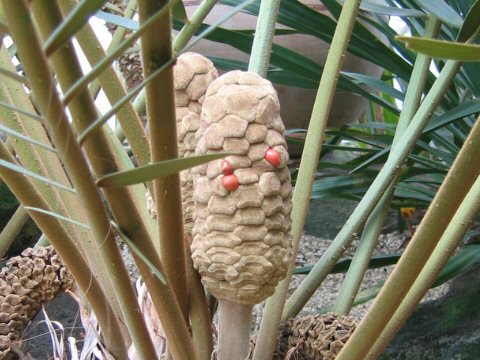
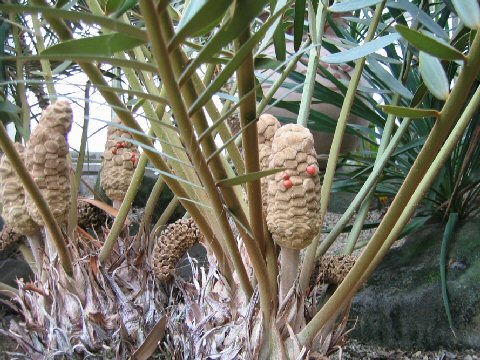
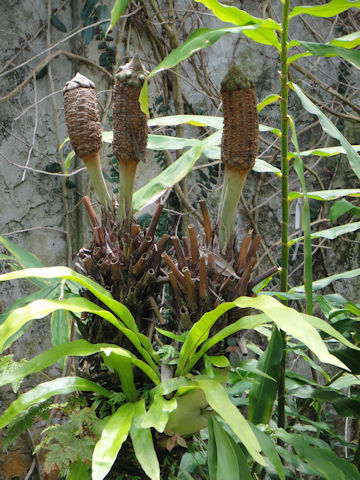
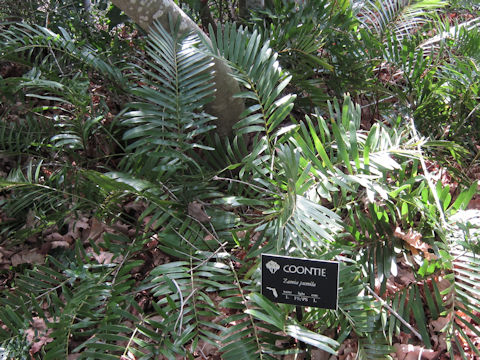
アメリカのフロリダ州および西インド諸島、メキシコに分布しています。幹は塊茎状で、高さは15センチほど、ほとんどが地下にあります。「そてつ」の仲間で、小葉が2~13対ついた大きな羽状複葉が広がります。雄花は円筒状で、雌花は長い円柱形です。雌花の外観は、六角形の鱗片に被われたように見えます。
|
|
|
ソテツ科ザミア属の常緑小低木で、学名は Zamia pumila。英名は Florida arrowroot、Sago cycas。
|
|
|
The Florida arrowroot (Zamia pumila) belongs to Cycadaceae (the Cycad family). It is an evergreen shrub that is distributed in Florida, the West Indies and Mexico. The stem is tuberous about 15 cm long and mainly below ground. The leaves are pinnate compound with 2-13 leaflets. The male inflorescence is cylindrical and the female one is long columnar. The female flowers are covered by hexagonal scales.
|
|
|
[上] 静岡県浜松市「浜松フラワーパーク」にて、2007年03月14日撮影。
[中1・中2] 愛知県名古屋市千種区「東山植物園」にて、2004年11月21日撮影。
[中3] アメリカ・フロリダ州「フェアチャイルド熱帯植物園」にて、2010年05月01日撮影。(photo by Jon Suehiro)
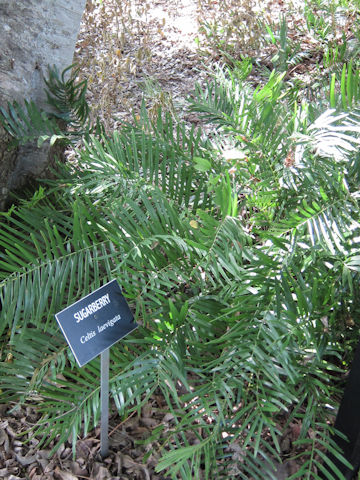
[中4・下] アメリカ・フロリダ州「フロリダ植物園」にて、2011年05月16日撮影。(photo by Jon Suehiro)
|

 ザミア・プミラ

 shu@botanic.jp