

|
 たつたそう (竜田草)
|
|
|
        |
|

|
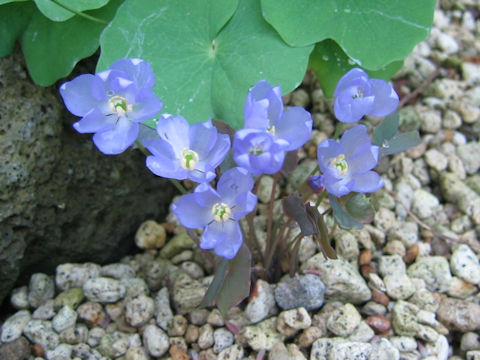
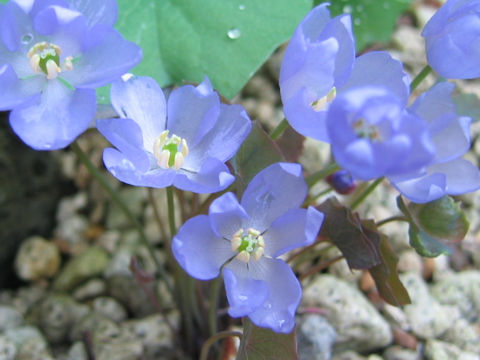
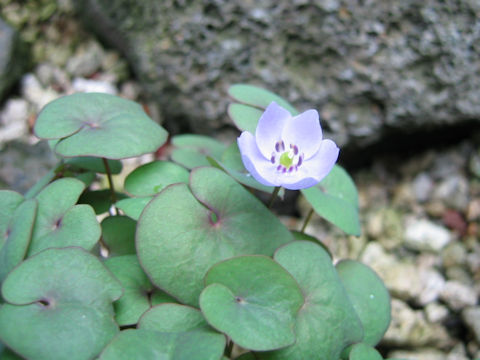
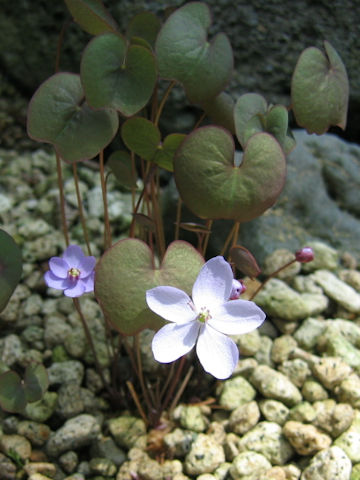
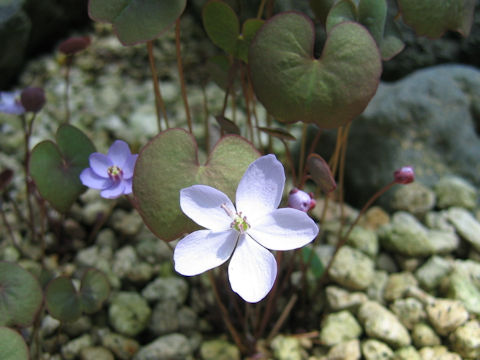
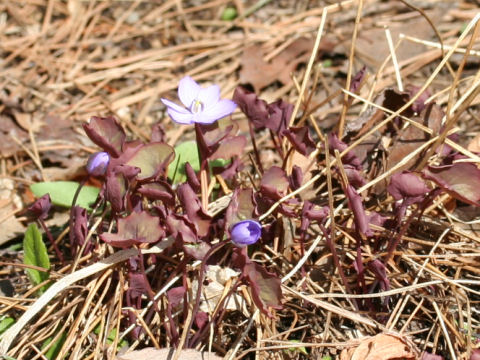
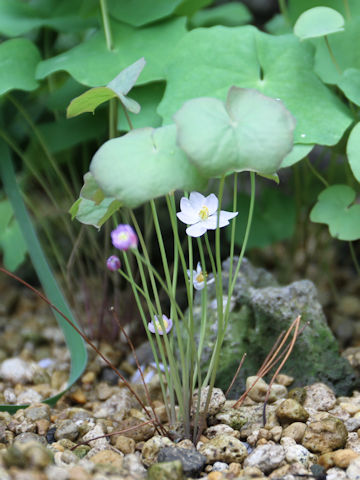
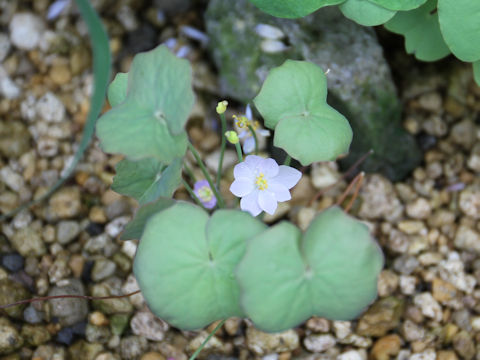
朝鮮半島北部から中国東北部、それにアムール地方に分布しています。山地の林床や林縁に生え、高さは20センチほどになります。葉は円形で先端がくぼみ、根生します。4月から5月ごろ、鮮やかな青藤色の花を咲かせます。和名は、日露戦争のときに軍艦「竜田」の乗員が持ち帰ったことから。別名で「いとまきぐさ(糸巻草)」とも呼ばれますが、開花しても一部の葉が展開せずに巻いているところから。中国語では「鮮黄連(xian huang lian)」と呼ばれます。 韓国語では「ケンケンイプル(깽깽이풀)」です。これは一列にまばらに並んで咲く様子が、まるで片足で跳ねながら「ケンケン(片足跳び)」を踊りながら進む姿に似ていることが、名前が由来と言われています。この種子の表面には、アリが好む甘くて栄養価の高い脂肪の塊である「エライオソーム」が付着していて、アリは種子を自身の巣まで運びます。アリはエライオソームだけを食べて、種子本体は巣の周辺やゴミ捨て場などに捨てます。これらの種子が発芽することで、アリが通った道に沿って花が一列に咲くようになるといいます。 |
|
|
メギ科タツタソウ属の多年草で、学名は Jeffersonia dubia (syn. Plagiorhegma dubium)。英名は Twin leaf。 |
|
|
The Twin leaf (Jeffersonia dubia) belongs to Berberidaceae (the Barberry family). It is a perennial herb that is distributed in the northern part of the Korean Peninsula, northeast China, and Amur region. This herb grows on the forest floors and forest edges of the mountainous area, and up to a height of about 20 cm. The leaves are round, the tip is hollowed and basal. The brilliant blue-lavender flowers bloom from April to May. The name was derived from the warship "Tatsuta", because of this crew member brought back this plant, during the Russo-Japanese War (1904-1905). Another name is also called "Itomaki-gusa (thread winding grass)", because of some leaves are rolling without developing even when flowering. It is called "鮮黄連" (xian huang lian) in Chinese. In Korean, it is called "kkaeng-kkaeng-i-pul" (깽깽이풀). It is said that the name comes from the fact that the way the flowers bloom sparsely in a single row resembles the appearance of someone hopping on one foot-as if dancing the "kkaeng-kkaeng" (one-legged hop)-while moving forward. The surface of these seeds is coated with "elaiosomes"-sweet, nutrient-rich fat deposits that ants find appealing-and the ants carry the seeds back to their nests. The ants eat only the elaiosomes and discard the seeds themselves near the nest or in trash piles. It is said that when these seeds germinate, flowers bloom in a single row along the path the ants traveled. |
|
|
[上・中1] 大阪市鶴見区「咲くやこの花館」にて、2003年11月14日撮影。 [中2] 同上にて、2004年09月16日撮影。 [中3・中4] 同上にて、2005年08月03日撮影。 [中6・下] 同上にて、2017年09月15日撮影。 [中5] 長野県伊那市西春近「かんてんぱぱガーデン」にて、2006年04月04日撮影。 |
|
|

|
Shu Suehiro shu@botanic.jp
|