 |
|

|
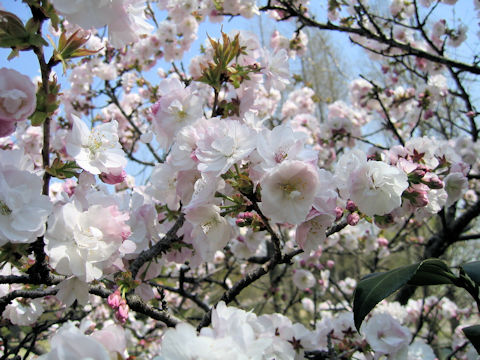
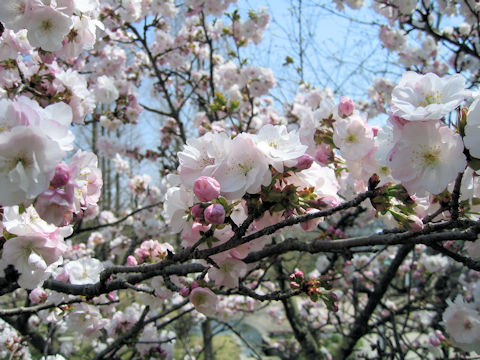
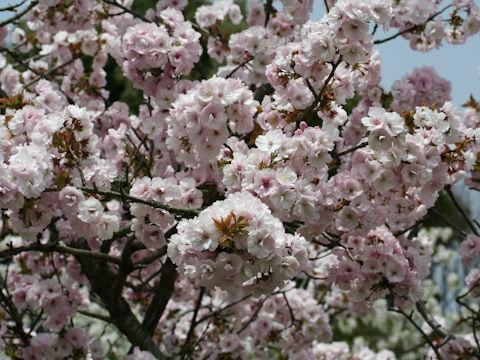
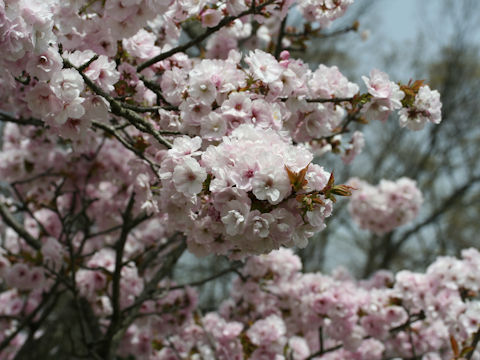
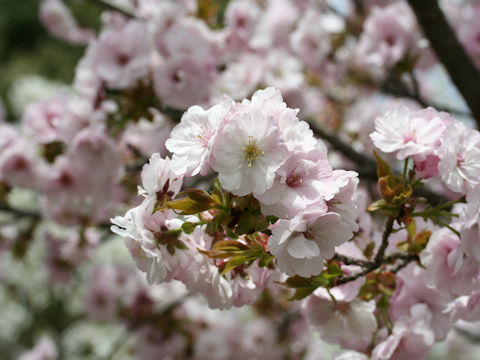
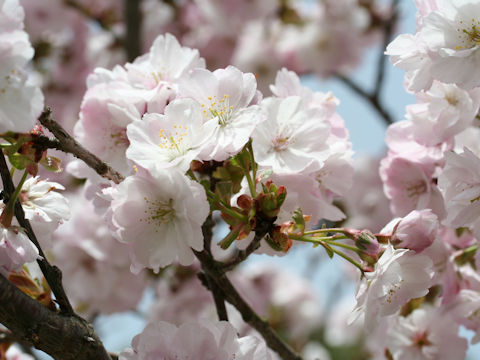
「ちょうじざくら(丁字桜)」と他の「さとざくら(里桜)」との交雑種だと推定されています。高さが3.5メートルほどにしかならず、葉や葉柄、小花柄などに毛が多いことが特徴です。4月の上旬から中旬ごろ、淡い紅色の八重咲きの花を咲かせます。花弁の内側は紅色、外側が淡紅色です。花期が早いことから、別名で「わせみやこ(早生都)」とも呼ばれます。
|
|
|
バラ科サクラ属の落葉低木で、学名は Prunus x sieboldii cv. Caespitosa。英名はありません。
|
|
|
The "Takasago-zakura" (Prunus x sieboldii cv. Caespitosa) belongs to Rosaceae (the Rose family). It is a small deciduous tree that is presumed to be a hybrid of "Clove cherry" (Prunus apetata) and other "Japanese cherry" (Prunus lannesiana cv.). The height is only about 3.5 m, and the leaves, petioles, and pedicels are characterized by a lot of hair. The pale crimson double-flowered flowers come in early to mid-April. The inside of the petals is crimson and the outside is pink. Because of its early flowering season, it is also known as "Wase-miyako".
|
|
|
[上・中1] 京都府精華町「京都フラワーセンター」にて、2005年04月15日撮影。
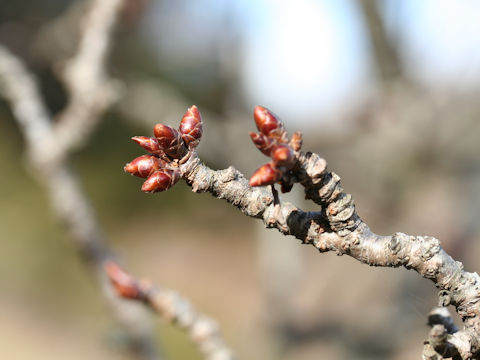
[中2] 同上にて、2006年02月04日撮影。
[中3~5・下] 同上にて、2006年04月18日撮影。
|

 たかさござくら (高砂桜)

 shu@botanic.jp