
|

|
 つたばうんらん (蔦葉雲蘭)
|
[Index]
[Back]
|
|
|
        |
|

|
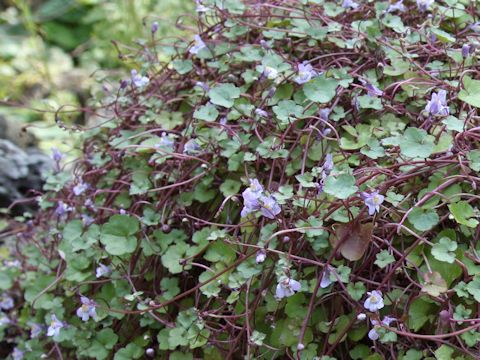
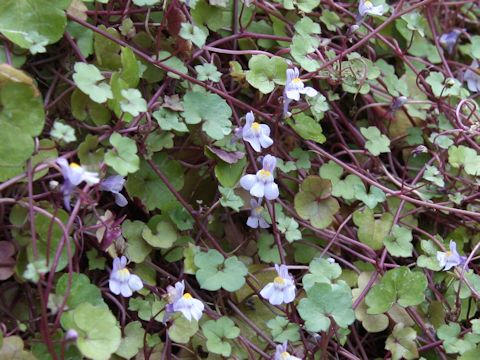
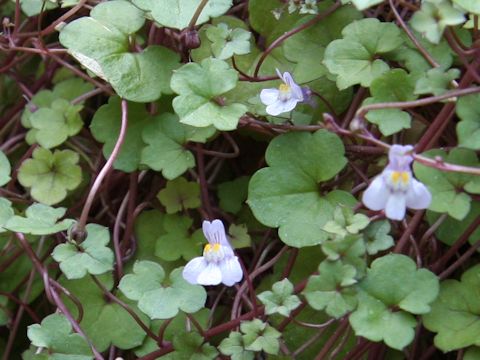
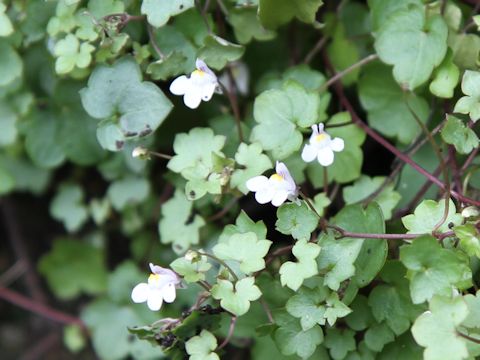
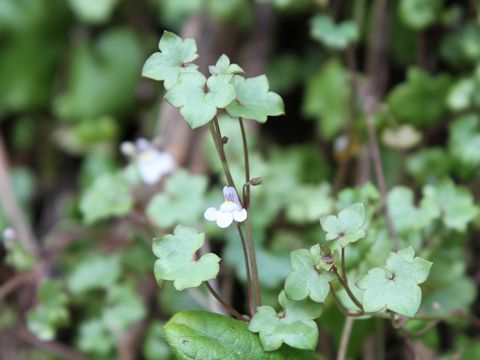
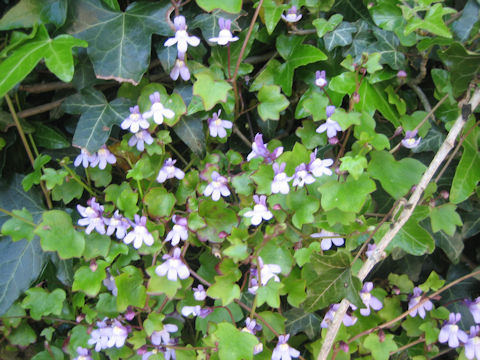
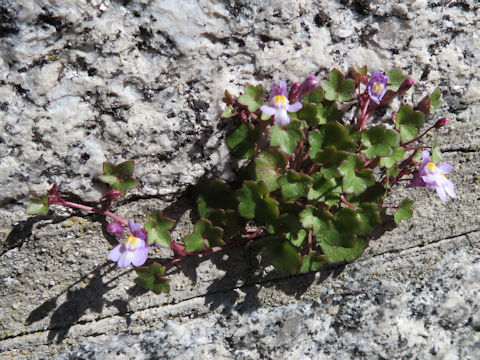
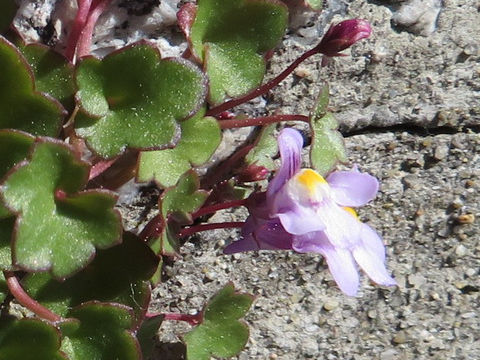
ヨーロッパの地中海地方が原産ですが、世界各地にも帰化しています。わが国でも、北海道から本州に帰化しています。岩上や壁の隙間、小道の側などに生え、すぐに広がって高さは5センチ以上になります。葉は円形から心形で、長さと幅ともに2.5~5センチで、浅く3~7裂します。5月から9月ごろ、小さな「きんぎょそう」に似た薄い青紫色の花を咲かせます。世界的な侵入植物です。別名で「つたがらくさ(蔦唐草)」とも呼ばれます。 |
|
|
ゴマノハグサ科ツタバウンラン属の常緑多年草で、学名は Cymbalaria muralis。英名は Ivy-leaved toadflax。 |
|
|
The Ivy-leaved toadflax (Cymbalaria muralis) belongs to Scrophulariaceae (the Figwort family). It is an evergreen herb that is native to the Mediterranean Europe and widely naturalised elsewhere. It is also naturalised in Hanshu and Hokkaido in Japan. This herb commonly grows in rock and wall crevices, and along footpaths, and it grows up to 5 cm in height. The leaves are rounded to heart-shaped, 2.5-5 cm long and wide, 3–7-lobed. The flowers are small, pale bluish purple, similar in shape to snapdragon flowers, and bloom from May to September. It is a worldwide invasive plant. |
|
|
[上・中1~2] 大阪市鶴見区「咲くやこの花館」にて、2013年05月25日撮影。 [中3・中4] 静岡県熱海市熱海「錦ヶ浦」にて、2013年08月02日撮影。 [中5] イギリス・ランカシャー州「ストーニーハースト大学」にて、2015年05月23日撮影。(photo by Yumi Gunji) [中6・下] ボルトガル・ノルテ地方・サントティルソ市にて、2019年03月19日撮影。(photo by Jon Suehiro) |
|
|

|
Shu Suehiro shu@botanic.jp
|
|