

|
 あらかし (粗樫)
|
|
|
|
-- もっと見る(Show more)--
-- 閉じる(Close) --
|
|
|
|

|
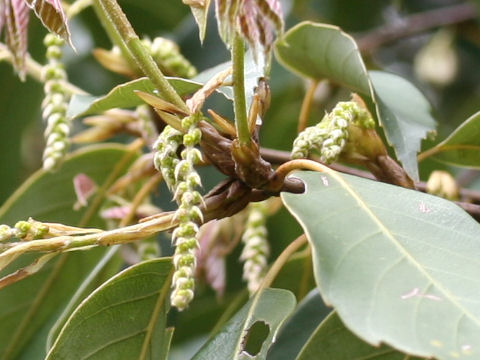
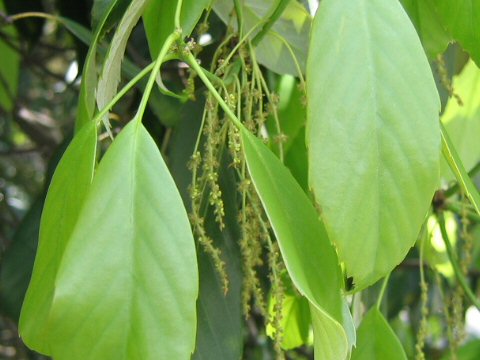
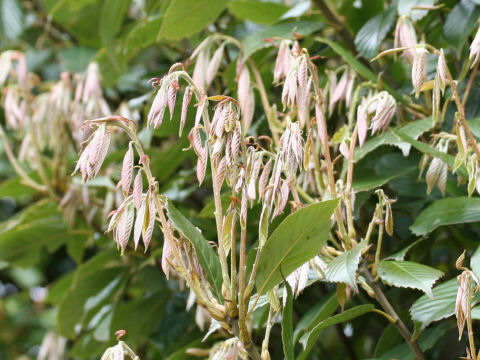
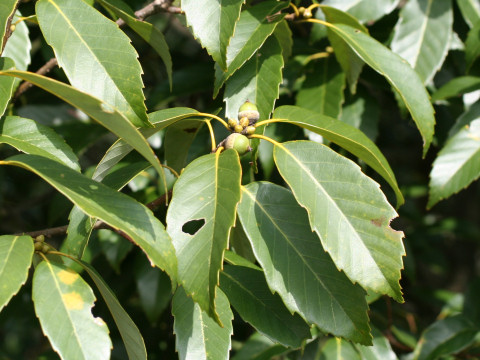
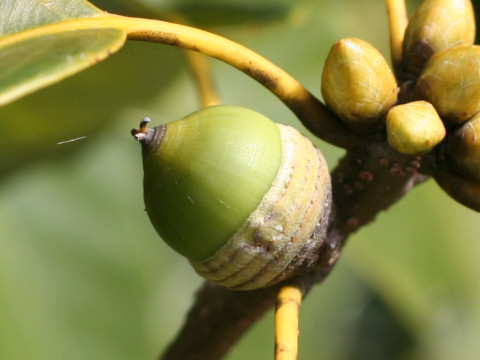
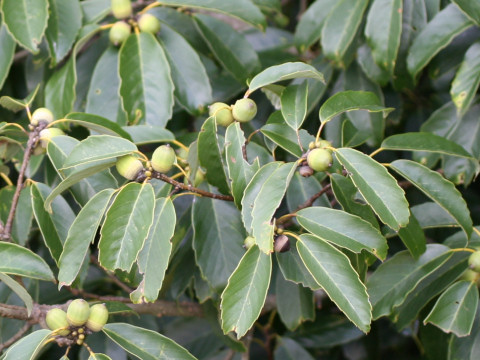
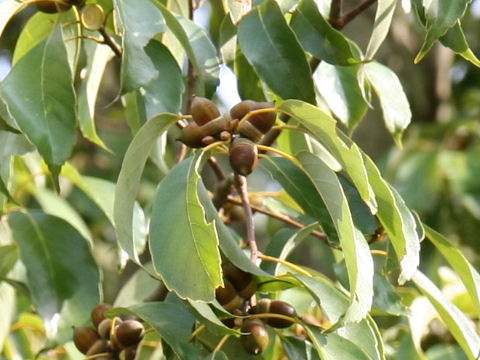
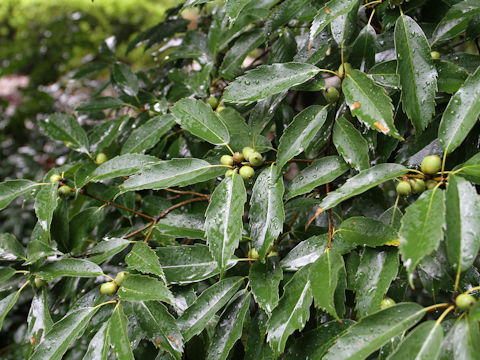
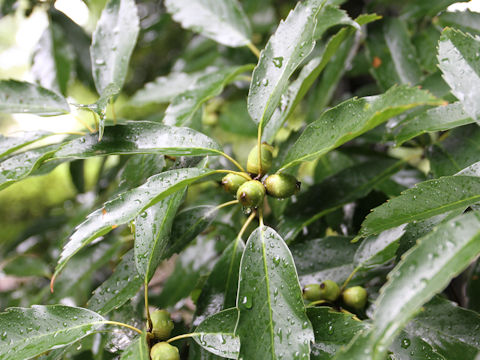
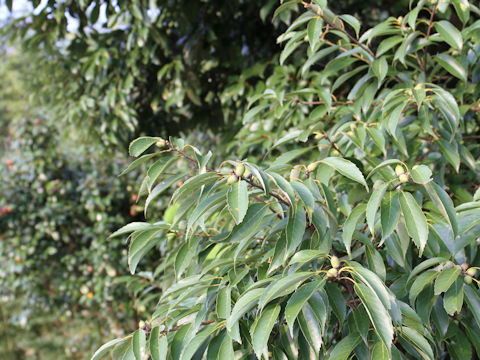
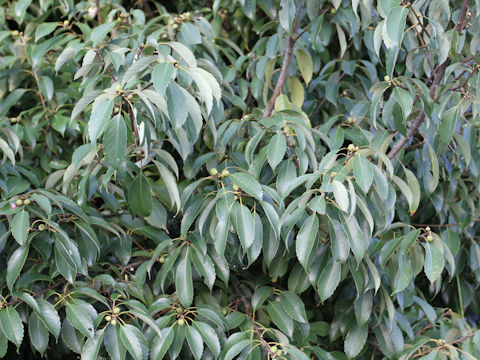
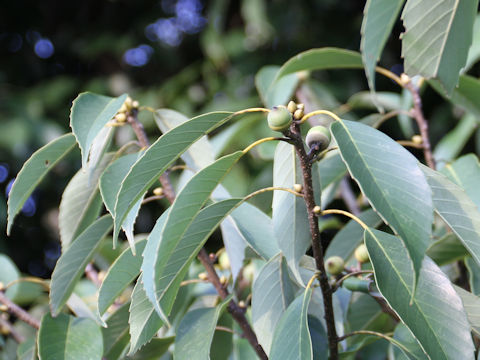
わが国の本州、宮城・石川県以南から四国・九州、それに台湾や朝鮮の済州島、中国中南部、インドシナ半島に分布しています。山野の雑木林に生え、高さは20メートルほどになります。葉は倒卵状長楕円形で、上半部には大きな鋸歯があります。4月から5月ごろ、新枝の下部に雄花序が下垂し、その上部に雌花序が直立してつきます。ドングリの殻斗には6~7個の輪層があります。材が硬く、農具の柄などに使われますが、和名は「堅木」あるいは「堅し」に由来します。台湾華語では「青剛櫟」、中国語では「青岡(qing gang)」と呼ばれます。 韓国語では「チョンガシナム(종가시나무)」です。これは「チョンガシ(종가시)」+「木(ナム: 나무)」の合成語です。この木の殻斗(ドングリ)がふっくら丸みを帯びていて鐘(チョン: 종)のように見えることからと、済州島の方言で、ドングリのことを「カシ(가시)」または「カシナン(가시낭)」と呼んでいたことに由来しています。 |
|
|
ブナ科コナラ属の常緑高木で、学名は Quercus glauca (syn. Cyclobalanopsis glauca)。英名はありません。 |
|
|
The "Ara-kashi" (Quercus glauca) belongs to Fagaceae (the Beech family). It is a tall evergreen tree that is distributed from Miyagi-Ishikawa Prefecture of Honshu south to Shikoku and Kyushu in Japan, as well as Taiwan, Jeju Island of Korea, central and southern China and the Indo-China Peninsula. This tree grows in scrublands of mountains and fields, and up to a height of about 20 m. The leaves are obovate-oblong with large toothed edges at upper-half of leaf blades. The male clusters are descending at lower-half of new branches and the female clusters stand upright at the top, from April to May. The cupules have 6-7 circular layers. This timber is hard and used for making handles of farm implement. It is called "青剛櫟" in Taiwanese Chinese and "青岡" (qing gang) in Chinese. In Korean, it is "jong-ga-si-na-mu" (종가시나무). This is a compound word formed from "jong-ga-si" (종가시) and "tree" (na-mu: 나무). The name derives from the fact that the cupules (acorns) of this tree are plump and rounded, resembling a bell (jong: 종), as well as from the fact that in the Jeju Island dialect, acorns were called "ga-si" (가시) or "ga-si-nang" (가시낭) in the Jeju Island dialect. |
|
|
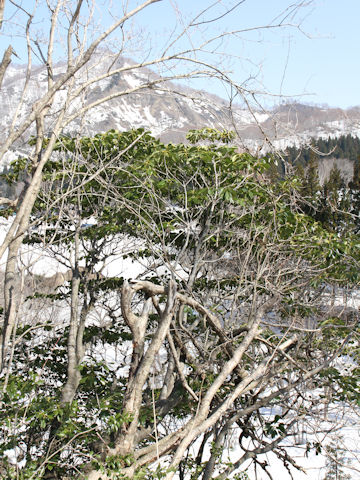
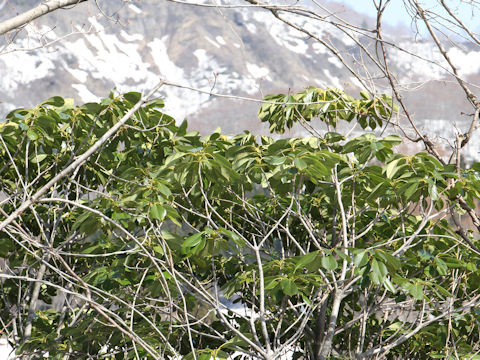
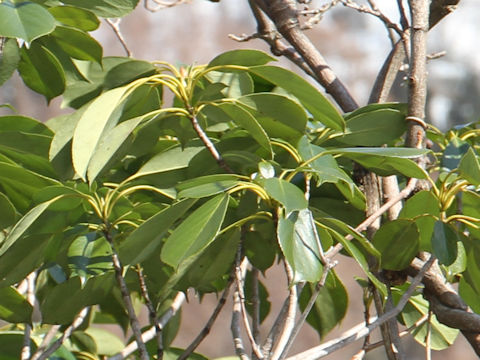
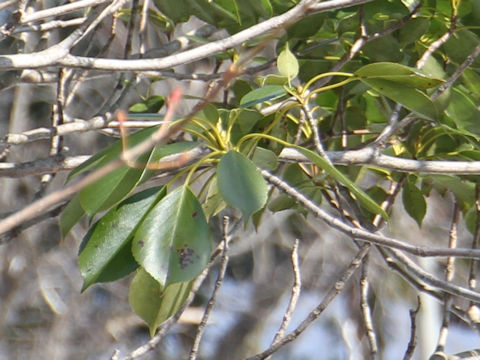
[上・中2] 大阪府四條畷市清滝中町にて、2006年04月12日撮影。 [中1] 大阪府四條畷市逢阪「清滝峠」にて、2004年04月25日撮影。 [中3~中5] 大阪府東大阪市上四条町「なるかわ園地」にて、 2005年10月03日撮影。 [中6] 大阪府河内長野市「花の文化園」にて、2006年11月21日撮影。 [中7・中8] 福岡市中央区「福岡市植物園」にて、2017年10月06日撮影。 [中9~中11] 佐賀県吉野ヶ里町「吉野ヶ里歴史公園」にて、2017年10月07日撮影。 [中12~中15] 山形県小国町小玉川にて、2018年03月28日撮影。 [中16~中18] 宮城県仙台市泉区「将監風致公園」にて、2024年08月20日撮影。 [中19~中21] 宮城県村田町関場「浮島の植物群落」にて、2024年08月22日撮影。 [中22~25・下] 宮城県大河原町「大河原公園」にて、2024年09月28日撮影。 |


|
|

|
Shu Suehiro shu@botanic.jp
|